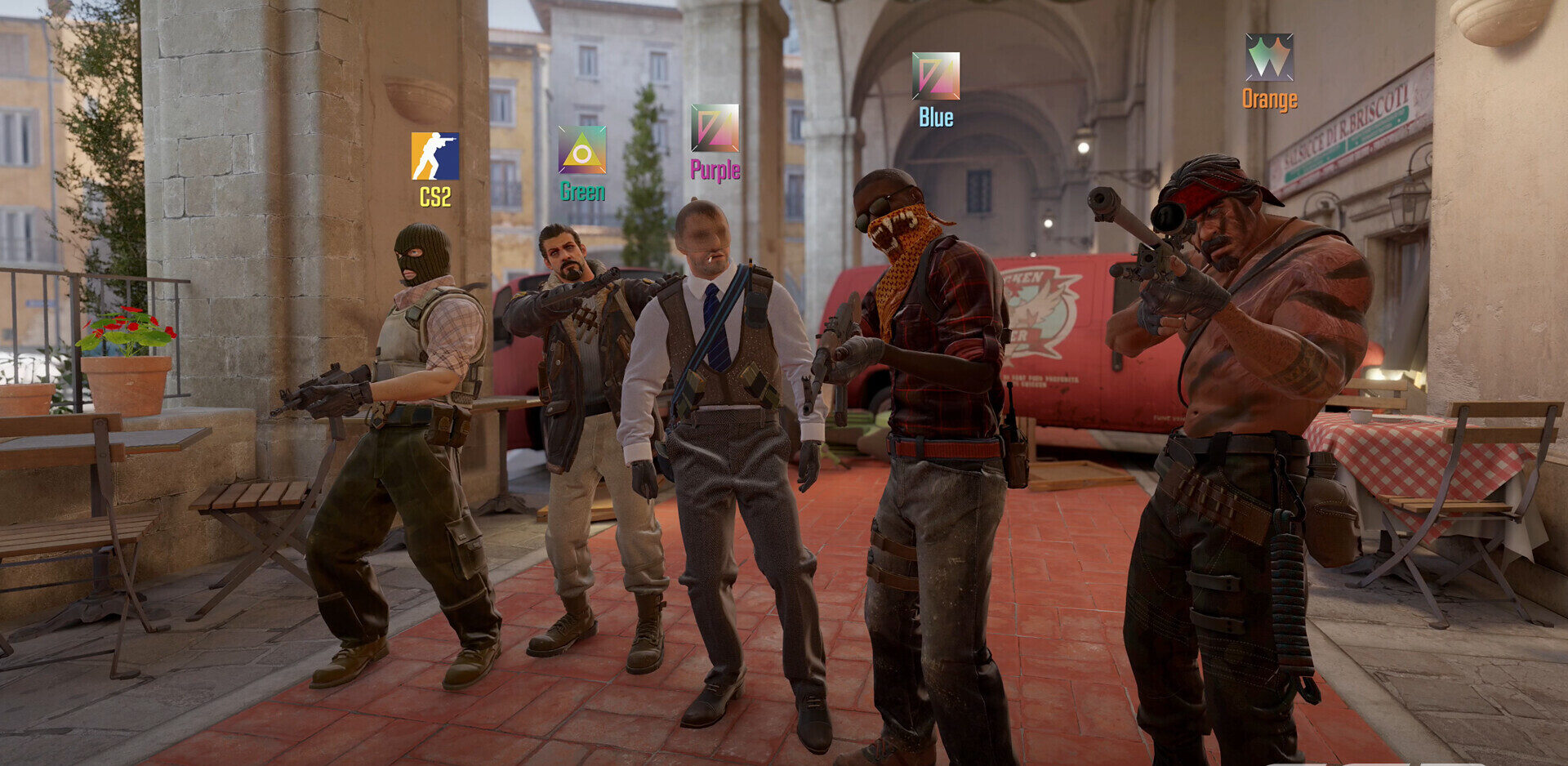
Why doesn’t Valve just hire hundreds more developers to speed up Counter-Strike updates? According to former Valve writer Chet Faliszek, the answer has little to do with money or ambition. Instead, it comes down to how teams actually function once they grow past a certain size.
This is worth paying attention to because it directly explains a long-running community complaint: why CS2 and TF2 updates can sometimes feel small compared to what fans expect from a company with Valve’s resources. Faliszek, who worked at Valve for twelve years and contributed to titles including Half-Life, Portal, Left 4 Dead, and Counter-Strike: Global Offensive, shared these views in a video where he reflected on his time at the company.
Valve’s Unusual Approach to Team Size
Valve has never operated with a traditional management structure. Faliszek pointed out that Valve could easily hire more skilled developers if it wanted to. However, the company has historically avoided scaling teams into the hundreds, because it does not believe bigger teams automatically mean faster development.
Faliszek said: “For Valve, there are enough good people out there that they could hire more good people.” Still, he argued that Valve rarely acts on this, since larger teams tend to introduce new problems rather than solve existing ones.
Why Bigger Teams Can Slow Things Down
According to Faliszek, once a team grows very large, it starts losing efficiency. Communication becomes harder, decisions take longer, and teams often backtrack on earlier choices. He explained: “These giant teams… I just don’t think you get a lot of bang for your buck out of [them].”
In contrast, Faliszek said Valve teams of around 25 to 45 people could move quickly. Everyone stayed close enough to understand what was happening across the project and could resolve disagreements directly, without extra layers of management. He said: “When you’re like 25 people, 45 people, you’re all in the same room essentially… You can move really quickly.”
This matters even more at Valve specifically, since the company lacks a formal management hierarchy. Faliszek argued that adding hundreds of people would force informal management structures to appear on the fly, and he described these as unhealthy for the company’s usual way of working. He said: “Especially at a place like Valve where there’s not a formal management structure… when you would add that many more people, you would have these management structures that would come up on the fly and would be unhealthy.”
Addressing the “Small Updates” Criticism
Faliszek then turned directly to a familiar complaint from the community: that Counter-Strike and TF2 updates are often very small. He referenced this criticism, saying: “Somebody… was complaining about how small updates are often, like for Counter-Strike or even for TF2…”
He revealed that this was not lost on Valve employees themselves. Faliszek said: “Even at Valve, we’d be like, ‘I can’t believe we get away with this.'” As a result, he compared Valve’s output directly with studios that run much larger teams. He described how other studios might have a thousand people working across many features at once, while Valve’s updates can look as simple as adding a handful of new skins, and players are still satisfied with that. In his words: “These other teams have a thousand people working on a gajillion different things and all these different features, and Valve’s like, ‘Here’s five skins,’ and people are like, ‘Cool.'”
A Balance, Not an Excuse for Doing Nothing
Faliszek was careful to clarify that his point was not that tiny teams should ship nothing at all. He said: “I think you need to have some oomph there. You need to have some weight to what you’re releasing.” In other words, small teams still need to deliver updates that carry real substance, even if they are not massive in scope.
Why This Matters for CS2
Faliszek’s comments do not reveal the exact size or structure of the current CS2 development team. Even so, they provide useful context for why Valve has never approached updates with a simple formula of hiring hundreds more people to speed things up. For players wondering why CS2 patches sometimes feel modest, this explanation suggests the pacing is tied to Valve’s long-standing philosophy on team size, not a lack of resources or ambition.