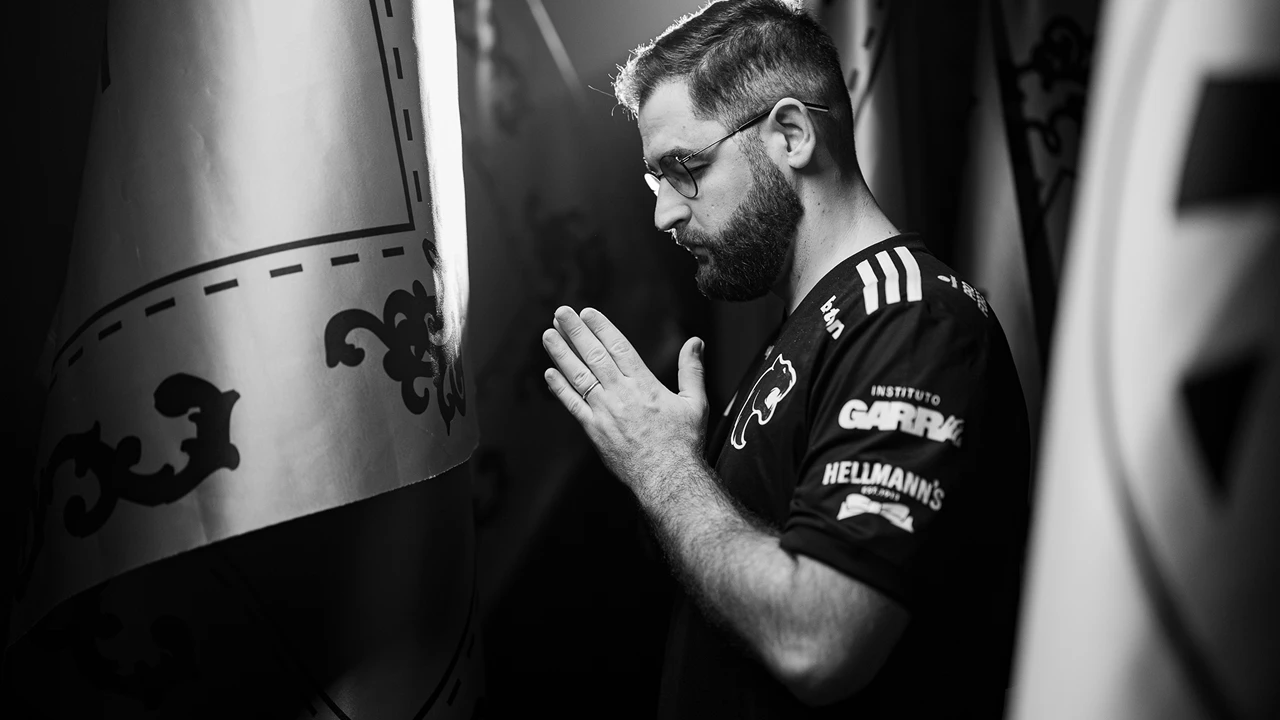

Gabriel “FalleN” Toledo has reacted to FURIA’s female Counter-Strike roster leaving CS2 for VALORANT, calling the move a sad reflection of the current state of the women’s scene. The Brazilian veteran pointed to a lack of interest from viewers, Valve and tournament organizers, while admitting that VALORANT currently offers players another path to continue competing at a high level.
FalleN calls the situation a “sad reflection” of women’s CS

FURIA’s female roster will remain with the Brazilian organization but will continue its career in VALORANT. Reacting to the news, FalleN focused on the reasons why players are increasingly looking outside Counter-Strike for competitive opportunities.
It’s a sad snapshot of the failure/lack of interest from both us viewers and Valve/tournaments in making an effort to find alternatives so that the ecosystem could function, seeing the girls from @FURIA and others heading to @VALORANT to play in a more vibrant scene.
FalleN therefore did not place responsibility on one particular side. Instead, he highlighted a broader lack of interest around women’s Counter-Strike, mentioning the audience as well as Valve and tournament organizers. At the same time, the Brazilian sees a positive side to the situation, as VALORANT gives the players an alternative environment in which they can continue their careers.
On the other hand, it’s good that there’s another game where they can continue competing at a higher level.
FalleN also said he is curious to see how the former CS2 players will perform against women who have been competing in VALORANT for much longer.

FalleN’s comments spark debate in the community
His reaction quickly generated discussion about the reasons behind the difficulties facing women’s Counter-Strike. A significant part of the community agreed that viewership remains one of the biggest obstacles. Some users argued that tournament organizers cannot sustainably invest in competitions without sufficient audience interest, sponsors and revenue. Others questioned whether separate women’s tournaments are the right approach at all, suggesting that female teams could instead compete through the regular open qualification system.
Another part of the discussion supported FalleN’s criticism of the competitive ecosystem. One user argued that Valve should do more to create meaningful competitions rather than expecting interest to appear on its own. Others pointed to Counter-Strike’s already packed tournament calendar. With dozens of events featuring many of the same top teams, some fans said they simply have little interest in watching even more competitions.

Women’s Counter-Strike faces another warning sign
FalleN’s reaction goes beyond FURIA’s decision itself. His comments highlight the broader challenge of creating a sustainable women’s Counter-Strike ecosystem when audiences, organizers and the game’s developer have struggled to generate enough momentum around it.
For FURIA’s players, VALORANT now provides another opportunity to continue competing. For Counter-Strike, their departure has once again raised the question of what needs to change to prevent more female players and teams from following the same path.