Almost a year after Valve’s gold trade-up update, the CS2 skin market is still struggling. Prices recovered after the first crash in October 2025, but they have been falling again in recent months. And while there are several reasons behind the decline, one of the biggest concerns is the loss of trust in the market. For years, players spent thousands of dollars on rare skins, believing they would hold their value. Valve’s update showed how quickly that could change.
How the Gold Trade-Up Update Crashed the CS2 Market
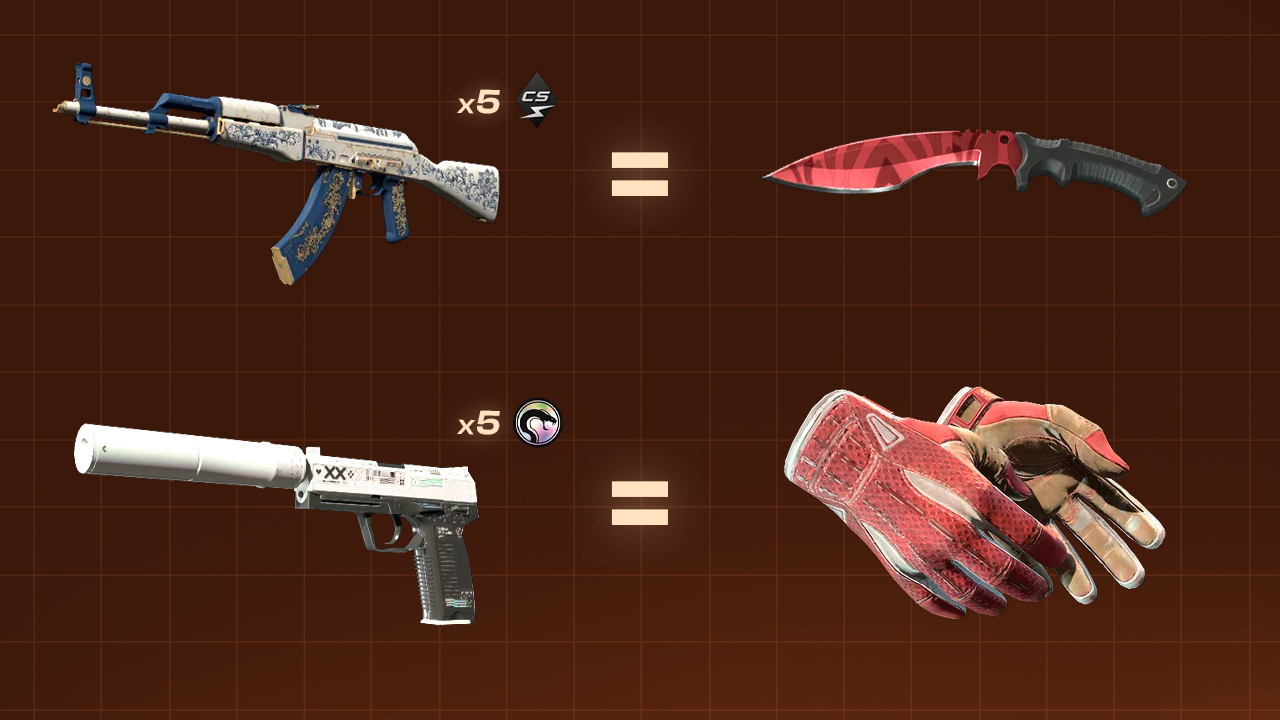
On October 22, 2025, Valve introduced one of the biggest changes to the CS2 skin market. Players could now trade five Covert (red) skins for a knife or gloves, while five StatTrak Covert skins could produce a StatTrak knife. Before this update, knives and gloves were mainly obtained through rare case openings. Their limited supply was one of the biggest reasons behind their high prices, and Valve had suddenly introduced a new way of obtaining them.
The reaction was immediate. Knife and glove prices began falling as players realised that more of these items could now enter the market. At the same time, Covert skins became much more valuable because they were needed for the new trade-ups. According to Ars Technica, one knife that had been listed for more than $14,000 lost over half its price in a single day. Meanwhile, the P90 Asiimov jumped from around $10 to over $100 on the Steam Market.
The overall impact was massive. Data from Pricempire showed that the estimated value of the CS2 skin market fell from over $6 billion to less than $4.3 billion overnight. This did not mean that billions of dollars were actually taken out of the market. Instead, the skins people already owned had become worth much less. For traders and collectors holding expensive knives, the difference hardly mattered. Many had seen a large part of their inventory’s value disappear in a matter of hours.
The Market Recovered, but Not Every Skin Did
The market eventually began to recover as the initial panic died down. By November 11, 2025, Dust2.us reported that its total estimated value had climbed back to approximately $5.16 billion. However, much of this recovery came from rising Covert skin prices rather than knives and gloves returning to their previous values. In other words, the market was recovering, but that did not mean everyone who lost money was getting it back.
The update also changed how knives and gloves are priced. Every successful gold trade-up requires five Covert skins, so producing these items still comes at a cost. As Covert skins become more expensive, some trade-ups become less profitable, which helps limit the number of new knives and gloves entering the market. However, their prices can no longer depend entirely on how rare they are to unbox. There is now another way to obtain them, and that has changed their value.
The Bigger Problem Was the Loss of Trust
The biggest damage from the crash may not have been the money lost, but the trust that disappeared with it. Traders always knew that Valve controlled the CS2 economy, but many had become comfortable buying expensive skins and expecting them to hold their value. The gold trade-up update showed that Valve could change the rules overnight. Even items that had remained rare and expensive for years were not safe from a major change.
Of course, Valve never promised that any skin would hold its value forever. But that does not change how buyers might feel after watching expensive inventories lose so much value in such a short time. Someone thinking about buying a $2,000 knife today might now wonder whether another update could make it much cheaper tomorrow. That uncertainty can make people less willing to spend large amounts of money, even on items that have not been directly affected by the trade-up changes.
And this concern is not limited to the original update. On May 22, 2026, Valve also allowed Souvenir skins to be used in Trade Up Contracts alongside regular skins, removing their Souvenir status in the process. Although the impact was different from the gold trade-up crash, it was another example of Valve changing how existing skins could be used. For traders, the concern is no longer just about what an item is worth today, but whether the rules that support its price will remain the same.
The CS2 Skin Market’s Decline Over the Past Few Months
The market’s recovery did not last forever. In fact, CSMarketCap records a peak value of approximately $8.71 billion before the market began losing ground again. July 2026 was still a relatively positive month for individual skin prices, with SkinWise recording a median increase of 3.2% across more than 3,200 tracked skin variants. However, the trend changed in August, when the median price of tracked variants fell by 4.2%. September brought another decline of 3.1%, followed by a further 2.6% fall between October 1 and October 20. These figures come from monthly samples of different sizes, but they show how the market has struggled to maintain its earlier recovery.

The fall is even clearer when looking at the estimated total value of the market. According to CSMarketCap, the market was worth approximately $5.87 billion at the end of September 2026, following a decline of around 7.3% over 30 days. By October 20, that figure had fallen further to approximately $5.4 billion. This represents a decline of 9.9% over the previous 30 days and 20.3% over 90 days, leaving the market around 38% below its recorded peak. While these are estimates rather than money actually lost through sales, they show just how much the value of existing skins has dropped.
What makes the recent decline particularly concerning is that it is no longer limited to knives and gloves. According to CS2.IO, the median price of tracked gloves fell by 8.8% between September 20 and October 20, while weapon skins dropped by 7.9% and knives by 4.6%. Of the 17,670 qualifying item variants tracked during that period, more than 12,700 lost value. The figures show that the weakness has spread across much of the market, including items that were not directly affected by the original gold trade-up update.
The market is not falling every single day, and there have been smaller recoveries along the way. However, the wider trend over the past few months has been negative. It is also difficult to point to one particular event that explains the continued decline, unlike the October 2025 crash. Instead, the market appears to be going through a longer period of falling prices, with fewer categories able to escape the downturn.
Why the CS2 Skin Market Keeps Falling
It would be wrong to blame every price drop on Valve’s gold trade-up update. Prices also depend on how many items are available, how much buyers are willing to spend, and how many people are trying to sell. However, the loss of trust could be making the current decline worse. Buyers who are unsure about the future may simply decide to hold on to their money, especially when prices have already been falling for several months.

This can also create a cycle that is difficult to stop. When prices start falling, some traders sell their skins because they are worried about losing more money. At the same time, potential buyers may wait, hoping to get the same items at even lower prices. With more people looking to sell and fewer willing to buy, prices can keep falling without Valve introducing another update. The gold trade-up crash gave players a reason to be more cautious, although it is impossible to say exactly how much of the current decline is caused by that fear.
Can the CS2 Skin Market Recover Its Trust?
The gold trade-up update was not bad for everyone. For regular players who simply wanted a nice knife or pair of gloves, lower prices were good news. Covert skin owners also benefited from the sudden increase in demand. But what helps ordinary players is not always good for collectors and traders who have spent years building expensive inventories. Valve does not have to protect those investments, even if its decisions have a major effect on their value.
The bigger question is whether traders will ever feel as confident about the market as they did before October 2025. Prices can recover, and the total value of the market can rise again, but that does not necessarily mean people will trust it in the same way. The gold trade-up update changed more than just the prices of knives and gloves. It reminded everyone that Valve can change the rules whenever it wants, and that uncertainty could continue to affect the CS2 skin market for years to come.