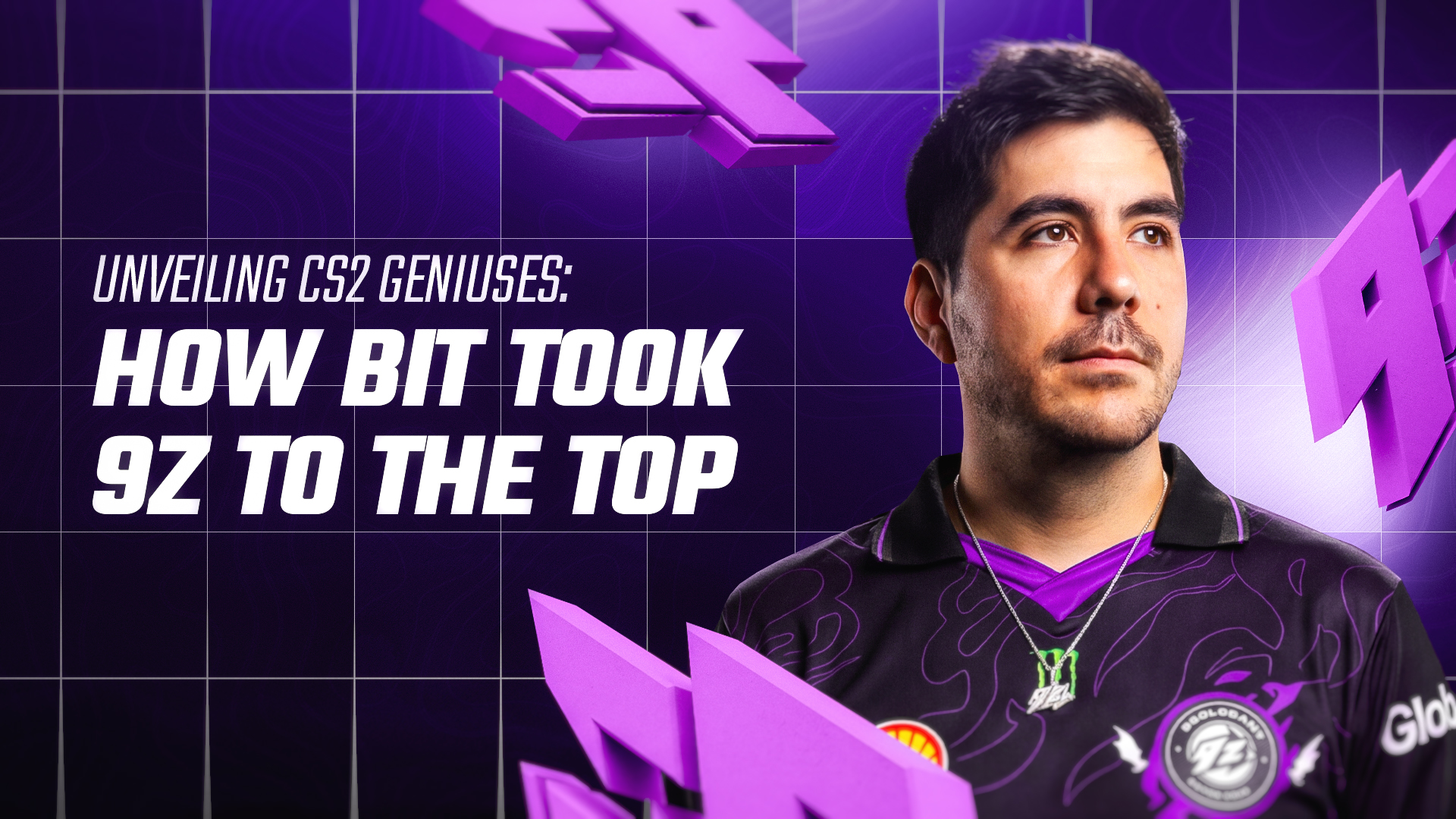
There are coaches who inherit teams ready to win, and there are coaches who have to convince a team that winning at the highest level is even possible. BIT belonged firmly to the second category when he returned to 9z in June 2025. The organization had ambition, talented players and a history of punching above its weight, but it did not possess the constant tier-one exposure that builds certainty. Its players were not spending every week across the server from Spirit, Vitality, MOUZ and Falcons. They had to earn those matches, sometimes from thousands of kilometres away, and then make every one of them count. BIT’s achievement was to take that environment and gradually turn it into a team capable of sitting third in the Valve Regional Standings.
BIT’s early footings
For BIT, that journey carried more weight than an ordinary coaching assignment. His Counter-Strike career stretches back to an entirely different era of the game. He competed for Made in Brazil during the glory years of Brazilian Counter-Strike 1.6, winning international tournaments including DreamHack Winter 2007 and GameGune 2008. Years later, when much of his generation had disappeared from top-level competition, he was still playing. He eventually became captain of 9z between 2020 and 2022, spending significant time in Europe and helping a young South American organization understand what international Counter-Strike demanded. He then moved behind the players, joining MIBR as coach and spending three seasons there before leaving in February 2025.
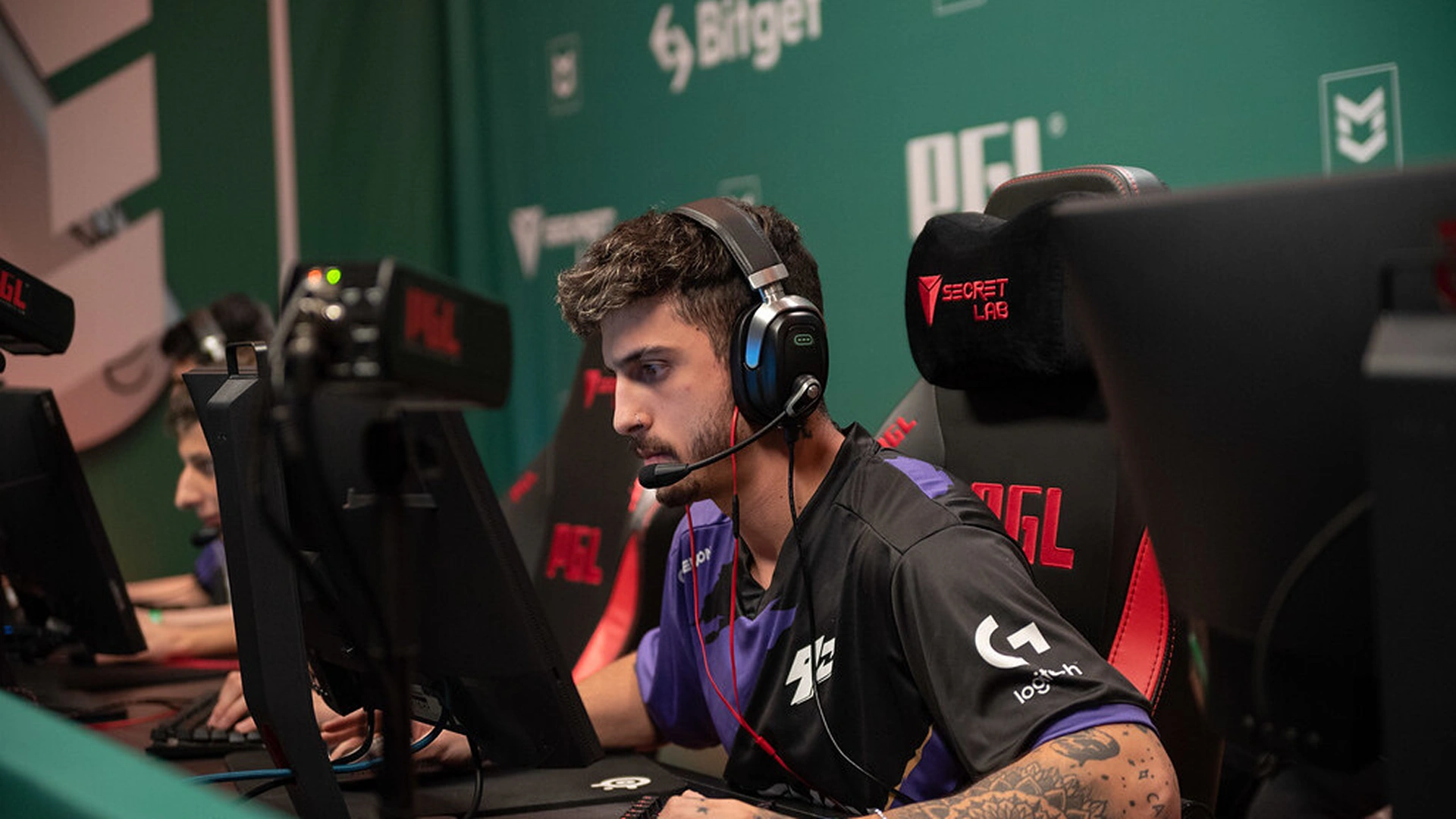
That piece of history is important because it shows that BIT did not arrive at 9z as an outsider carrying someone else’s blueprint. He already understood the organization, the region and, crucially, max. When 9z began making noise at the Cologne Major, max was unusually clear about the importance of having his former captain beside him again. “There are a lot of reasons, but there is one big one, which is very important. That is that BIT is with me,” he told HLTV. BIT had captained 9z before max became its in-game leader, and their reunion gave the current captain something difficult to manufacture: a coach who understood not only how he wanted to call, but how he had developed into the caller he was.
A team that had to learn tier-one Counter-Strike in public
The challenge facing BIT was not simply to improve a lineup. It was to accelerate its education. When 9z qualified for BLAST Open Rotterdam in early 2026, it marked a return to a top-level international event after spending much of their time fighting through the South American circuit.
That distance from the elite could be seen immediately in Rotterdam. Vitality crushed 9z 13-3 on Overpass and 13-5 on Nuke in their opening series. Against one of the best teams in the world, the difference in polish was brutal. Yet two days later, 9z eliminated MOUZ 2-0. For a developing side, those two results sitting beside each other told BIT almost everything he needed to know. The ability was already there, but accessing it consistently against elite opposition was another matter entirely.
BIT had experienced this problem before. During his early months coaching MIBR, he spoke about trying to add structure to a naturally aggressive team and finding a balance that would hold up against European opposition, where teams were sharper at collecting information, taking space and controlling situations. His value to 9z came partly from having spent years confronting the same regional problem from different angles. South American players could have enough aim, aggression and instinct to hurt anyone, but the higher they climbed, the more those qualities needed to exist inside a system capable of surviving long series against opponents who punished every unnecessary mistake.

By May, that education was producing results. At PGL Astana, 9z beat PARIVISION in their opener and then defeated MOUZ in a three-map series to reach the playoffs with a 3-0 record. The MOUZ victory was particularly revealing. 9z took Nuke, were comprehensively beaten on Inferno, then recovered to win Ancient 13-9. Instead of allowing one bad map against a superior opponent to decide the series, they reset and won the decider. It was the kind of composure that becomes routine for experienced tier-one teams and has to be learned by everyone else.
The results were starting to give BIT evidence that he could put in front of his players. 9z had beaten MOUZ in Rotterdam and beaten them again in Astana. Their domestic form was strong enough that, before Cologne, max said they had won five consecutive events in their home region. More importantly, the work behind those results had become obsessive. The captain said 9z had spent the two weeks before the Major grinding all day, with players reaching at least 100 hours while combining deathmatch, demos and scrims.
Cologne changed the scale of the story
The IEM Cologne Major 2026 was where BIT’s project stopped looking like a promising South American team and began looking like something much more dangerous. 9z opened Stage 2 by beating FlyQuest and Astralis to reach the 2-0 pool. Even at that stage, max described the lineup as potentially the best version of 9z the organization had ever produced. The remark carried more significance than it might have seemed to at the time, because 9z already had a respectable Counter-Strike history. What this lineup had not yet done was make that potential survive an entire Major.
They kept surviving. 9z moved through Stage 2 and into Stage 3, where the level of opposition rose again. Then came Vitality, the matchup that best captured how much the team had changed since Rotterdam. Less than three months after being demolished by them, 9z faced Vitality at the Major and won the series 2-1, recovering after losing Inferno 13-4 to take Mirage 13-9 and Dust2 13-11. The opponent had not become easier; 9z had become much harder to break.
One of the defining themes of 9z’s Major was learning how to strip the names and reputations away from the players sitting opposite them. max later described the mental block that could emerge when his team faced superstars such as ZywOo or donk. For a roster without years of tier-one repetition, that psychological problem is understandable: every round against a player of that stature can feel heavier than the same round against an ordinary opponent. BIT’s job was to help make those situations ordinary, because teams do not reach the elite by treating elite opponents as something exceptional.

That process was tested severely after the Vitality victory. 9z lost to Spirit and then Aurora, falling from 2-0 to 2-2 and leaving themselves one series away from elimination. The Major could easily have become another story about an underdog that produced one spectacular upset before reality caught up. Instead, 9z faced The MongolZ in the deciding series and beat them 2-0, winning both Inferno and Overpass 13-8. dgt produced a dominant performance, luchov followed closely behind, and the team that had entered the tournament with uncertain expectations suddenly had a place inside the LANXESS Arena.
There was genuine history attached to that qualification. 9z became the first non-Brazilian South American organization to reach the playoffs of a Counter-Strike Major, taking a region whose biggest international achievements had overwhelmingly been associated with Brazil and placing an Argentine-founded organization among the final eight. The achievement belonged to players from Uruguay, Argentina and Chile, but BIT’s presence gave the run another layer. A Brazilian veteran who had spent his own playing career carrying the region’s flag internationally was now helping a multinational South American lineup expand what the region could look like at the top level.
The quarter-final opponent could hardly have been more appropriate. FURIA had been South America’s clearest tier-one reference point for years, and 9z’s first Major playoff series placed them directly against the team whose position they were beginning to challenge. 9z took Dust2 13-8 and went into Mirage with a genuine opportunity to push the series in their favour, but FURIA recovered to win Mirage 13-9 before taking Overpass 13-6. 9z left Cologne in the quarter-finals, but they left having taken a map from FURIA in the arena after already beating Vitality and reaching the final eight of the biggest tournament of their lives.
For BIT, the significance of the Major was that his players now possessed memories that could not be argued away. They knew what it felt like to beat Vitality at a Major, to win an elimination series against The MongolZ, and to walk onto the LANXESS stage. The next time someone told them they lacked tier-one experience, the statement would still be technically true compared with the circuit’s veterans, but it would no longer carry the same psychological weight.
The run did not end when the Major did
The weeks after Cologne strengthened BIT’s case more than the Major alone could have. Surprise runs do happen in Counter-Strike. Maybe a favourable matchup, a player catching fire or a few close rounds can carry an underdog unusually far at one event. The best way to prove a breakthrough was not accidental was to keep winning once the adrenaline of the Major had disappeared.
9z did exactly that in China. At the XSE Pro League Guangzhou, they endured an uneven group stage, losing to EYEBALLERS and Alliance before stabilising their run. Once the playoffs arrived, however, 9z beat TYLOO, took revenge on Alliance and reached the grand final against PARIVISION. They then delivered one of their cleanest performances of the year, sweeping the final 3-0 with victories of 13-9 on Mirage, 13-10 on Inferno and 13-4 on Dust2. It was the first notable international LAN trophy in 9z’s history, and it came immediately after playoff appearances at Astana and the Cologne Major.

The sequence changed how 9z had to be discussed. They were no longer a South American team occasionally appearing at international tournaments; they were collecting results at them. They had beaten Falcons and MOUZ during their Astana run, reached a Major quarter-final after defeating Vitality and The MongolZ, and then won an international LAN in Guangzhou. BIT had taken a lineup that entered the year rebuilding its position and turned it into one capable of accumulating enough high-value results to sit alongside the most established teams in the world.
Even 9z’s owner began framing the transformation around the coach. After the team reached the XSE playoffs, Frankkaster wrote that BIT was “molding us to be a tier-one team” and added a line that captured the depth of their connection: “BIT is 9z.” The statement was emotional, but it was grounded in history. BIT had been the organization’s captain, had left to develop his coaching career elsewhere, and had then returned to help build the strongest international run 9z had ever produced.
Above FURIA, and eventually at #3
The rankings eventually caught up with the results. On August 3, 2026, the official Valve Global Ranking placed 9z fourth in the world with 1,847 points. Spirit, Falcons and MOUZ were the only teams above them. Vitality were fifth, NAVI sixth, and FURIA, the organization that had eliminated 9z from the Major, sat eighth. For a team that had spent the early part of the year rebuilding its VRS position after roster changes, the climb had become extraordinary.
It is difficult to establish responsibly from the available historical ranking archives whether 9z were literally the first non-Brazilian South American team ever to rank above FURIA, so that claim should not be treated as settled history. What the rankings did show clearly was that 9z had become the highest-ranked South American team in the world. For an organization from outside Brazil to sit four places above FURIA was a powerful shift in a regional hierarchy that had revolved around Brazilian teams for most of Counter-Strike’s modern era.
Eleven days later, the number beside 9z became even smaller. HLTV’s live implementation of the Valve ranking placed them at #3 on August 14 with 1,897 points. Only Spirit and Falcons stood above them, while MOUZ, Vitality, NAVI and FURIA were all behind. It was a live VRS calculation rather than an official monthly Valve snapshot, but it marked the highest point reached by this 9z lineup and completed a climb that had seemed almost absurd when the year began.
The ranking gave a different meaning to every difficult step that preceded it. Rotterdam’s 13-3 and 13-5 defeat to Vitality looked different after 9z beat the same core at the Major. The uncertain early months looked different after the Astana playoffs. The Major quarter-final looked different once 9z followed it with an international trophy. Individual results that could once have been dismissed as flashes of potential had accumulated into a body of work strong enough to put 9z among the top teams in the world.
What BIT’s 9z should be remembered for
Coaches in Counter-Strike are difficult to measure because so much of their work happens outside the server. A player leaves a tournament with kills, ratings, opening-duel numbers and clutches. A coach leaves with preparation that may never be visible, conversations that happened away from cameras and adjustments whose ownership is shared with the in-game leader. BIT’s impact on 9z is easier to recognise because the development of the team has been so closely tied to the areas where coaching matters most: structure, learning, confidence and the ability to turn painful experiences into useful ones.
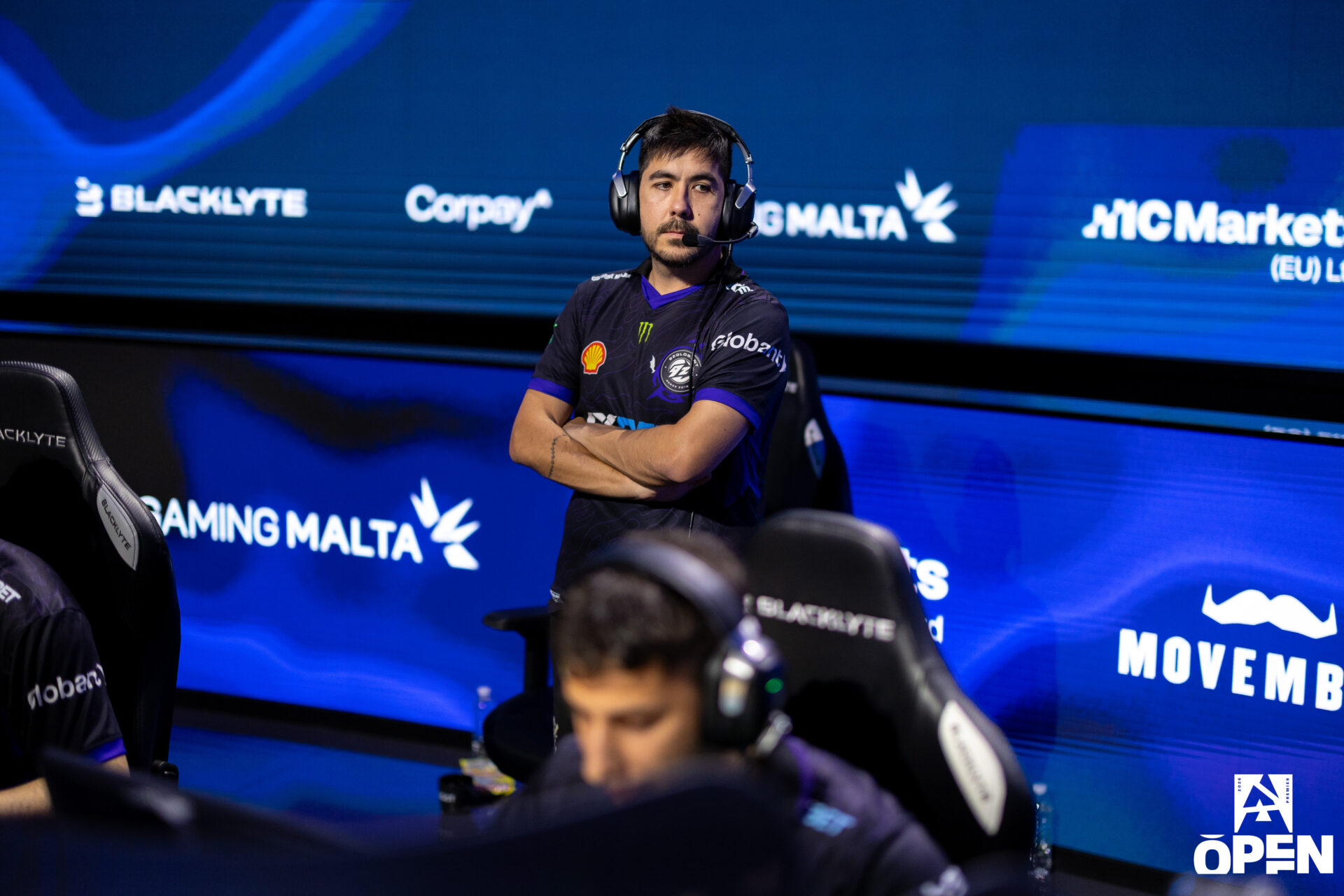
His relationship with max may be the clearest example. BIT did not replace the authority of his IGL; he strengthened it. max himself credited BIT as one of the central reasons the lineup was working, and that trust appears throughout 9z’s rise.There is another lesson in the speed of the transformation. Lack of experience is usually treated as a problem that only time can solve, yet BIT showed that good coaching can make the time more productive. He could not give luchov another three years of tier-one matches before Cologne, but he could make sure the matches he did play were studied properly.
He could not prevent Vitality from humiliating 9z in Rotterdam, but he could help create the environment in which the same opponent became beatable three months later. He could not remove the pressure of a Major elimination match, but he could help build a team capable of responding to it with a 2-0 victory. That is what makes BIT’s work with 9z worth more than the ranking itself.