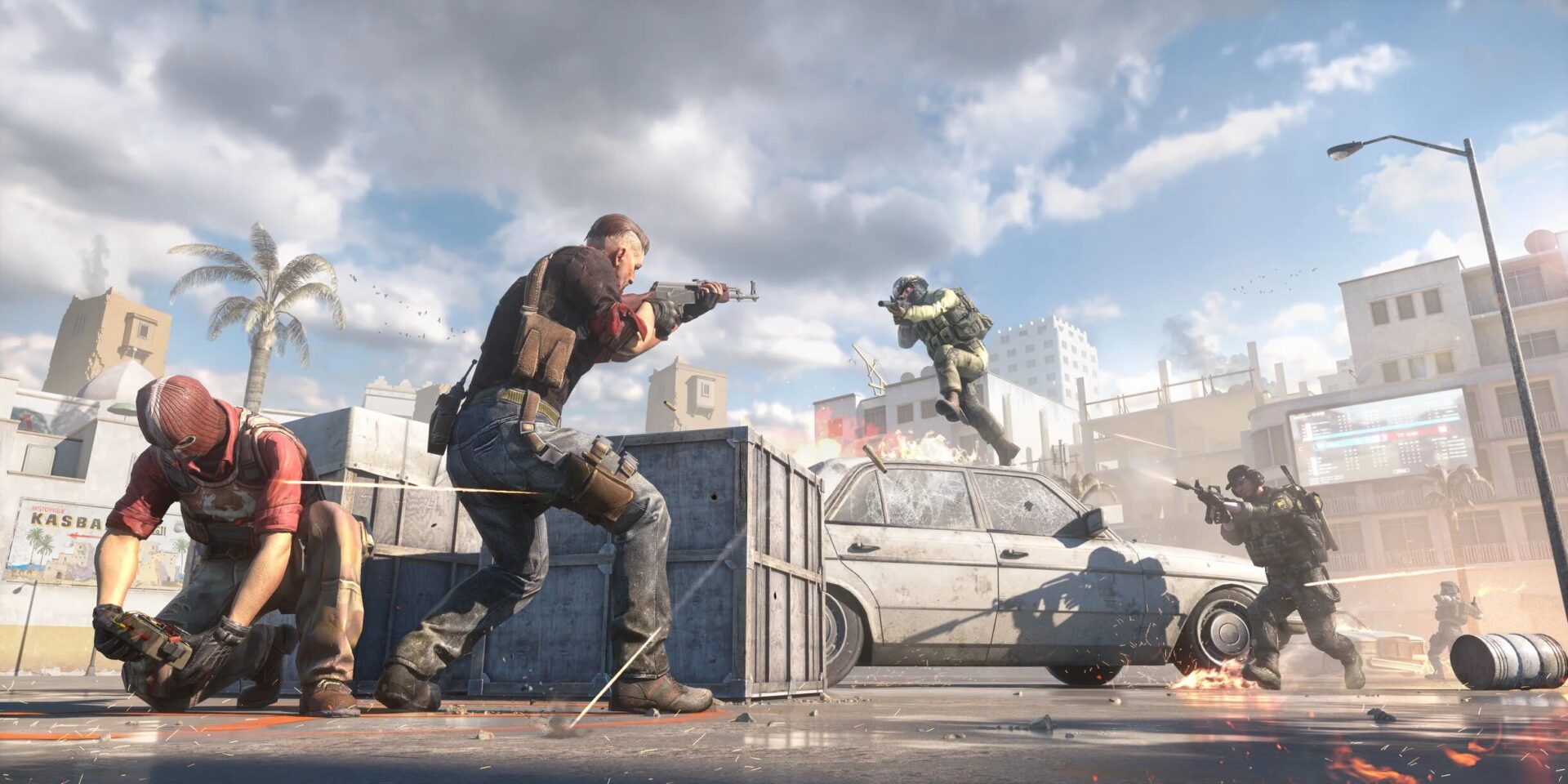

CS2 players have discovered that messages sent during matches can appear in publicly searchable profiles on third-party statistics website cstracker.gg. According to Dexerto, the feature attracted attention across the Counter-Strike community on August 27–28 after users began checking their own profiles and those of well-known players and streamers.
Some profiles contain hundreds or even thousands of recorded messages, with the service connecting them to individual matches. The discovery has raised privacy concerns among players, particularly because users do not need to actively create a cstracker.gg profile for match data connected to their Steam account to appear on the website.
cstracker.gg collects messages from CS2 demos
cstracker.gg is a third-party statistics service that processes Counter-Strike 2 match demos to create player profiles, match histories, leaderboards and additional statistics.
CS2 demos can contain text messages sent during matches, allowing the service to associate chat logs with individual players. Instead of requiring someone to manually download and inspect separate demos, cstracker.gg gathers the available information into one searchable profile.
The archive does not necessarily represent every message a player has ever sent in CS2. The available history depends on which matches and demos have been collected and processed by the service.

Players find thousands of old messages
The scale of some profiles helped the feature spread across the community. Dexerto highlighted an account containing more than 2,800 messages across 388 tracked matches, while users also began searching profiles belonging to professional players and streamers.
Oleksandr “s1mple” Kostyliev was among the recognizable names whose chat history was found and shared by users. The discovery showed that the same searchable system can apply to public figures as well as regular matchmaking players.

Streamer Ludwig Ahgren was another public figure whose messages attracted attention. After screenshots from his CS2 history began circulating, Ludwig responded on X and explained the context behind several of the messages users had found.
1. I streamed it
2. The guy was insanely racist
3. All donations go to my mods
4. The earth warrior fights for earth https://t.co/Q6HNmZTDPG— ludwig (@LudwigAhgren) August 28, 2026
The response demonstrated how quickly old messages can return to public attention once they are collected into an easily searchable archive.
Community raises privacy concerns
The feature quickly became a discussion point on Reddit and social media. Some users treated the archive as an entertaining way to look through old matches, while others questioned whether large amounts of chat history should be collected and presented in a single searchable location.
One of the main concerns is accessibility. Messages contained inside match demos were not necessarily impossible to find before, but locating them required significantly more effort. A searchable profile makes the same information much easier to collect and browse.
Other users argued that messages written in public match chat should already be considered public information. The debate has therefore focused not only on whether the data was accessible before, but also on the difference between information existing across individual demos and being aggregated into one profile.
Location estimates add another concern
Chat history is not the only cstracker.gg feature attracting attention. The service can also display an estimated player location based on latency measurements across known CS2 server locations.
cstracker.gg notes that these estimates are approximate and can be affected by routing, VPN use, distant servers and limited data.
Still, the combination of estimated location, aliases, Steam identifiers, match history and searchable chat messages has added another layer to the privacy discussion around the service.
Players can request removal of their data
cstracker.gg provides options for users who do not want their information displayed on the service. According to the website, players can contact the operators to request removal, correction or restriction of data associated with their profile.
Users are asked to provide identifying information such as the relevant Steam ID or profile link so the request can be reviewed. The service also provides a separate contact option for urgent reports involving issues such as doxxing or illegal content.
For now, Valve has not announced any changes related to the situation. The discussion instead highlights how information already contained inside CS2 demos can become significantly more visible once thousands of separate match records are collected into a searchable database.