
ESL have seriously tightened their rulebook for the second half of the 2026 season and effectively closed off two painful scenarios for the scene at once. The first is player behavior in internal TeamSpeak communication during matches. The second is a team withdrawing from a tournament after already accepting an invite or during the event itself.
The core of the changes is simple: internal team communication is no longer considered a “gray area,” and withdrawing from a tournament now hurts not only a team’s reputation, but also its money, invites, and future roster. For the professional scene, this is an important signal: the operator wants tighter control over both in-server discipline and clubs’ responsibility for their decisions.
TeamSpeak during a match now also falls under the rules
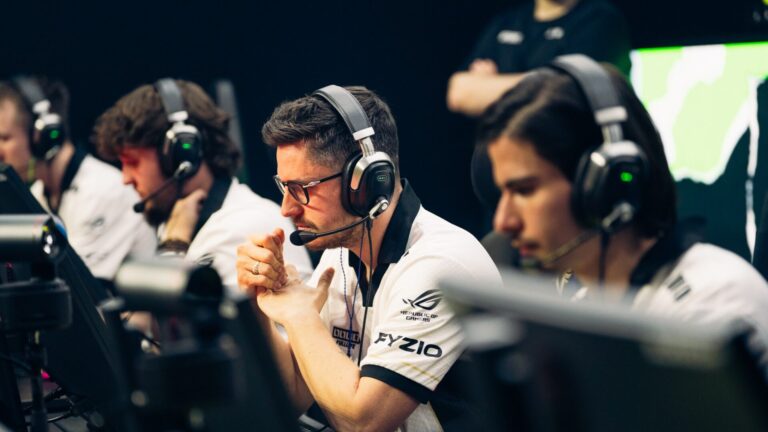
The loudest change concerns point 2.30, which directly states that communication between players of the same team during a live match is also governed by the general rulebook. In other words, the mere fact that the conversation takes place in a “closed” voice channel no longer means that it remains outside disciplinary control.
And here it is important to understand the emphasis correctly. The rulebook does not say that every emotional swear word is automatically punishable. But it directly prohibits hate speech and any discriminatory language in internal team communication. Tournament officials may issue a warning, a fine, or other disciplinary sanctions for such behavior. So now TeamSpeak is no longer a “private space,” but another zone of responsibility during an official match.
This is not just a cosmetic edit
On paper, the change looks like one new paragraph in a large rulebook, but in practice it seriously changes the logic of accountability. Previously, closed team communication was often perceived as something separate from the public space of a tournament. Now ESL are effectively saying the opposite: if you are in a match, behavioral norms apply inside the team as well, not just on stage, in chat, or in interviews.
For the scene, this also means a different level of risk. Any incident that previously could have been written off as “emotions inside the game” can now theoretically become grounds for formal punishment. And that is exactly why this edit looks not decorative, but very practical — especially for top teams, where tension in matches often goes through the roof.
Withdrawing from a tournament has now become much more expensive
The updated point 2.14.1 on tournament withdrawal looks no less harsh. If a team leaves an event during an active stage, between two stages, or after already accepting an invitation, it loses all prize money earned at that tournament. But the punishment does not end there.
For offline tournaments, an even harsher mechanism then kicks in: the team receives an invite ban for the next tournament of the same level if that invite would have come through VRS. If a slot had already been confirmed for a future event, the punishment is pushed to the following tournament instead. It is also specifically stated that such a team cannot play in the relevant qualifiers either, if those exist. At the same time, this ban does not affect wildcard invitations.
A separate blow — a financial penalty for replacement
Another important detail: the team that withdraws must pay the costs of its replacement. The rulebook directly states that this includes, at minimum, flights for the replacement team and other additional expenses caused by that replacement. So now refusing to participate is not just a lost opportunity, but also a direct financial loss.
And what is especially telling is that even in cases of a medical emergency or visa issues, tournament administration may remove not all consequences, but only some of them. The rule explicitly states that in such exceptional situations, other sanctions may be lifted, but not the compensation of replacement expenses. So even for a valid reason, a club may still be left with the bill for logistics.
The punishment can “move” together with three players
One of the most unpleasant parts of the new rule is the ban inheritance mechanism. If three or more players from a roster that received an invite ban move together to a new team before the punishment has expired or been served, the new team inherits that ban.
This is no longer just a sanction against a tag or organization, but a blow to the roster core itself. ESL are effectively closing the obvious loophole where a lineup could formally “restart” under a new brand and reset the consequences. Now that trick is accounted for in advance: if the core of the team remains the same, the punishment does not disappear either.
What this means for the scene
Taken together, these changes send a very clear message. First, the tournament operator wants tighter control over behavior inside matches, even if it does not enter the public space. Second, clubs are being directly shown that withdrawing from a tournament “without a big price” is no longer possible.
For teams, this means one thing: offseason decisions, logistics issues, visas, or internal conflicts now have to be calculated even more carefully. And for players, it means that even a “closed” TeamSpeak during an official match is no longer territory without rules. All of this makes the rulebook significantly harsher, but at the same time much more specific.
Direct control over internal team communication
The ESL rule update turned out to be far more serious than it may seem at first glance. The most resonant changes are direct control over internal team communication during matches and harsher punishment for tournament withdrawals, which can now include loss of prize money, loss of a VRS invite, a qualifier ban, and compensation of replacement costs.
The main conclusion is simple: the scene now has even fewer gray areas. TeamSpeak will no longer shield toxic or discriminatory communication, and pulling out of an event can now have a long and expensive aftertaste — not only for the organization, but also for the core of the roster itself.