

The Skin.Club Pick’em Challenge returns for the PGL Major Singapore 2026, giving Counter-Strike fans another chance to prove their predictions and compete for $25,000 in giveaways, including the legendary AWP | Dragon Lore. But building the perfect Pick’em isn’t just about knowing which teams are the strongest. It’s about understanding the tournament format, recognizing potential upsets, and making the right decisions at every stage.
With 32 teams competing from November 24 to December 13 and reward tiers requiring 45, 100, and 250 points, every prediction matters. Whether you’re aiming to qualify for Diamond or finish above everyone else, a successful Pick’em requires more than simply following the favorites.
Understand the Pick’em Format First
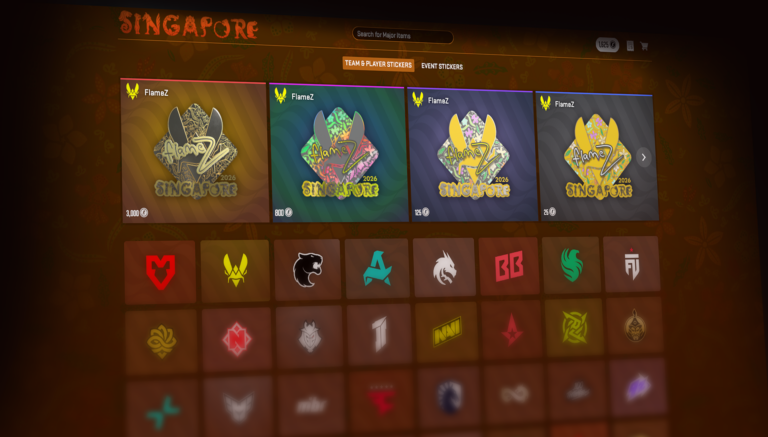
Before making predictions, it’s important to understand how the Skin.Club Pick’em works. During each of the three Swiss stages, players must select:
- Two teams to finish 3-0
- Two teams to finish 0-3
- Six additional teams to advance
For the playoffs, the prediction system changes:
- Four semifinalists
- Two finalists
- One tournament winner
Additional categories include Tournament MVP, Most Picked Map, and Most Frequent Skin. Every correct prediction contributes toward the reward tiers:
- Silver Tier — 45 points
- Golden Tier — 100 points
- Diamond Tier — 250 points
- Platinum Tier — AWP | Dragon Lore for the highest-scoring participant
The goal isn’t necessarily to predict every match perfectly. It’s to collect as many points as possible while avoiding unnecessary risks.
The Biggest Mistake: Trusting Rankings Too Much
One of the most common mistakes in Major Pick’em predictions is assuming that the highest-ranked teams will automatically perform as expected. The Singapore Major’s format makes that especially dangerous.
During Stage 1 and Stage 2, opening matches are played as BO1, while advancement and elimination matches are BO3. A single map can completely change a team’s tournament trajectory.
Even the strongest favorites can struggle because of:
- An unfavorable map veto
- A slow start against an aggressive opponent
- Poor individual performances
- An unexpected tactical approach
- Pressure in crucial rounds
A team might still be a clear favorite to advance despite losing its opening match. That’s why it’s important to separate teams likely to qualify from those capable of completing an undefeated run. Rankings provide a useful starting point, but recent results, map pools, and matchup history should carry just as much weight.
How to Pick the Perfect 3-0 Teams
Choosing two undefeated teams is one of the most challenging parts of the Pick’em. The obvious approach is selecting the two strongest teams in the tournament. However, being the strongest overall doesn’t guarantee three consecutive victories. When selecting your 3-0 candidates, prioritize:
- Consistency: Teams that regularly defeat lower-ranked opponents without unnecessary complications.
- Map Pool: Squads that can remain competitive across different maps and veto scenarios.
- Strong Openings: Teams that consistently start matches well, particularly important in BO1 games.
- Tactical Discipline: Rosters capable of adapting when their initial strategy isn’t working.
Another important factor is the potential Swiss bracket. A team might look like a comfortable 3-0 candidate on paper but encounter difficult opponents after its opening victories. Don’t avoid favorites simply because they’re popular. Instead, compare their chances of finishing undefeated with their chances of advancing overall.
If you believe a team is almost guaranteed to qualify but less likely to finish 3-0, placing it among your six advancing picks may be the safer decision.
How to Identify the Best 0-3 Candidates
Predicting which teams will finish without a single victory can be just as difficult as selecting undefeated squads.
Major tournaments regularly produce unexpected results, and even the lowest-ranked participants can steal a BO1 victory against stronger opposition. The best 0-3 candidates usually share several weaknesses:

- Limited experience against elite opponents
- Shallow or predictable map pools
- Inconsistent performances against comparable teams
- Difficulties adapting during matches
- Poor recent results
However, one characteristic matters more than the others: their ability to win at least one match. A weaker team with an explosive individual player or an unusual tactical approach might be dangerous in BO1, making it a risky 0-3 selection.
Instead, look for teams that struggle to produce convincing performances even against opponents of a similar level. With two 0-3 selections available, evaluate both candidates independently rather than automatically choosing the two lowest-ranked teams.
The Six Advancing Teams: Build Your Foundation
While undefeated and winless predictions attract the most attention, your six advancing selections provide an opportunity to build a reliable foundation. The most effective approach is to divide potential candidates into three categories.
- Strong Favorites
Start with teams that consistently reach the later stages of major international tournaments. Look for experienced rosters with strong individual talent, reliable tactical systems, and deep map pools. These teams don’t necessarily need to dominate every opponent. They simply need to win three matches before losing three.
- Consistent Contenders
Next, consider teams that might struggle against the tournament’s biggest favorites but regularly defeat opponents below their level. Consistency is particularly valuable in the Swiss format, where teams can recover from early defeats and still qualify. A 3-2 advancement counts toward your predictions just as much as a more comfortable qualification.

- One Calculated Underdog
Finally, consider including an underrated team capable of outperforming expectations. Look for squads entering the Major with strong recent results, improving individual performances, or favorable potential matchups.
An unexpected advancing team can help distinguish your Pick’em from other participants, especially if you’re competing for the highest overall score. However, don’t sacrifice reliable predictions just to be different. An underdog only provides value if you have a convincing reason to believe it can qualify.
Stage-by-Stage Strategy for PGL Major Singapore 2026
Every stage presents different challenges, meaning your approach should evolve as the tournament progresses.
Stage 1 — November 24–27
The opening stage brings together sixteen teams competing for eight places in Stage 2. With BO1 matches at the beginning, early upsets are a major concern. Strategy:
- Prioritize teams with reliable map pools.
- Consider recent LAN performances over reputation.
- Avoid treating opening-match favorites as guaranteed 3-0 candidates.
- Analyze potential 0-3 teams carefully.
Stage 1 rewards preparation. Teams that adapt quickly to their opponents can outperform expectations, while slow starters risk falling into difficult elimination matches.

Stage 2 — November 28 – December 1
Stage 2 introduces another sixteen-team Swiss competition, featuring eight advancing teams from Stage 1. The competition becomes more demanding, and teams arriving from the opening stage have already gained valuable tournament experience. Strategy:
- Consider performances from Stage 1 when evaluating advancing teams.
- Pay attention to teams showing tactical improvements.
- Avoid overreacting to one surprising result.
- Compare how teams perform against different levels of opposition.
A team that finishes Stage 1 with a convincing 3-0 record won’t necessarily repeat that success against stronger opponents.
Stage 3 — December 2–6
The third stage introduces a major format change: all matches are BO3. With sixteen teams fighting for eight playoff spots, consistency across multiple maps becomes significantly more important. Strategy:
- Prioritize teams with deep map pools.
- Focus on recent BO3 results.
- Evaluate how teams perform under pressure.
- Give greater weight to experienced contenders.
The longer match format reduces the influence of a single unexpected map result, although upsets remain possible. This is where teams with strong tactical preparation, adaptable strategies, and reliable individual performances become particularly attractive picks.
How to Predict the Playoffs
Once the Swiss stages are complete, the Pick’em enters its final phase. Participants must predict four semifinalists, two finalists, and the eventual Major champion. Unlike the Swiss stages, the playoffs follow a single-elimination bracket, with BO3 matches and a BO5 Grand Final. The key is to analyze the actual bracket rather than simply choosing the four strongest remaining teams.

Consider:
- Which teams could meet in the quarterfinals and semifinals
- Recent head-to-head results
- Strength across the active map pool
- Experience playing under arena pressure
- Ability to perform in longer series
A potential champion might face its most difficult opponent in the quarterfinals. Meanwhile, another contender could benefit from a more favorable path to the final. Your semifinalist and finalist predictions should reflect the bracket and remain logically consistent. For the tournament winner, prioritize the team with the strongest combination of individual firepower, tactical depth, and consistency in high-pressure matches.
Don’t Ignore the Bonus Categories
Team predictions are only one part of the Skin.Club Pick’em Challenge. Additional categories provide opportunities to increase your overall score, making them particularly important for participants targeting the Diamond and Platinum tiers.
Tournament MVP
The safest approach is to select an elite performer from a team you expect to reach the final stages of the Major. Individual statistics matter, but tournament success can also influence MVP recognition.
Most Picked Map
Instead of choosing your favorite map, examine how frequently different maps appear in professional vetoes. Consider the map preferences of participating teams and how potential matchups could influence selections. Remember that the category counts maps picked or assigned during the veto process, not only those actually played.

Most Frequent Skin
This category rewards attention to the cosmetic choices of professional players. Examine which skins are commonly used by players across different teams and weapon categories. Since the result is determined by appearances in recorded matches, skins used by players expected to compete in more matches may be worth considering. Don’t make these predictions randomly. Small advantages across several categories can become important by the end of the tournament.
Should You Follow the Crowd?
Popular predictions aren’t automatically bad predictions. If most participants expect a strong team to advance, there may be good reasons for that confidence. Choosing a different team simply to stand out can cost you valuable points. However, the Platinum Tier introduces another consideration.
Since the AWP | Dragon Lore goes to the highest-scoring participant, with a draw used to resolve ties, finding accurate predictions that others overlook can make a difference. The best strategy is to balance both approaches:
- Follow clear favorites when the evidence supports them.
- Avoid unnecessary risks in reliable advancement selections.
- Look for overlooked teams with convincing recent results.
- Use bonus categories to gain additional points.

Your goal is to outperform other participants through better predictions, not through different predictions for their own sake.
The Perfect Pick’em Formula
There is no guaranteed method for predicting every Major result, but a structured strategy can significantly improve your decision-making. For the Swiss stages:
- Two 3-0 teams: Consistent contenders with favorable matchups and strong early-game performances.
- Two 0-3 teams: Teams with limited map pools, weak recent results, and few realistic winning scenarios.
- Six advancing teams: A balanced combination of strong favorites, reliable contenders, and carefully selected underdogs.
For the playoffs:
- Four semifinalists: Teams with strong BO3 records and favorable bracket paths.
- Two finalists: The most complete and consistent contenders.
- One champion: A team capable of maintaining its level across multiple playoff series and a BO5 Grand Final.
Finally, revisit your bonus predictions using tournament statistics, map preferences, and individual player form.
Final Thoughts
The perfect Pick’em isn’t built by blindly following rankings or choosing the most unexpected outcomes. It’s built through preparation, consistency, and understanding how different tournament formats influence results. From unpredictable BO1 openings to decisive BO3 series and the Grand Final, the PGL Major Singapore 2026 will test every prediction you make.
With $25,000 in giveaways and the legendary AWP | Dragon Lore waiting for the highest-scoring participant, every point could make a difference. Make your predictions in the Skin.Club Pick’em Challenge, trust your analysis, and see whether you have what it takes to predict the Singapore Major better than anyone else.