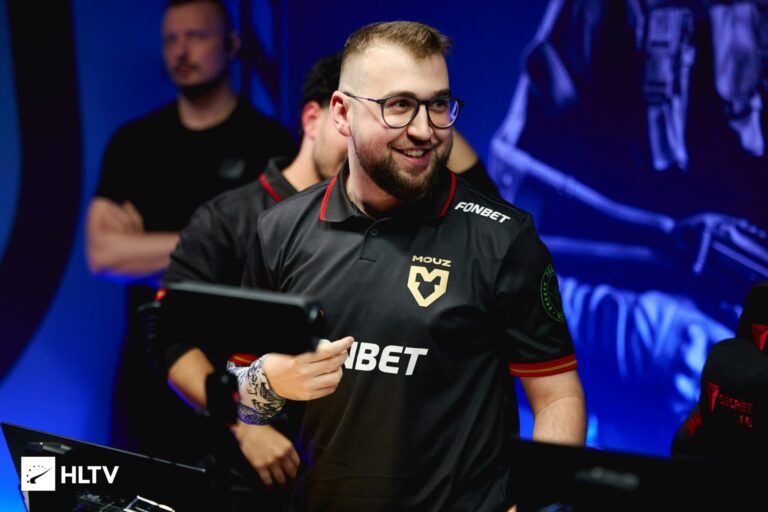

The race among top organizations to sign the youngest possible talents has become one of the main trends in the modern CS2 scene, but Thorin believes this approach is overrated. In his opinion, donk’s success has made clubs eager to find another superstar among teenagers, even though signing a player at 22–23 could be a much more reliable option, as they already have experience, an understanding of their own game, and the necessary maturity.
Clubs are trying to find the next donk
The emergence of donk and his rapid rise to the highest level demonstrated just how much potential a very young player can have. Such an example naturally encourages organizations to pay closer attention to academies, FACEIT, and young rosters, as discovering a future superstar before competitors can provide a huge competitive advantage.
The problem Thorin highlights is different: one exceptional case can easily be turned into a general rule. Even if a young player already has incredible aim at 16–18, that does not guarantee they are ready to consistently compete against the best teams in the world, adapt to a top team’s system, and withstand the pressure of the professional scene.

Thorin identified 22–23 as the optimal age
According to Thorin, a player who reaches the highest level slightly later could be a much more interesting prospect for clubs. By the age of 22–23, an esports player has already spent several years in a competitive environment, encountered their weaknesses, and developed an understanding of exactly what they need to improve.
Real players should be signed at 22–23. That’s the ideal age: by that point, a person already has some life experience, they’ve played a bit, lived a little, figured out the weaknesses in their game, and are mature enough to move to the next level.
At the same time, Thorin does not deny the talent of young players. His argument is more about how little information a club has when making such a transfer. A teenager may look mechanically incredible, but the organization still does not know how they will respond to a series of setbacks, a role change, a long season, or the need to adapt their own playstyle to fit the team.
Young newcomers’ results highlight the risk
Examples from 2026 partially support this argument. Eight players under the age of 20 joined top-20 teams during the year: s1zzi at 16, xelex and slaxejezzz at 18, mzinho and cmtry at 19, Tikuak at 17, DarkMeister at 18, and Rkzinho at 17.
However, only three of those eight players are still competing for top-20 teams. This statistic alone does not prove that younger players are worse, but it clearly demonstrates the risk of this approach: an impressive start and a high level of mechanical skill do not necessarily mean a player will immediately establish themselves among the elite.

Aim alone is not enough at the top level
This is where the main distinction lies between a promising talent and an established professional player. At lower levels, individual mechanics can compensate for a huge number of weaknesses, but in the top 20, positional discipline, communication, understanding of the system, consistency, and the ability to adapt quickly to opponents become crucial.
Therefore, the statement that teenagers are often simply “great because they can shoot well” does not mean they cannot become superstars. Rather, it emphasizes that at this age, a club is primarily buying potential, while an older player’s actual profile and the role they can fulfill at the highest level are already much clearer.
donk may remain an exception
After the emergence of a player like donk, the desire to find the next phenomenon is entirely understandable. If an organization signs a future superstar before their breakthrough, it secures a player for years to come and potentially saves enormous amounts of money on a future transfer.
But this is precisely where the risk of the current trend lies: clubs may begin evaluating every young talent through the lens of one extraordinary example. donk has not necessarily marked the beginning of a generation of dozens of similar players — he may simply remain an exception that cannot be replicated by searching for the best 16-year-old aimer.
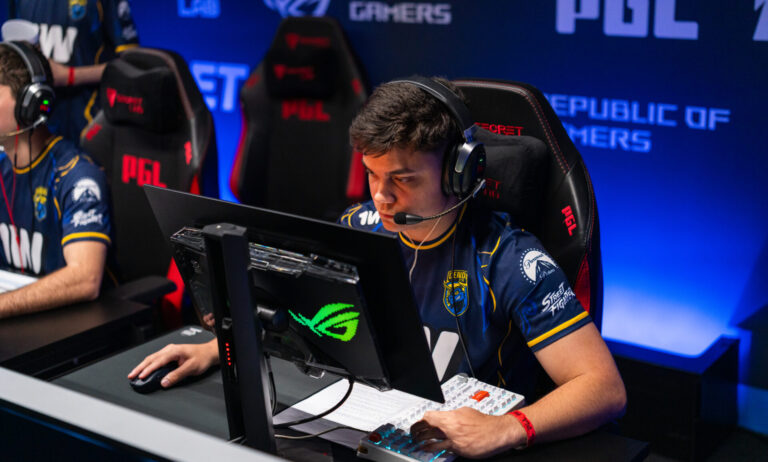
Age does not guarantee success, but it provides more information
Thorin’s argument does not suggest that young players should never be signed. The point is more about balancing risk: at 17–18, a club sees enormous potential but still has very little evidence that this potential will translate into success at the highest level.
At 22–23, a player can still continue developing, but an organization already has significantly more information about their character, consistency, game sense, and ability to work within a team. And if the current race for teenage talent continues, the results of the coming seasons will show whether CS2 is truly entering an era of increasingly younger superstars or whether donk’s example has made clubs place too much faith in an exception.