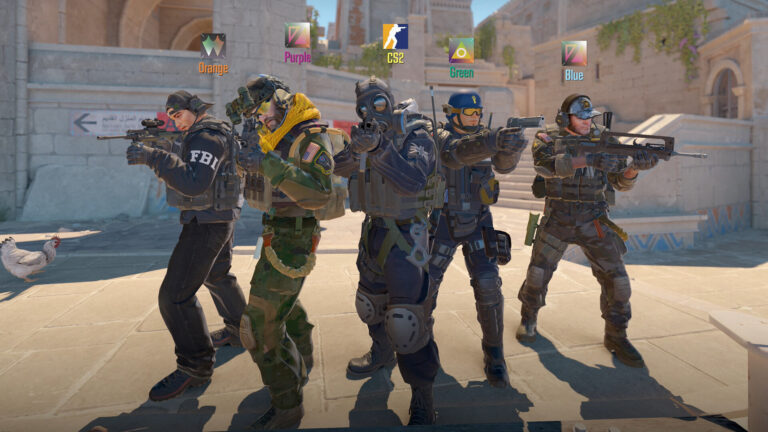
It looks like the release of AnimGraph 2 in CS2 brought not only new animations and technical fixes, but also a very noticeable performance boost. The first user tests show improvements in average FPS, 1% lows, and a reduction in packet size in Premier. And if the gain is already visible on a powerful PC, then on mid-range and weaker systems the effect may turn out to be even more noticeable.
The first tests after release look encouraging
After the full launch of AnimGraph 2, part of the community immediately chose not to argue about “feel,” but to measure actual numbers. It is exactly these early measurements that are now shaping the first impression of how the patch has really affected the game.
According to one of the tests on a system with a 9800X3D + RTX 5070, the author recorded roughly a 5% improvement in both average FPS and 1% lows. For an already optimized PC, that is a very solid result, because on hardware like this every extra percent is harder to gain than on lower-tier configurations.
What the FPS measurements showed
In the cited test on Anubis, in offline mode without bots, the results look like this:
- Average FPS: 842.1 → 890.2
- 1% low average FPS: 392.8 → 415.3
So this is not just about an increase in the “average temperature in the hospital,” but also about improved frame stability. And in CS2, 1% lows are often more important than raw average FPS, because they better show how smoothly the game behaves in the micro-moments where gunfights are decided.
Packets in Premier also became lighter
Another effect after AG2 looks no less interesting — a reduction in average packet size in Premier.
According to the published measurements:
- Sender: 741 bytes → 491 bytes
- Receiver: 757 bytes → 687 bytes
In percentage terms, that is approximately:
- Sender: -33.69%
- Receiver: -9.25%
And that is already a very serious change. Smaller packet size does not automatically mean “perfect input” or the magical disappearance of all network issues, but it is a good signal in the direction of more efficient operation of the game’s networking side. Especially for Premier, where any issues related to data transmission immediately become a painful topic for the community.

Why this matters not only for top-end hardware
It is also worth paying attention to the opinion of the testers themselves: if a top-tier PC that was already well optimized is showing about a 5% gain, then on mid-end or low-end systems the difference could be even greater.
That is logical. Strong hardware usually already “brute-forces” most of the game’s problems simply through surplus power. But on weaker configurations, any optimization of the engine, animation system, or network logic is felt much more strongly. That is exactly why, in the coming days, the community will most likely bring even more tests from much more varied systems.
For now, these are still early results, but the trend looks positive
Of course, it is important not to fall into euphoria too early. This is still not a global laboratory study across hundreds of configurations, but the first user measurements. Results may vary depending on the map, mode, drivers, graphics settings, and the overall condition of the system.
But even with that caveat, the overall direction already reads quite clearly: AnimGraph 2 appears not only to have “not broken performance,” as some players feared, but on the contrary may have genuinely helped make the game lighter both for rendering and for the networking side.
Valve seem to have hit more than just the animations
The first tests after the release of AnimGraph 2 give CS2 a fairly rare reason for cautious optimism. Players are already reporting FPS gains, better 1% lows, and a noticeable reduction in packet size in Premier.
For now, this is only the first wave of measurements, but it already shows the main point: the update may have improved not only the visual side of the game, but also its technical foundation. And if the next tests confirm this trend, AG2 may very well turn out to be one of the most useful technical updates CS2 has received in recent times.