For much of Counter-Strike’s history, the identity of a team was inseparable from the country it represented. Ninjas in Pyjamas were not simply an organization with five talented players. They were Sweden. Virtus.pro embodied Poland, VeryGames and LDLC carried French Counter-Strike, while Luminosity and SK Gaming became symbols of Brazil’s arrival at the top of the game. A match between NiP and Virtus.pro could be understood as Sweden against Poland. Astralis against SK was Denmark against Brazil.
That connection has weakened considerably. The modern elite scene is increasingly built around international teams assembled from the global talent market. Organizations now search across countries for the best available in-game leader, AWPer, entry rifler or anchor rather than limiting themselves to one national player pool.
International rosters have raised the competitive ceiling of many organizations, but they have also diluted one of Counter-Strike’s most accessible narratives. The Esports Nations Cup, or ENC, is now attempting to bring that missing element back.
National Counter-Strike before national teams
There is an important distinction between a national roster and an official national team. Most of the famous national lineups from early CS:GO represented private organizations rather than their countries. NiP did not enter tournaments as the official Swedish national team, nor did Virtus.pro formally represent Poland. Nevertheless, the players shared a nationality, language and domestic competitive background, allowing supporters to treat them as informal national representatives.
Actual country-based Counter-Strike was not an entirely new concept. ESL previously operated the European Nations Championship between 2004 and 2010, with national teams competing across several esports, including Counter-Strike. The event distributed more than €200,000 during its existence and held finals alongside major gaming conventions. Years later, the World Electronic Sports Games recreated part of that atmosphere by requiring teams to use same-nationality rosters during its early editions. The modern Esports Nations Cup is a separate project, but the ENC initials carry an accidental historical resonance. Counter-Strike has already experienced periods in which national selection was treated as a legitimate competitive format. What disappeared was not the idea itself, but its regular place within the elite calendar.
The foundation of National CS: 2012 to 2014
When CS:GO’s professional scene began taking shape in 2012, the leading teams were overwhelmingly national or language-regional lineups.Sweden became the first dominant power of the CS:GO era. NiP’s all-Swedish lineup of GeT_RiGhT, f0rest, Xizt, friberg and Fifflaren produced an extraordinary 87-map unbeaten run on LAN between 2012 and 2013. The streak helped establish NiP as the game’s first great team and gave the young esport an unmistakable national powerhouse.

France developed its own rivalry between VeryGames, Titan, LDLC and other combinations of the country’s leading players. Poland’s Virtus.pro roster remained one of the most recognisable and durable national cores in esports. Fnatic built another Swedish championship side, while Denmark’s growing domestic system gradually produced the players who would later form the foundation of Astralis.
The earliest Major results reflected this structure. Fnatic’s Swedish lineup won DreamHack Winter 2013. Virtus.pro’s Polish roster won EMS One Katowice 2014. NiP won ESL One Cologne 2014, and LDLC’s French lineup closed the year by winning DreamHack Winter.
The first four CS:GO Majors therefore produced four champions from three distinct national scenes: Sweden, Poland and France. More remarkably, each of the first ten CS:GO Majors, from DreamHack Winter 2013 through the ELEAGUE Major Atlanta in 2017, was won by a single-country roster.
The national superteam era: 2015 to 2017
Between 2015 and 2017, national roster building became even more deliberate. Organizations were no longer merely retaining groups of players who happened to share a nationality. They were attempting to consolidate the best players from a country into domestic superteams.
Fnatic’s Swedish lineup won consecutive Majors at ESL One Katowice and ESL One Cologne in 2015. EnVyUs then rebuilt around French stars and won DreamHack Open Cluj-Napoca. In 2016, Brazil’s Luminosity Gaming and SK Gaming won consecutive Majors with the FalleN-led core. Astralis gave Denmark its first Major at the beginning of 2017.

These teams represented different national schools of play. Communication was naturally easier. Players could use their first language during fast, high-pressure situations in which fractions of a second mattered. Shared cultural references made relationships easier to develop, while domestic LANs and lower-level competitions created networks through which young players could reach established professionals.
However, the system also contained an unavoidable limitation: every country had a finite talent pool. A national scene could produce several excellent riflers but no elite in-game leader. It could have two world-class AWPers but lack a reliable support player. The five most famous players were not necessarily the five players who created the most balanced roster. Once the best domestic combinations had been attempted, organizations had few alternatives other than repeating the same roster shuffle.
Kinguin and the first deliberate international experiment
Mixed-nationality teams had existed before 2015, especially within linguistically connected regions. Several CIS teams, for example, included players from different countries who shared Russian as a competitive language. French-speaking teams occasionally included Belgian players.
However, Team Kinguin’s 2015 project is generally recognised as the first prominent attempt to build a deliberately international, pan-European CS:GO roster around English communication. The original lineup brought together Maikelele and SKYTTEN from Sweden, rain from Norway, fox from Portugal and ScreaM from Belgium. It was not constructed around a national core or an existing regional identity. Its central argument was that talent and role suitability should matter more than passports.
The project was initially met with considerable scepticism. Communication was expected to be slower, tactical systems more difficult to develop and personal relationships harder to maintain. At the time, speaking English inside a team was still viewed as a significant competitive disadvantage compared with opponents communicating in their native language.
Kinguin nevertheless reached the playoffs of ESL One Cologne 2015. After the roster was acquired by G2, it reached the semifinals of DreamHack Open Cluj-Napoca later that year. FaZe Clan subsequently purchased the lineup in January 2016, creating the organizational foundation for Counter-Strike’s first lasting international superteam project.
FaZe took the torch forward
FaZe gradually transformed the Kinguin experiment into an international all-star team. Rather than preserving a fixed national or regional core, the organization recruited according to reputation, role and competitive need. Over time, players such as karrigan, NiKo, GuardiaN and olofmeister joined rain within a roster containing some of Europe’s most accomplished talent.
The 2017 version of FaZe won multiple major events and reached the final of the ELEAGUE Major Boston in January 2018. Although Cloud9’s American roster denied FaZe the championship, the run showed that an English-speaking international team could be one round away from winning Counter-Strike’s most important trophy. FaZe’s significance extended beyond its results. It normalized the idea that an organization could replace a player without searching within one domestic ecosystem. A Danish in-game leader could direct a Norwegian entry, a Slovakian AWPer, a Swedish rifler and a Bosnian superstar. Roles that were difficult to fill domestically could be filled through the wider European market.
The final validation arrived at the PGL Major Antwerp in 2022. FaZe’s lineup of karrigan, rain, broky, Twistzz and ropz represented Denmark, Norway, Latvia, Canada and Estonia. By defeating NAVI in the final, FaZe became the first deliberately international roster to win a Counter-Strike Major. Kinguin had introduced the possibility in 2015. FaZe proved seven years later that it could produce the best team in the world.
Why organizations started to go international
Internationalization did not happen immediately because the national model remained highly competitive. Astralis provides the strongest evidence that national teams did not disappear because they were tactically inferior. The all-Danish lineup won four Majors, including three consecutively between 2018 and 2019. Cloud9 won the Boston Major with an American lineup. NAVI reached the top with a Russian-speaking regional core. Brazilian teams continued circulating players through a large domestic system. Finnish ENCE reached the IEM Katowice Major final in 2019 with an all-Finnish lineup.
However, the difference was that international organizations possessed more ways to solve their problems.A Danish organization could remain Danish because Denmark had enough players, coaches and leaders to support multiple elite teams. Smaller countries could not do the same. A world-class player from Estonia, Latvia, Israel, Slovakia or Bosnia and Herzegovina was unlikely to find four equally strong domestic teammates covering every necessary role.
International teams allowed those players to enter championship-level projects without waiting for their countries to produce an entire generation simultaneously. As English became more common among younger players, one of the greatest barriers also weakened. Players who had grown up competing in FACEIT pugs, international academy teams and multinational online leagues were far more comfortable using English than the professionals who entered CS:GO in 2012.
Scouting technology, statistical databases, demo analysis and online competition also made talent easier to discover. Organizations no longer needed to rely primarily on personal relationships within a local scene. A promising player in a smaller region could be evaluated against international opposition before ever joining a major organization.

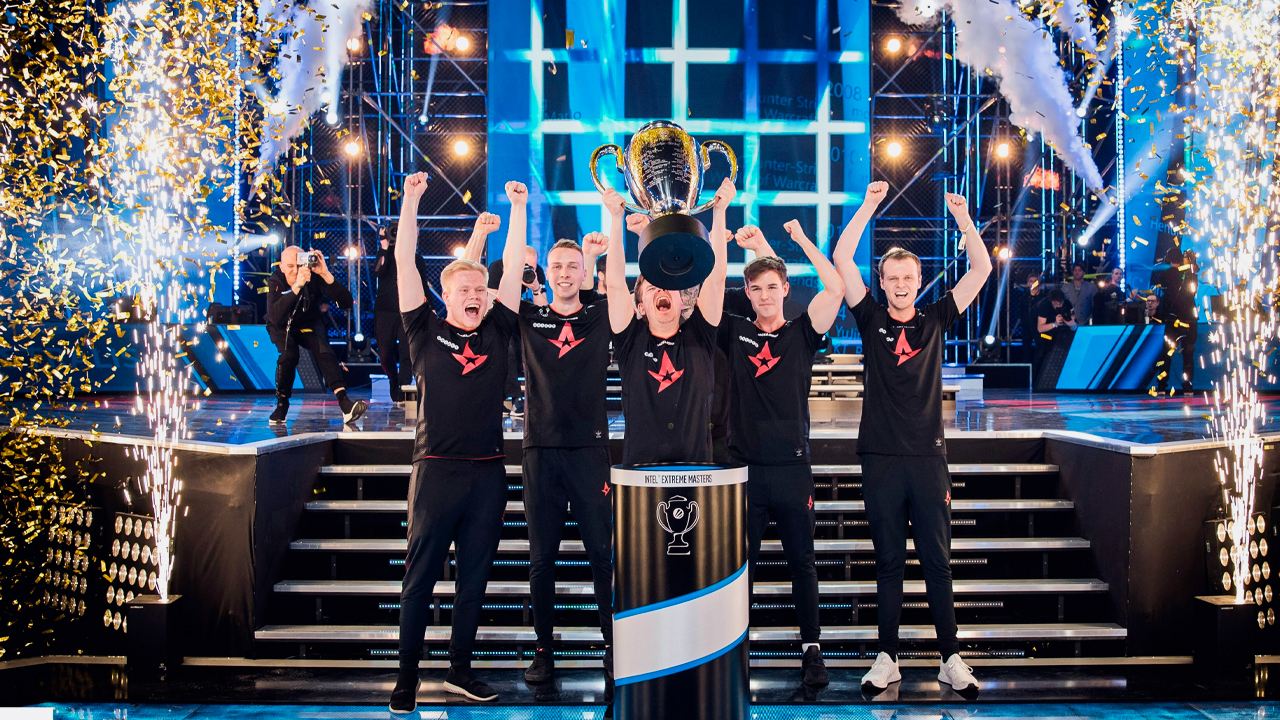
Astralis’ dominance also accelerated the search for international solutions. Between 2018 and 2019, the Danish team did not merely win three consecutive Majors; it established a standard that most national scenes could not reproduce. Astralis had an elite tactical leader in gla1ve, a world-class AWPer in device, highly adaptable riflers, specialist site anchors and a coaching structure capable of turning preparation, utility usage and role discipline into consistent advantages. Opponents could no longer expect to defeat the best team in the world simply by assembling the five most individually talented players available within one country. They needed a complete roster in which every tactical responsibility was covered at an elite level.
For many organizations, finding that combination domestically was impossible. A country might possess a star rifler capable of competing with Astralis but lack an experienced in-game leader, a reliable defensive anchor or an AWPer suited to a structured system. Astralis therefore demonstrated both the strength and the limitation of the national model: Denmark could dominate with five Danish players because its unusually deep talent pool contained almost every piece required for a championship lineup. Organizations without that depth increasingly looked beyond national borders, recruiting the specific leader, AWPer, support player or anchor they were missing. Going international became a way to build rosters capable of matching Astralis role for role rather than repeatedly reshuffling the same limited group of domestic players.
How much did teams actually improve?
FaZe is the clearest success story. The organization spent years refining its international model, reached the Boston Major final and eventually won Antwerp in 2022. Its achievement was larger than one trophy. It eliminated the final argument that an international lineup could compete at the highest level but would always lose to a more cohesive national team when the pressure peaked.
Vitality entered Counter-Strike in 2018 as the leading French project, built around ZywOo and several experienced domestic players. The team achieved major tournament success but repeatedly encountered roster limitations within the French-speaking market. In January 2022, Vitality signed the Danish trio of dupreeh, Magisk and coach zonic, publicly committing itself to an international future. The transition was not immediately smooth, but it eventually produced the organization’s first Major title at the BLAST Paris Major in 2023.

Vitality continued evolving internationally by adding British rifler mezii and later Estonian star ropz. The organization won both CS2 Majors held in 2025, in Austin and Budapest, demonstrating that the move was not merely a short-term attempt to surround ZywOo with decorated players. It became the basis of a sustainable global recruitment system.
G2 spent several years cycling through combinations of leading French-speaking players. In 2019, it began moving away from that restriction by signing Serbian-Bosnian cousins nexa and huNter-. The roster later became fully international and won IEM Katowice and IEM Cologne in 2023. G2’s international era has not produced a Major title, which is an important reminder that access to more talent does not guarantee perfect recruitment. It has, however, allowed the organization to remain a major contender without depending on the health of the French scene.
NAVI’s historic lineups were regional rather than strictly national, generally combining Ukrainian and Russian players through a shared competitive language. In June 2023, the organization moved to a broader international structure by signing Finland’s Aleksib, Lithuania’s jL and Romania’s iM. That roster won the PGL Major Copenhagen in March 2024 and later reached six consecutive elite grand finals during the year. The achievement showed that even an organization with one of Counter-Strike’s strongest regional identities could rebuild successfully around English communication.
The current state of national Counter-Strike
International teams have become the default structure at the top of CS2, particularly among large European organizations. FaZe, Vitality, G2, MOUZ and NAVI have all demonstrated that multinational rosters can win major trophies or remain among the world’s leading teams. The old assumption that native-language communication was required for championship-level Counter-Strike no longer holds.
However, national Counter-Strike has not vanished. Aurora continued to field a Turkish lineup up until the Cologne Major. The MongolZ reached the Austin Major final in 2025 with five Mongolian players, providing one of the clearest modern examples of a domestic ecosystem producing a world-class team. Brazilian organizations continue to rely heavily on their national scene, while teams like BetBoom still field Russian talents.

The difference is that national construction is now a strategic choice rather than the natural starting point. Countries with large, active development systems can still produce balanced elite lineups. Smaller scenes may produce one or two exceptional players, but those players usually need international teams to reach their full competitive potential.
National identity has consequently moved down the structure. It remains visible in academies, grassroots tournaments, regional fan communities and the way players are discussed, but it is less visible in the composition of the biggest club teams. A Latvian fan may support broky and an Estonian fan may follow ropz, but neither has traditionally had a realistic elite national team to support. ENC is designed to change that.
What the Esports Nations Cup is offering
The inaugural Esports Nations Cup CS2 tournament will take place in Riyadh from November 10 to November 15, 2026, featuring 24 national teams and a $1.32 million prize pool. Planned as a biennial competition, ENC will use country rankings and regional qualifiers rather than direct invitations, with national strength calculated through the Valve Regional Standings points of each country’s leading players.
Its roster rules are designed to ensure that teams are genuine national selections rather than existing club lineups competing under a flag. Citizenship determines eligibility, players can represent only one country per season, and no more than three members of a five-player roster may come from the same organization. This forces coaches to combine players from different teams, tactical systems and competitive environments.
ENC has also announced a $20 million development fund for its wider national-team programme. The money is intended to support coaching, boot camps, exhibition matches, community events and domestic development, giving the competition the potential to create year-round national structures rather than existing only during the main tournament.
Can ENC truly revive national Counter-Strike?
ENC cannot restore the professional structure of early CS, nor should that be its objective. International rosters have solved genuine competitive problems by allowing elite players from smaller countries to reach the highest level and helping organizations construct stronger role combinations. Teams such as FaZe, Vitality and NAVI have demonstrated that international lineups can build chemistry, tactical sophistication and lasting identities. Club Counter-Strike is therefore unlikely to return to an era in which almost every major organization represents a single country.
What ENC can revive is the emotional layer that disappeared during that transition. National competition offers narratives that international clubs cannot produce as naturally. Sweden against Denmark requires little explanation, while Brazil against the United States carries meaning beyond the specific players involved.
It can also reconnect isolated stars with their domestic scenes. Estonia could build around ropz, Latvia around broky and other smaller countries around professionals who normally compete across different international organizations. Younger players would be able to watch elite competitors represent the same national scene rather than appearing only as part of a multinational club.
Its success will ultimately depend on prestige rather than money. Players must want to participate despite demanding club schedules, organizations must release them, coaches must receive enough preparation time and broadcasters must explain the history and identity behind each national scene. ENC will not recreate the exact era in which NiP represented Sweden, Virtus.pro represented Poland and SK represented Brazil throughout the season. It can, however, give national Counter-Strike a new purpose.