
Valve Anti Cheat, commonly referred to as VAC, has been part of Counter Strike for over twenty years. Most players interact with it only through system messages. A match ends unexpectedly due to VAC Live. A session fails verification. An account receives a ban days after a suspicious game. The messages are brief. The system behind them is not.
VAC is not a single program running in the background. It is a collection of detection and enforcement tools that have evolved alongside the game. To understand why it behaves the way it does, it helps to look at how its different parts function together.
What VAC is and what it’s not
VAC stands for Valve Anti Cheat and operates across Steam multiplayer titles, including Counter Strike 2, Counter Strike Global Offensive, and Dota 2. When it first launched in the early 2000s, it functioned primarily as a signature scanner. The idea was straightforward: identify known cheat software and remove the accounts using it. Over time, that simple framework expanded into a broader detection ecosystem. VAC is designed to protect competitive integrity within the game client itself. It is not built to scan an entire computer system or monitor unrelated activity. That distinction shapes both its strengths and its limitations.

Signature detection and why bans are delayed
At the foundation of VAC is signature detection. When a cheat is identified, Valve analyzes its code and generates a unique digital fingerprint. That fingerprint becomes part of VAC’s database. When the game launches, VAC checks memory and active processes against known signatures. If there is a match, the account is flagged internally.
What often confuses players is the timing. Detection does not usually result in an immediate ban. Instead, enforcement is delayed and grouped into what are commonly referred to as ban waves.
The reasoning is strategic. Immediate bans would make it easier for cheat developers to identify exactly which version or feature triggered detection. By delaying enforcement, Valve makes reverse engineering more difficult and collects data on how widely the cheat has been distributed. This approach can create frustration, especially when suspected cheaters remain active for a period of time. From a systems perspective, however, it slows the feedback loop for those creating the software.
What VAC monitors during play
Modern VAC extends beyond static file scanning. It looks for irregular interaction with the game process. This includes injected programs attempting to modify memory, unauthorized access patterns, altered game files, and known third party software running alongside Counter Strike 2. The focus is narrow by design. VAC primarily monitors what directly interacts with the game environment.

Unlike kernel level anti-cheat systems used in some other competitive titles, VAC traditionally operates in user mode. It does not install deep system drivers with broad operating system access. That choice reduces system intrusion and compatibility risks. It also means that certain advanced or hardware assisted cheats may require additional detection layers.
VAC live and immediate match intervention
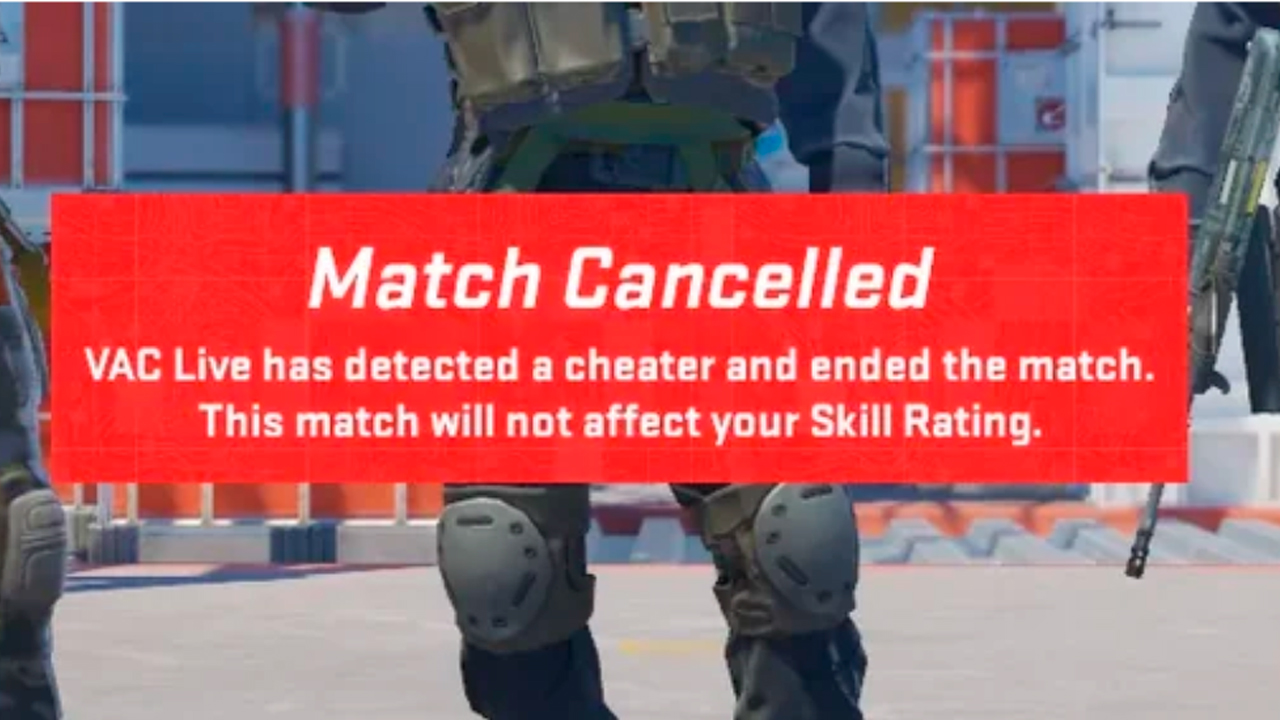
Counter Strike 2 introduced VAC Live, adding a real time enforcement component. Under VAC Live, confirmed cheating behavior during a match can trigger immediate action. The match is canceled and the player is removed before the game concludes. For those in the server, it appears as an abrupt end accompanied by a system notification.
This represents a noticeable shift from the older model that relied almost entirely on delayed bans. While not every suspicious case results in instant cancellation, the addition of live enforcement reduces the number of compromised matches that continue to completion. It does not replace traditional VAC mechanisms. It sits on top of them.
Trusted Mode as preventative control
Alongside detection tools, Counter Strike 2 operates in Trusted Mode by default. This mode limits how external applications interact with the game client. If a third party program attempts to hook into the game process or inject code, Trusted Mode can block that interaction or prevent the session from launching normally. In some cases, it may trigger further review.

Rather than identifying cheats only after they execute, Trusted Mode attempts to narrow the surface area through which they can operate. It is less visible than VAC Live but serves an important preventative function.
VACnet and behavioral pattern analysis
Signature scanning alone is not enough in a modern competitive environment. During the later years of Counter Strike Global Offensive, Valve introduced VACnet, a machine learning system built to analyze gameplay behavior. Instead of looking at software, VACnet evaluates how players perform inside matches. Reaction timing, crosshair tracking, shot distribution, and other statistical markers are compared against large datasets of human play.
The objective is not to ban automatically based on one unusual moment. It is to identify consistent patterns that differ meaningfully from normal performance. Subtle cheats designed to appear legitimate are more difficult to detect through code alone. Behavioral analysis adds another layer.
VACnet contributes data to the broader enforcement pipeline rather than functioning as a standalone judge.
Why cheating persists
Even with multiple detection layers, no system eliminates cheating entirely. Private cheats distributed in limited circles may avoid signature databases for a period of time. Hardware based solutions introduce additional complexity. Developers adjust quickly when public bans reveal vulnerabilities in their tools.

Valve’s decision to avoid deeply invasive kernel drivers places limits on how aggressively the system can monitor low level processes. That trade off reflects a balance between competitive enforcement and system stability. For players, the result is an environment that continues to evolve. Detection improves, bypass methods adapt, and the cycle repeats.
The broader structure
It is more accurate to think of VAC as a defensive stack rather than a single mechanism. Signature scanning identifies known software. Ban waves delay feedback to cheat developers. VAC Live handles real time confirmed cases. Trusted Mode restricts external interaction. VACnet analyzes behavioral anomalies. Server side validation checks monitor in game consistency.
Individually, each component has limits. Together, they create overlapping layers designed to reduce both obvious and subtle forms of cheating. The system is not static. It adjusts as threats change.
What comes next
Predicting the next stage of VAC’s development involves some speculation. Real time detection may expand further. Machine learning models could become more refined as larger datasets are analyzed. Preventative restrictions might tighten in response to new bypass techniques.
At the same time, Valve must maintain a balance between effective enforcement and maintaining player trust in system stability and privacy. Counter Strike has always depended on competitive credibility. As long as that remains central to the game, VAC will continue to evolve alongside it.