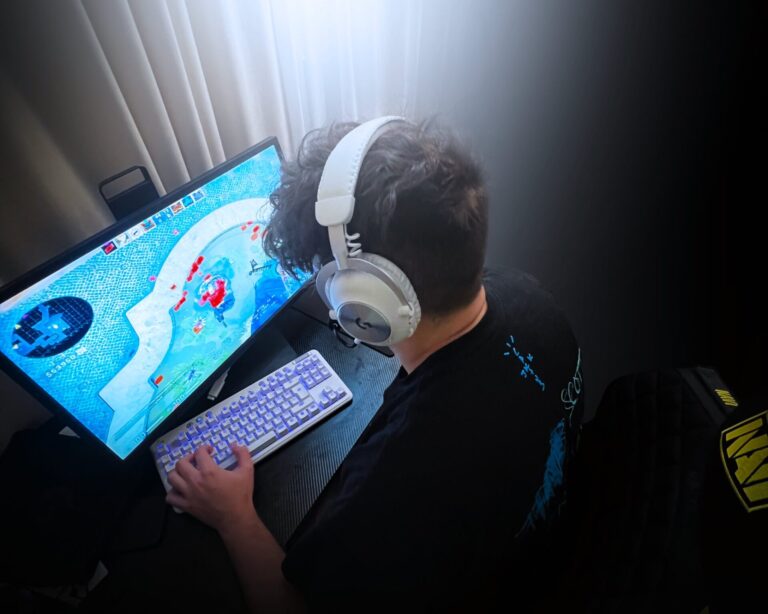

Today, to watch a big Counter-Strike match, it is enough to open a broadcast on Twitch or YouTube. In the early 2000s, everything worked completely differently: the viewer had to find the server themselves, connect through the game console, launch the audio commentary separately, and even manually synchronize it with the match.
How Half-Life TV worked
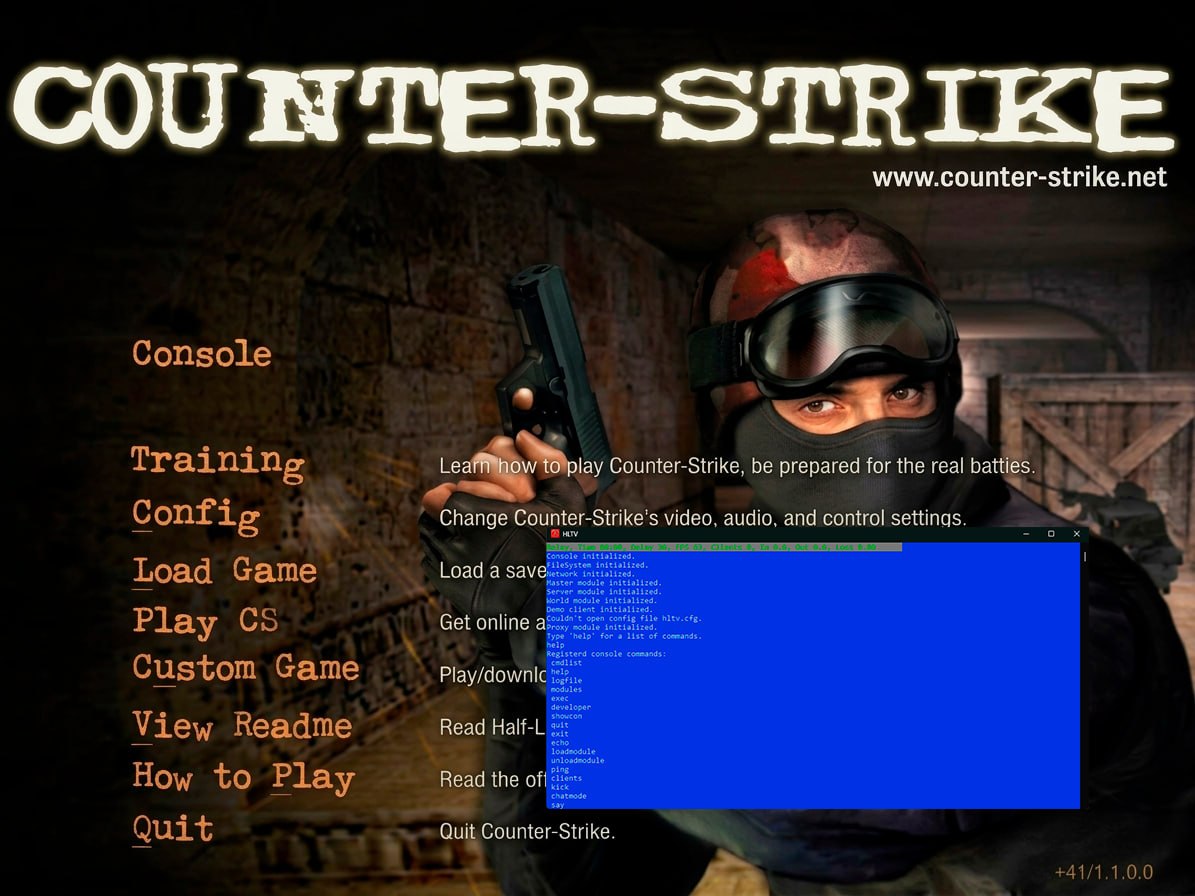
Half-Life TV appeared in September 2001 and became one of the first ways to watch Counter-Strike matches en masse over the internet. The organizer launched a special server, while the viewer opened the game itself, opened the console, and entered the connect command together with the IP address of the needed broadcast.
The main problem was finding that address. At first, there was no single match directory, so the IP had to be searched for on websites, forums, and other resources. This very problem later became one of the reasons for the creation of HLTV.org — a place where server addresses began to be collected centrally, and later match demos appeared alongside them.
255 viewers could already become a problem
One Half-Life TV server supported a maximum of 255 viewers, while the standard limit was even lower — 128. But the real limitation was often not the program itself, but the organizer’s internet connection: each connected viewer consumed roughly 2–3 KB/s of outgoing traffic.
Because of this, broadcasts were built according to a tree principle. A proxy connected to the main server, other servers connected to it, and then they distributed the match to their own viewers. The more people and organizations agreed to launch such a proxy, the larger the audience that could watch the game at the same time.
Autodirector instead of a familiar observer
A full-fledged observer, who today manually follows the most important moments of a match, was far from present on every broadcast back then. Often, all the work was done by the autodirector, which switched the camera between players by itself and did not always correctly understand where exactly the most important action was happening.
Because of this, watching could be quite chaotic: the camera missed key duels or switched at a bad moment. Later, the match observation system became much more convenient, but at the beginning of esports broadcast development, viewers had to put up even with such limitations.
Commentators worked separately from the game
There was no commentary directly inside the Half-Life TV broadcast. A separate audio stream was used for it, for example through SHOUTcast. The viewer found the needed link and launched it in Winamp, so the match and the commentator’s voice effectively worked as two independent broadcasts.
The number of listeners also depended on the capabilities of the server from which the audio was being transmitted. If its limit was 128 connections, the next user simply could not join. So even after successfully entering the match server, there was still no guarantee that the commentator could be heard.
The hardest part was synchronizing everything manually
The main challenge remained synchronization. Half-Life TV had its own delay, while the audio commentary went through a separate channel, so the picture could be ahead of the caster’s voice or, on the contrary, lag significantly behind it.
To help the audience, commentators periodically called out the current match time. After that, the viewer manually adjusted the broadcast in Half-Life TV, trying to align the game with the audio as accurately as possible. What is done automatically today was a separate part of the viewing process back then.
read more

From the console and Winamp to one browser tab
This is what the first years of online Counter-Strike broadcasts looked like: a console command to connect, a separate IP, a network of proxy servers, Winamp for commentators, and constant manual delay adjustment. There were many inconveniences, but it was on this infrastructure that the early culture of watching esports was formed.
Over two decades, the process has changed radically. Now the match, video, commentators, statistics, and replays are available in one player, and the main problem for the viewer is no longer connecting to the broadcast, but choosing from a huge number of tournaments and matches.