
The second part of Banks’ exclusive interview with karrigan turned out to be much deeper than just a conversation about his transfer to Falcons. Finn explained very directly what exactly he wants to bring to the new team, why the theme of responsibility matters so much to him, and how he sees the path to major titles in general.
What makes it especially interesting now is that the interview itself was recorded before the Cologne Major, but many of the things karrigan talked about were already forming a very clear vision of the future Falcons even then. It was not just an introduction to a new project, but effectively a public formulation of his championship model.
Modern top-level Counter-Strike
At the center of this interview is not so much the change of team as the change in karrigan’s own role. He speaks not as a veteran simply looking for one more chance, but as a leader who clearly understands what exactly he must give a star-studded lineup in order for it to truly become championship-level.
And that is exactly why this conversation is interesting not only for Falcons fans. It shows very well how karrigan sees modern top-tier Counter-Strike: where simple calling ends, why a team without responsibility does not work, and why, for him, the main thing is not to look right, but to actually win.
For him, responsibility is the first foundation of a team
One of the main themes of the whole interview is responsibility inside the team. Karrigan returns to this idea several times, and it is effectively where he begins explaining what did not work for him before and what now has to work in Falcons.
For him, this is not some beautiful abstraction, but a basic rule of a healthy lineup. If no one on the team steps forward and takes part of the blame for a loss, then eventually all the weight automatically falls on the leader — and the system starts to break.
Being part of a team, accountability is the first thing you take. It’s never anyone’s fault you you lose, right? But if everybody’s playing okay, but we lose as a team, step forward, take accountability.
In the context of Falcons, this sounds especially strong, because later in the interview it becomes clear: this is exactly what he wants to bring into the new team as a norm. Not the search for someone to blame, but a culture where each person does not hide behind general words and understands his own part of the responsibility for the result.
And that is a very important detail for a star roster. The more strong players and bright egos you have, the more valuable internal honesty becomes in difficult moments.
Winning matters more to him than being personally right
Another very important thought from karrigan is that he openly admits that over the years of his career, he has learned to hold on less to his own rightness and to think more about the result. This is one of the key quotes of the whole interview, because it describes very accurately why he believes he is needed specifically for a roster like Falcons.
In essence, he formulates a leadership principle without which superteams often fall apart. If a captain starts proving that his vision is correct in and of itself, the team very quickly runs into the rigidity of the system. Karrigan, on the contrary, talks about flexibility.
And for me, when you when you’re losing, obviously when I see things not working and I hear people have suggestion how we can approach things differently, I’m open ears cuz I want to win. Like I said before, I rather want to win than being right. Like that’s what I learned in the past.
This effectively explains why his arrival in Falcons looked logical from the very beginning. His task is not to impose “karrigan Counter-Strike” on everyone. His task is to build a system in which this specific five-man lineup will actually start winning.
And that is where the main difference appears between simply an experienced IGL and a leader who understands that sometimes you do not have to force your own idea through, but instead find the one that will bring the trophy.

Falcons need not just an IGL, but a captain
Another very strong part of the interview is the discussion about the difference between an in-game leader and a captain. Here, Karrigan effectively describes one of the central reasons why his role in Falcons is not limited to calling rounds and making mid-round decisions.
He says directly that the ability to call does not automatically make someone a true captain. In the peak moments of the game, it is important not just to name an action, but to make the other four believe in it without doubt.
There are not many captains. An in-game leader and a captain. I only put to a few people, yourself included, Apex for example. But some people they can call. But doesn’t mean that the whole team’s going to believe.
This is how karrigan sees his main added value for Falcons. He already has a star roster, but these kinds of teams often lack exactly the kind of person who, in a critical moment, gathers every voice into one direction.
And if we trust his own words, he sees himself here not as just another source of ideas, but as the one who must give the whole system a sense of unity in the hardest moments of matches.
For him, the move to Falcons became a breath of fresh air
A very personal section of the interview is the part where he talks about why the Falcons project turned out to be so important for him. Karrigan says directly that this was not just an interesting option on the market. At some point, he felt that he genuinely needed it.
In this part, it becomes very clear that for him this is not only about changing logos, but about a new internal starting point. After a long and exhausting period, he speaks about Falcons as a place where the feeling of a fresh start appeared again.
This is the this is first time when I’m looking back in 5 years I’m doing something for myself that I need. It’s not I want it’s more like I I could feel after a few days with this offer and this brewing I need it. I need this opportunity to play five new players, a new field of grass, and just enjoying because this is probably and let’s be honest, this is the final team that I get.
Karrigan does not hide it: he sees Falcons as possibly the last great team of his career. That is why this project is not just a professional step for him, but a moment he is entering with full awareness.
And that is exactly why there is so much energy in his words. This is not the mindset of someone simply playing out his final years, but of someone who has seen one last great chance and wants to squeeze everything possible out of it.

His job is not to make stars look good, but to give the team rounds
Another central block of the interview is the way karrigan explains his system inside Falcons. Here he formulates his own role very sharply: his goal is not to highlight individual superstars, but to make the team win rounds by any means necessary.
This matters a lot, because it immediately removes the romantic idea of an “ideal style.” Karrigan is not selling beautiful Counter-Strike. He is selling practical Counter-Strike that is supposed to win.
My my job is to make the team win. Not make Moni, not make Niku and Kaya look good. No. My my job is to make the team win. Does that matter how we do it? No. We just need the rounds on the table.
In essence, this is the most concentrated description of how he sees Falcons. If the players need freedom, he will give them freedom. If at some point the team needs to return to structure, he will bring them back into structure. For him, there is no “correct style” outside of the result.
And it is exactly this kind of flexibility that often separates a living championship team from simply a talented roster that looks great on paper.
In this project, he is already thinking not about himself, but about NiKo and kyousuke
The most emotional block of the second part is the moment where karrigan talks about motivation. And here he unexpectedly shifts the focus away from himself and toward others. Instead of talking about his own legacy, he begins talking about what he wants to give this team and specific players.
What sounds especially powerful is the way he formulates his role alongside NiKo and kyousuke. He does not just want to win with them — he wants to help them finish the stories that have been hanging over their careers for a long time.
I want Nikico to get his major I want to get his major I want Kaisuka to show why people said he’s the next dunk by doing these things and have this kind of motivation I wake up every morning trying to improve them and try to help them. Um I could think about myself, but when my career is done, it’s always going to be a discussion. What I can control is what I do right now. I do this move because I want to win so badly.
This quote reveals karrigan’s real motivation very well at this later stage of his career. He is no longer fighting for someone else’s judgment of his place in history. He wants to use his experience in a way that helps this team win right now.
And that is what makes the Falcons story so powerful for him. Here he does not just see a good roster, but a group of players with whom he still has time to do something truly great.
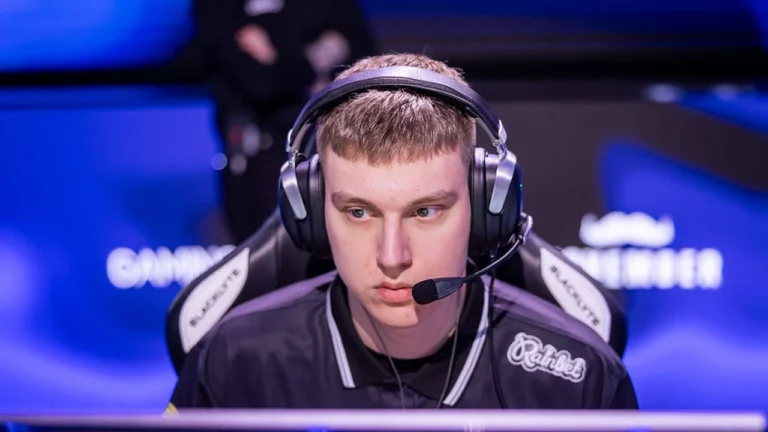
The future Falcons model
The second part of Banks’ exclusive with karrigan turned out to be very revealing. In it, he effectively described the future Falcons model: a team where responsibility is the norm, where a captain matters more than just a caller, where style adjusts to victory rather than the other way around, and where the star power of individual names is meant to work toward a shared result.
And probably the most interesting thing about this conversation is that it sounded like a plan even before this project had lived through its full major cycle. Karrigan was not talking about a beautiful idea, but about a very concrete system. That is exactly why this interview now reads not like a standard pre-tournament exclusive, but as an explanation of how he wants to build a championship Falcons team.