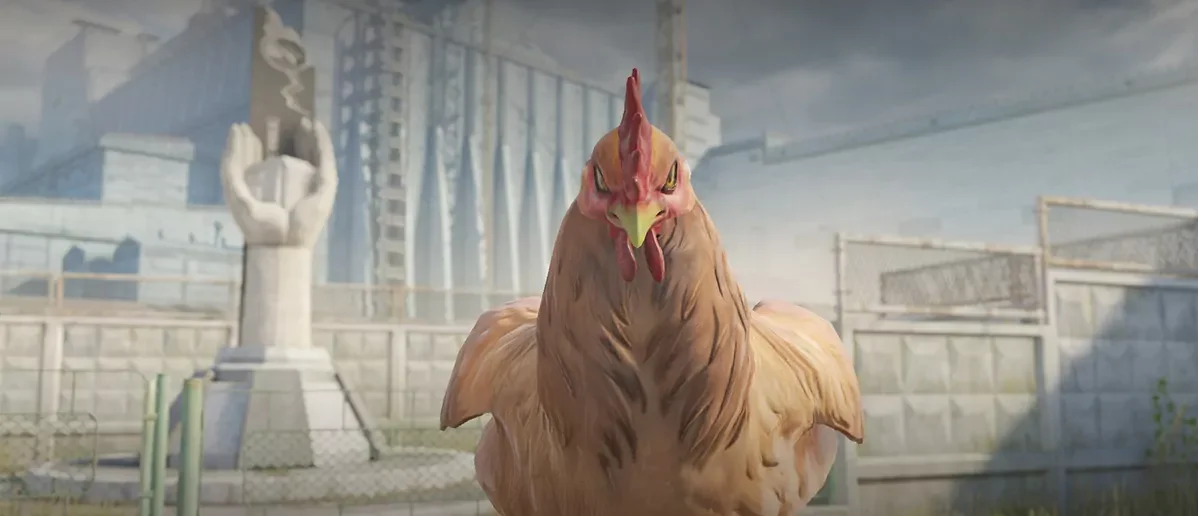

A CS2 player named BeepIsla has published clips showing how the game’s chicken pet system works from start to finish. The clips cover hatching, growth, and two different ways the pet can eventually leave its owner. This is notable because the pet’s departure is not a fixed animation. Instead, it changes based on how the player treated the chicken during its lifetime.
That detail is what makes the material worth covering. CS2’s chicken pet does not simply vanish or die at the end of its lifespan. The game distinguishes between a neglected chicken and a properly cared-for one, and it shows this difference through separate title cards and separate departure animations.
Background
BeepIsla posted the clips on X, documenting the chicken pet’s full lifecycle inside CS2. The pet ages through defined stages. Its behavior at each stage ties to specific in-game conditions rather than being purely cosmetic.
The chicken’s final animation depends directly on whether it was fed, according to BeepIsla. A chicken that goes unfed eventually leaves on its own. A chicken that is fed and cared for over time also leaves eventually, but under a more positive framing.
What the Clips Show
The first clip shows the hatching stage, where the chicken emerges from its egg for the first time. The second clip shows the chicken during its growth phase. The remaining two clips each cover one of the pet’s two possible endings, and both open with an in-game title card before the departure animation plays.
The first ending clip opens with the title “Retirement,” followed by the subtext “Turns out chickens need food. Who knew?” The chicken then proudly walks away from the player. In the second clip, the title reads “A Life Well Lived.” Its subtext states that the player raised the chicken well enough that it no longer needs them, and that they can revisit the time spent together through their profile card. Here, the chicken waves a wing at the player and flies off instead of dying.
BeepIsla also demonstrated the Hatch Book feature tied to the same pet system. Hatch Book lets players take photos with their chicken and collect them over time. The clips show the Hatch Book interface, the process of taking a photo with the pet, and an example album already filled with saved photos from an earlier chicken.

Additional Conditions Shared by BeepIsla
BeepIsla also listed several unlock conditions tied to the chicken’s age and progression within CS2. Some poses only become available while the chicken is still a baby. Some maps stay locked until the player completes a match on them. Effects and tricks unlock once the chicken reaches an older age. However, all hats remain free regardless of the chicken’s current stage.
Why This Stands Out
Cosmetic pet systems in shooters are often static, offering no real consequence for how a player interacts with them. CS2, however, builds a system where neglect and care lead to two distinct, explicitly labeled outcomes. This gives the feature more weight than a typical cosmetic add-on.
The Hatch Book feature also extends the system beyond a single chicken’s lifecycle. It preserves a photo record of that chicken after it leaves, so players can look back at a specific pet even once its story has ended.

Conclusion
According to BeepIsla’s clips, CS2’s chicken pet system ties its ending directly to player behavior. A neglected pet’s retirement plays out differently from a well-cared-for pet’s send-off, and the Hatch Book feature preserves photos from that pet’s lifetime afterward. This detail matters because it shows Valve building a cosmetic system with real behavioral consequence, rather than a purely decorative loop. Players who invest time in raising a chicken get a visible payoff for that time, both in how the pet leaves and in what they get to keep once it’s gone.