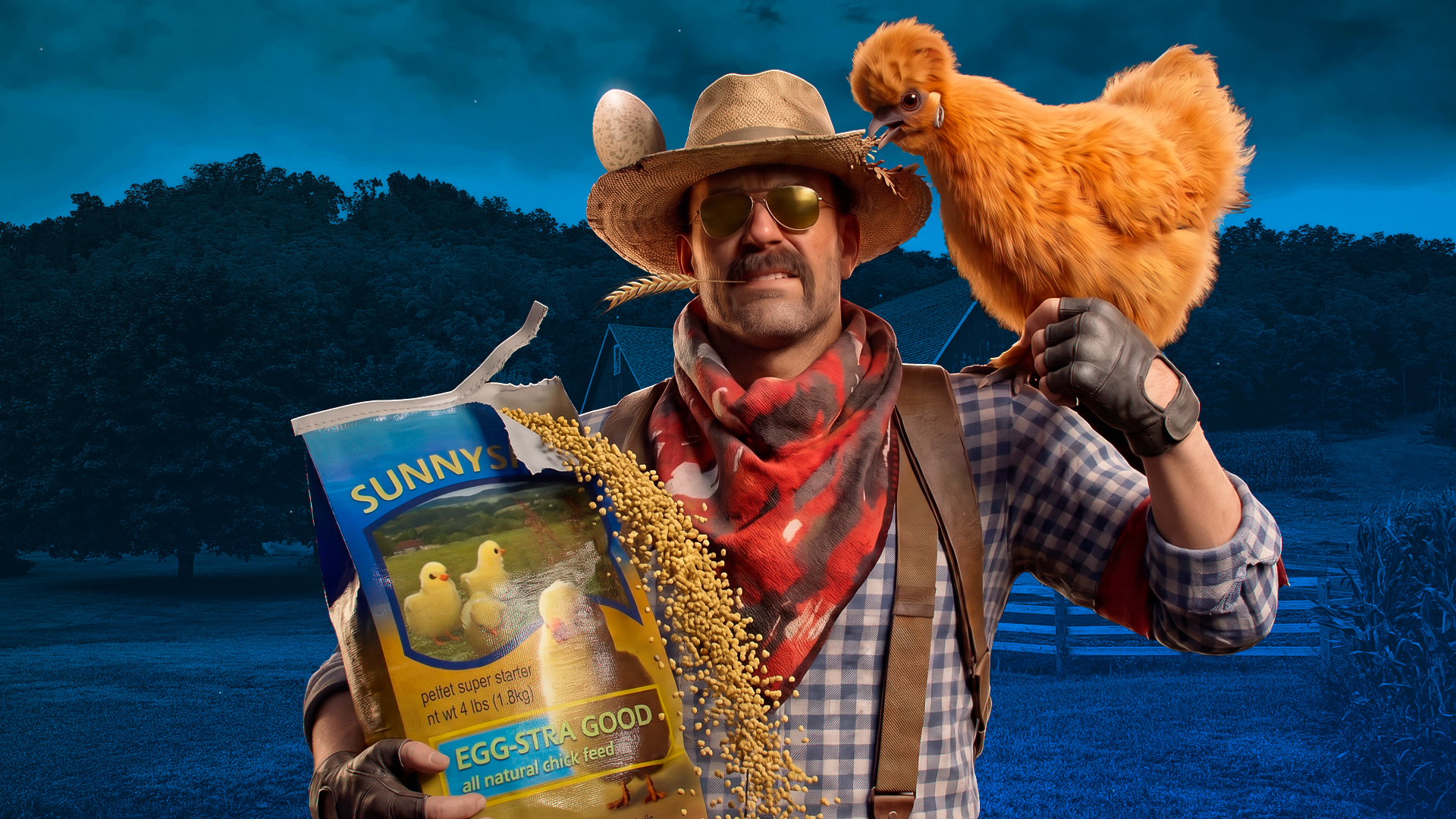

CS2 Chicken Eggs are a new reward tied to the game’s pet system, allowing a chicken companion to develop from an egg over time. The feature appeared with the Rush Hour update on September 22, 2026, although Valve didn’t explain the pet system in the original patch notes. That quiet release made the addition especially noticeable. Chickens were previously limited to matches, while the new system lets players hatch and keep one as a pet. Community reaction has been mixed. Some players found the update amusing, while others questioned its timing amid ongoing concerns about cheating and anti-cheat measures.
CS2 Chicken Eggs at a Glance
Chicken Eggs are account-bound Weekly Care Package rewards that initiate the pet chicken system. Chicken Eggs and newly hatched Chicks are now confirmed in-game, while most information about the later Pullet and Hen stages still comes from client data. Valve can still change those values before players reach the relevant stages.
Fact | Details | Reliability |
|---|---|---|
Source |
Can appear in the Weekly Care Package for Prime players. |
High (Confirmed in-game) |
Reward cost |
Selecting a Chicken Egg uses both weekly reward picks. |
High (Confirmed in-game) |
Drop chance |
Eggs aren’t guaranteed to appear in every Weekly Care Package. Valve hasn’t published the odds. |
High (Confirmed in-game) |
Trading |
Eggs and pets can’t be traded or sold on the Steam Market. |
High (Confirmed in-game) |
Growth stages |
The pet progresses through Egg, Chick, Pullet, and Hen stages. |
High (Confirmed in-game) |
Breeds |
Three adult breeds are currently present: Catalana, Silkie, and Polish. |
High (Confirmed in-game) |
Chicken Feed |
Chicken Feed can also appear in Weekly Care Packages and is used for the pet system. |
High (Confirmed in-game) |
Naming |
Chickens can be given a custom name after hatching. |
High (Confirmed in-game) |
HatchBook |
Photos and records from the pet’s different growth stages are stored in the HatchBook. |
High (Confirmed in-game) |
Match use |
Pullets and Hens can accompany the player during matches on official servers. |
Medium (Client data) |
Rarity tiers |
Dataminers found 34+ chicken skins in the code, featuring ultra-rare patterns. |
Medium (Client data) |
Pet limit |
Only one active pet can be kept on an account at a time. |
Medium (Client data) |
How to Get a Chicken Egg
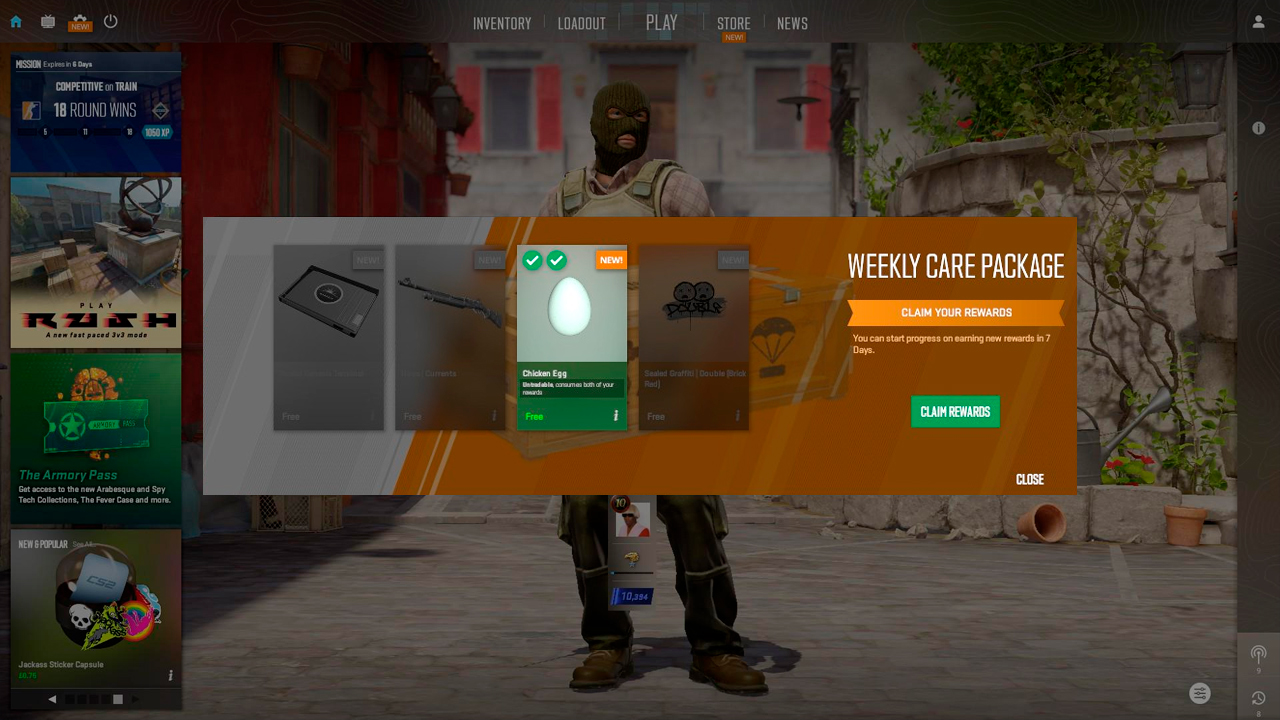
A Chicken Egg can only appear in the Weekly Care Package, so Prime Status is required. The package becomes available after the first Profile Rank increase of the weekly cycle. An egg isn’t guaranteed to appear among the offered rewards. If it does, selecting it takes both reward slots, leaving no second item from that package. Only one of the available CS2 pets can be active on an account at a time, so another egg can’t be claimed while a current pet remains attached to the account.
From Egg to Hen: The Full Life Cycle
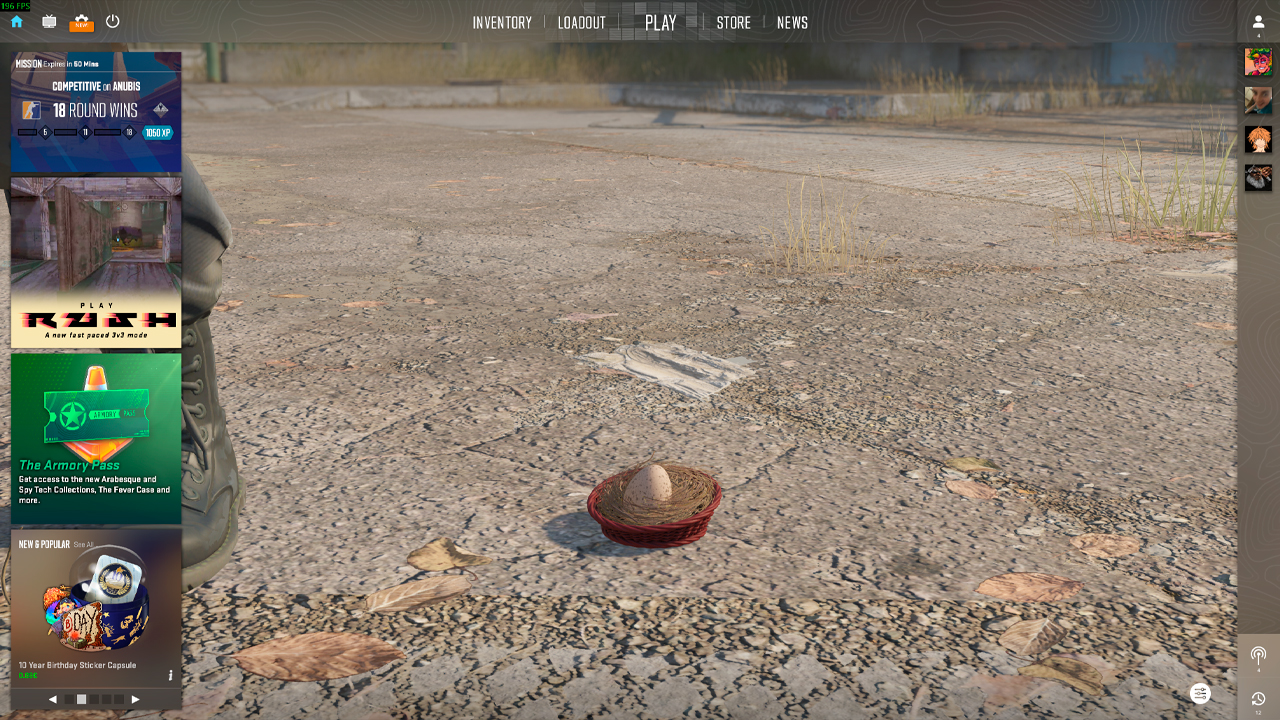
A CS2 chicken passes through four stages, with its appearance and available features changing as it grows. Current client data puts the full CS2 chicken lifespan at about 140 days after hatching, provided the pet remains fed.
- Egg (about 7 days): The egg remains in its nest until the assigned hatch date. After hatching, every egg produces the same small yellow chick, so the eventual breed and color still aren’t visible.
- Chick (22 days): The chicken keeps its standard yellow appearance during this stage. Naming becomes available after hatching, along with the HatchBook and photo features.
- Pullet (28 days): The pet’s breed and plumage appear at this point, giving it its individual look. Pullets can also accompany their owners during supported matches.
- Hen (about 90 days): The chicken reaches its adult size and proportions, while its breed and color remain the same. A fully fed pet reaches the end of its normal lifespan on day 140 after hatching.
From the Chick stage onward, the pet can be named once during each growth stage. Its in-game label combines the owner’s name with the chicken’s chosen name. At the end of its normal lifespan, the game marks the departure as “A Life Well Lived” and states, “Your pet has reached the end of a long, loud life. Nothing left to do but wave.” A pet can leave earlier if its feed runs out. In that case, the message reads, “Your pet has accepted a position elsewhere. The offer included meals.”
Chicken Feed: The Mechanic That Decides Everything
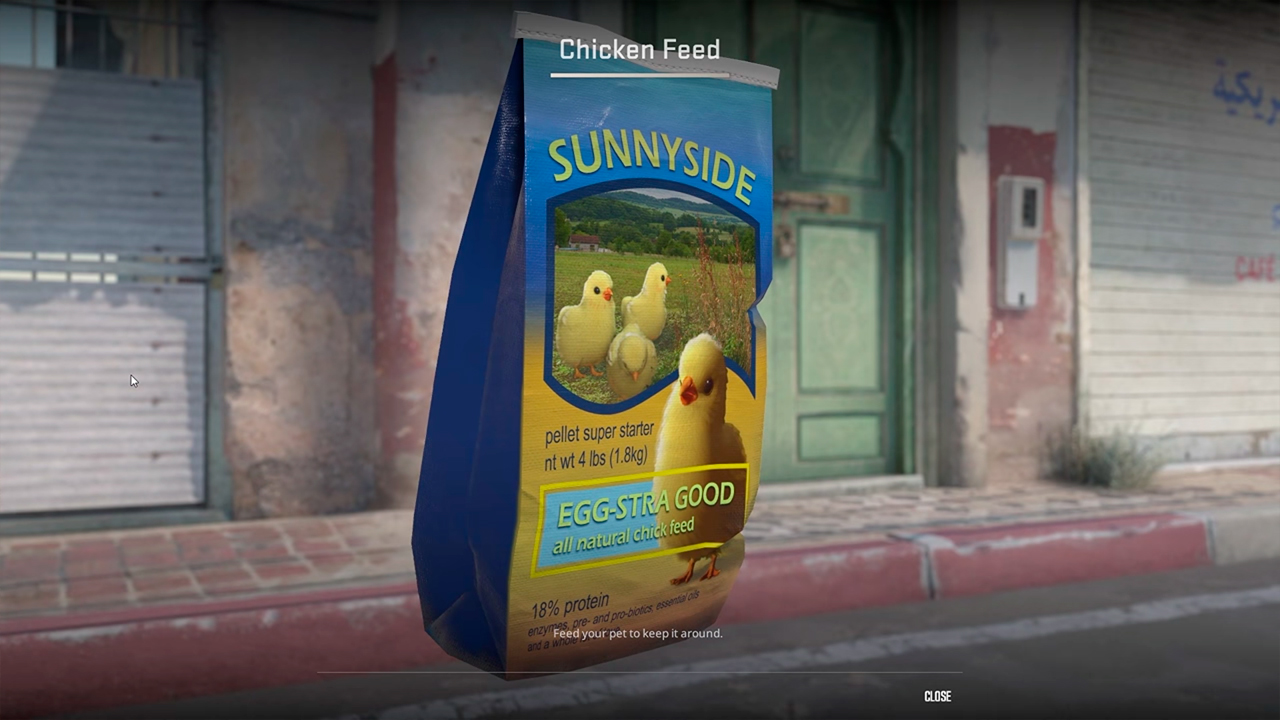
Chicken Feed can appear in the Weekly Care Package after a pet has been claimed. Like a Chicken Egg, choosing feed uses both weekly reward slots, and it can’t be bought on the Steam Market or traded between accounts. Three feed rewards are available in the game: a 4 lb bag of starter pellets, an 8 lb bag of complete pellets, and two 8 lb bags for a total of 16 lb. The item itself is described as “Feed your pet to keep it around.” After a pet is active, the rank-up interface can also direct the player back to the Weekly Care Package for more feed. Food is tracked through an expiration date. Valve hasn’t published how quickly feed is consumed or how many days the 4 lb, 8 lb, and 16 lb rewards add, so there’s currently no confirmed rule such as feeding once per week. Adding feed moves the expiration date forward.
The egg also depends on this system. Current client-data references indicate that an egg whose food expires won’t hatch. After hatching, running out of feed causes the pet to leave permanently. The pet panel gives advance notice before this happens. The warning appears about nine days before the supply expires, accompanied by the message “Your pet is running low on food. Grab more feed from a Weekly Care Package soon.” Another status, “More feed is available,” appears when the current supply won’t last until the next growth stage.
What Raising a Chicken Actually Costs
The main cost of a chicken is the Weekly Care Package rewards given up along the way. Both the egg and every Chicken Feed claim consume two reward slots. Valve hasn’t published how long each feed size lasts, so the exact lifetime cost can’t be calculated yet. If four feed claims are needed, raising one chicken costs five Care Packages, or 10 missed rewards. Eight feed claims would increase that to 18 missed rewards.
Current active containers are worth roughly $0.05 to $0.96, while most common skin drops have relatively low market value. This puts the typical opportunity cost at several dollars over a full life cycle, although a rare skin can raise it considerably. Financially, pets return nothing tradable and eventually leave, so their value is entirely cosmetic.
All CS2 Chicken Breeds and Colors
CS2 currently has three adult chicken breeds: Catalana, Silkie, and Polish. Together, they account for 34 color variants. There are also two separate pre-adult models, Chicken Egg and Pet Chick, bringing the total to 36 pet entries. All 36 pets are classified as High Grade. This is the item rarity class, not a separate rarity tier for individual colors. Exact odds for specific breeds and colors haven’t been published.
Catalana
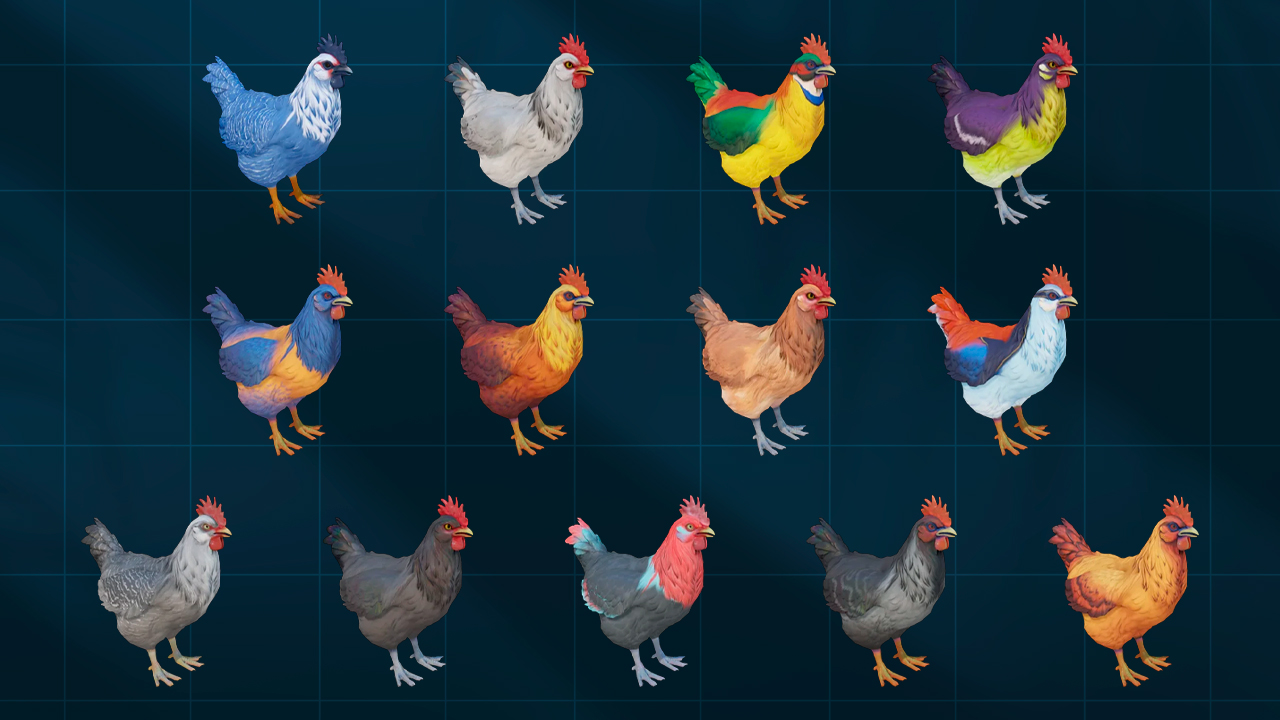
Catalana is the closest of the three breeds to the standard Counter-Strike chicken model. It has regular feathering, a visible comb and wattle, and 13 color variants, the largest selection of the three breeds.
- Tan
- Black White Head
- White
- Yellow And Red
- Light Blue And Red
- Black With Red Head
- Blue
- Dark Orange
- Blue And Light Orange
- Orange Blue Neck
- Yellow Red Gradient
- Grey
- Black
Silkie
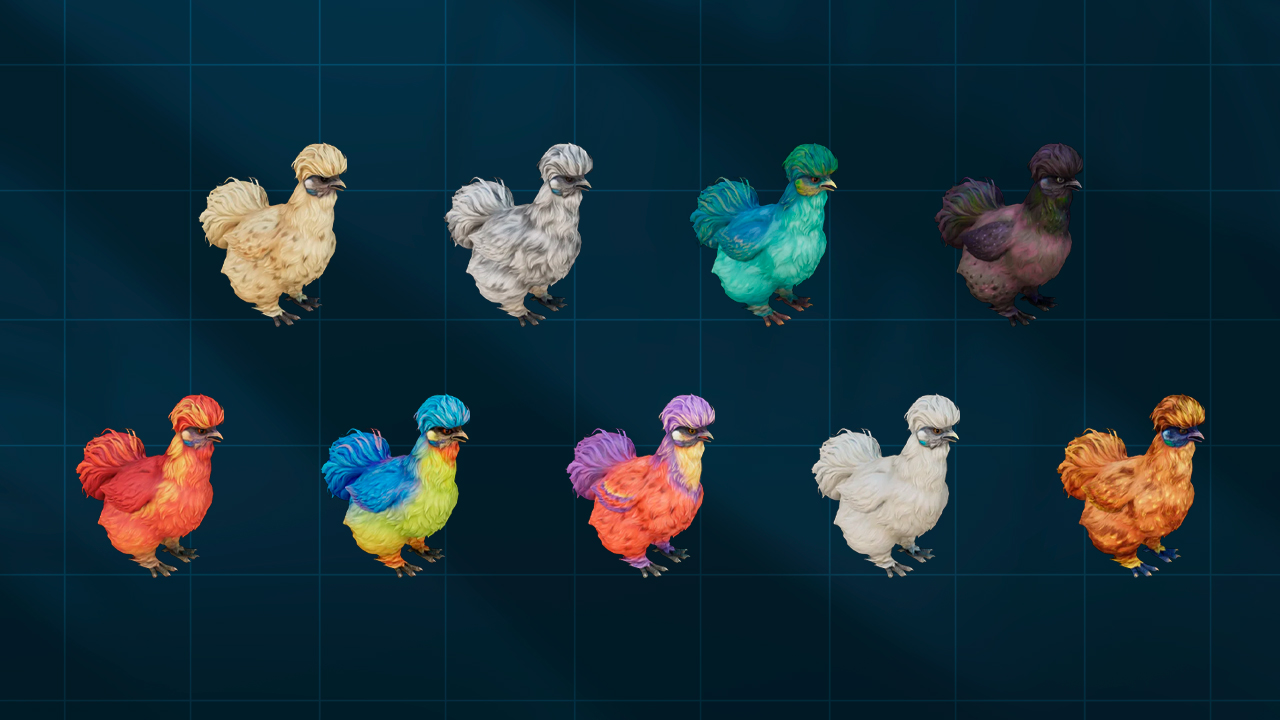
Silkie has a more feathered model with a rounder body and feathering around the head and legs. It has 9 available color variants. Unlike Catalana, its model doesn’t use the adjustable comb trait found in the client data.
- White
- Splash
- Blue With Red Beard
- Leopard
- Red
- Red Beetle
- Orange
- Purple
- Aqua With Yellow
Polish
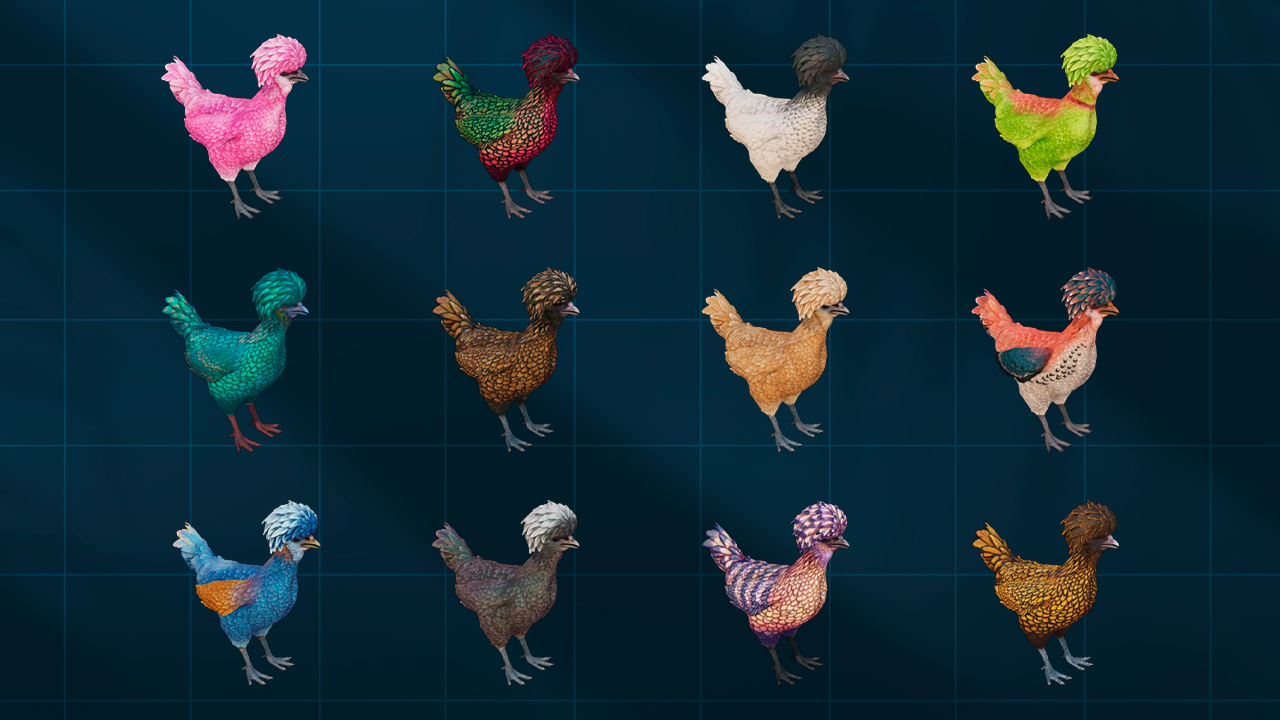
Polish is distinguished by the feathered crest around the top of the head. The breed has 12 color variants and, like Silkie, doesn’t use Catalana’s adjustable comb trait.
- Black With White Head
- Brown
- White With Black Wing Tips
- Brown With Black Wing Tips
- White Black Head
- Blue
- Green With Red Head
- Green
- Pink
- Blue Yellow
- Orange White Blue
- Orange With Black Stripes
Chicken Traits
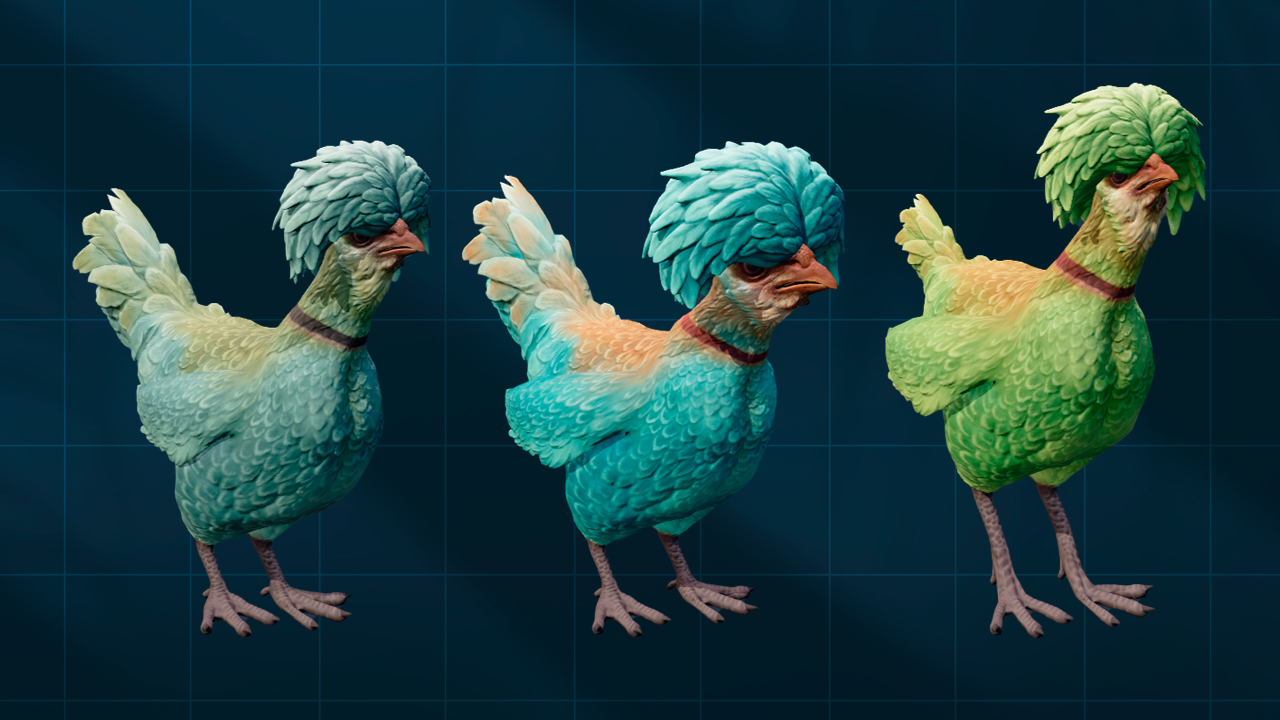
Breed and color don’t completely determine a chicken’s appearance. Each pet also receives a hidden seed, which controls body proportions and smaller visual changes. The pattern is already visible at the Egg stage through differences in shell color and speckling, and it can also affect the shade of the Chick’s fluff. Later, the same system controls more noticeable differences between Pullets and Hens.
- Body shape: The seed changes body roundness, tail size, leg length, wing size and width, neck length, head size, and wattle size.
- Comb: Catalana also has separate variation in the front and rear parts of its comb. Silkie and Polish don’t use this trait.
- Color: Depending on the variant, the seed can adjust hue, saturation, brightness, contrast, marking color, detail strength, and iridescent sheen.
- Patterns and markings: Some colors have additional pattern rolls. For example, Catalana Light Blue And Red has eight face-marking variants, while Blue And Light Orange has 16. White Silkie has four pattern variants, and Red Beetle has two.
- Growth: Pullet and Hen stages use different ranges for the same body traits. Pullets have more restricted proportions, while Hens can show greater variation in body size, tail, comb, wattle, and several other features.
- Seed visibility: The game doesn’t display the seed or individual trait values, and there are currently no official named tiers for body shapes or patterns.
This means two chickens with the same breed and listed color can still differ in proportions, markings, and exact feather tones. The breed determines the model, the color defines the main appearance, and the hidden seed controls the remaining variation.
Hatchbook, Photo Booth and Hats
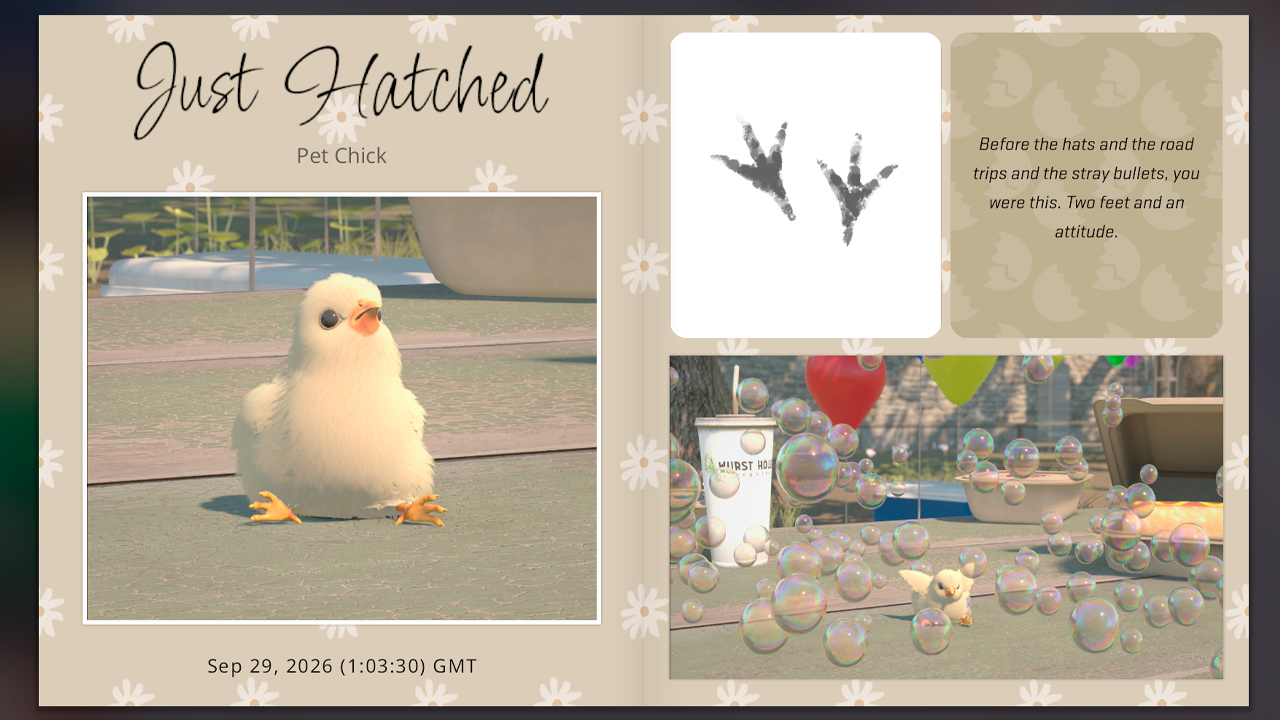
The CS2 HatchBook becomes available after the egg hatches and records the pet’s life. It has separate sections for the Chick, Pullet, and Hen stages, with photos added from the Photo Booth. The HatchBook remains available after the chicken leaves. These functions are already confirmed in-game.
The Photo Booth opens at the Chick stage and allows photos to be taken with different backgrounds, effects, and pet actions. Some options become available as the chicken grows or after matches are completed with the pet equipped.
- Backgrounds: Photo Studio and Picnic are available for Chicks, while Warehouse unlocks at the Pullet stage.
- Map backgrounds: Dust II, Mirage, Inferno, Nuke, Cache, Train, Ancient, and Baggage can be unlocked after completing a match on the corresponding map with the pet.
- Effects: Hidden Field Incident Reports are tied to Molotov fire, Zeus x27 damage, and C4 explosions, which can unlock Fire, Lightning, and Explosion effects.
- Other options: The Photo Booth includes poses, filters, stickers, and pet actions. Client data also references a Brave tag.
Warehouse, map backgrounds, and Field Incident Reports are still based on client data. The same customization system includes 10 head accessories: Wizard Hat, Top Hat, Party Hat, Banana, Sprout, Alien, Glasses, Nose Glasses, Helmet, and Armor Helmet. Trick animations include running in a circle, jumping, flying, and kicking. Later-stage animations haven’t been confirmed in-game yet.
Will Your Chicken Join You in Matches?
Current client data indicates that Pullets and Hens can accompany their owner in official matches, while Chicks remain outside regular map play. The pet follows its owner as a cosmetic companion and doesn’t provide combat, scouting, or economy advantages. This match behavior is described in the game files but hasn’t yet been fully confirmed through normal progression.
A CS2 pet chicken is separate from the standard chickens already found on some maps. Map chickens are regular NPCs tied to the match, while a pet belongs to the account and keeps its breed, color, name, and individual appearance. Pet chickens can be killed during a match by Molotov fire, a Zeus x27, or a C4 explosion, but this doesn’t end the pet’s life cycle or remove it from the account. These incidents can be recorded in the HatchBook and unlock the related Fire, Lightning, or Explosion Photo Booth effects earlier than usual.
Can You Trade or Sell CS2 Chickens?
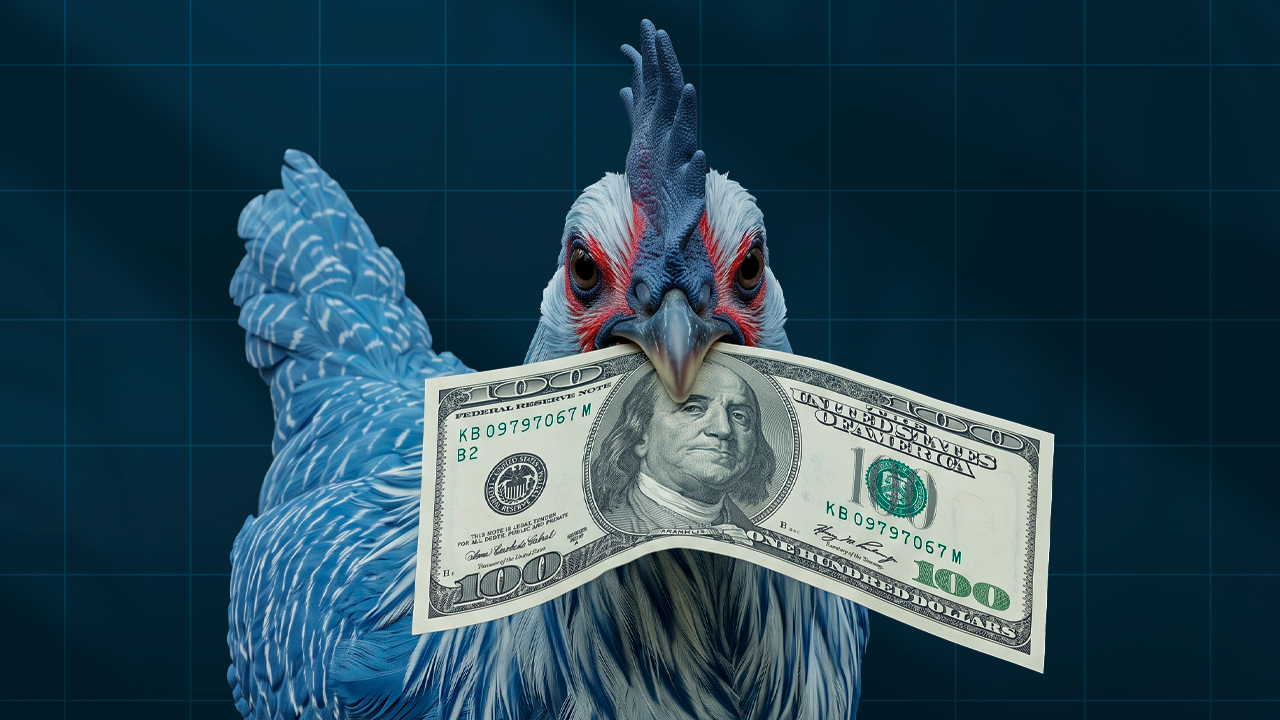
CS2 chickens, eggs, and Chicken Feed can’t be traded or listed on the Steam Community Market. They’re tied to the account that receives them, so there’s currently no legitimate way to buy a chicken from another player. Any offer to sell an egg, feed, a specific breed, or a rare color should be treated as a scam.
The first wave refers to the earliest Chicken Eggs distributed after the pet system launched in September 2026. Some players treat these early eggs as potentially more desirable, but they have no confirmed market value because they can’t be traded or sold. Any future value is purely speculative unless Valve changes those restrictions.
Myths and Unconfirmed Claims
The pet system is still new, so several claims around Chicken Eggs and adult pets aren’t supported by current information. Some also conflict with how the system works in-game.
- Pets replace map chickens: They don’t. Regular map chickens remain separate NPCs from account-bound pets.
- Chicken Eggs can be purchased: Eggs currently come from Weekly Care Packages and can’t be traded or sold.
- Rare colors or patterns mean profit: Unusual appearances may be desirable, but pets have no market price while trading remains disabled.
- Pets provide an advantage: No weapon, economy, movement, or competitive benefit is tied to owning a chicken.
These claims could change if Valve updates the system, but they shouldn’t currently be treated as established mechanics.
FAQ
-
What is a chicken egg in CS2?
A Chicken Egg is an account-bound pet item that eventually hatches into a chicken. It was introduced with the September 2026 pet system.
-
How do I get a chicken egg?
Chicken Eggs can appear in the Weekly Care Package for Prime accounts. Selecting one uses both weekly reward slots, and an egg isn’t guaranteed to appear.
-
How long does a CS2 chicken egg take to hatch?
An egg takes about one week to hatch and displays its own hatch date. It must remain fed during this period.
-
Do I need to feed the egg?
Yes. The egg uses the same food system as later growth stages, and an egg that runs out of feed won’t hatch.
-
How long do CS2 chickens live?
Current client data sets the normal post-hatch lifespan at about 140 days if the chicken remains fed. These timings haven’t been officially published by Valve.
-
Where do I get chicken feed?
Chicken Feed comes from Weekly Care Packages and uses both reward slots when selected. It can’t be bought or traded.
-
What happens if my chicken runs out of food?
A hatched pet leaves permanently when its food expires, while an unfed egg never hatches. The HatchBook remains as a record of the pet.
-
Will my pet replace the chickens on Inferno?
No. Map chickens are separate NPCs and remain independent from the account-bound pet system.
-
Can I trade or sell my chicken?
No. Eggs, feed, and pet chickens are non-tradable and can’t be listed on the Steam Community Market.
-
How many chicken breeds and colors are there?
There are three adult breeds: Catalana, Silkie, and Polish. Their current adult lists contain 34 color variants in total.
-
Does the pet chicken give an advantage in matches?
No. Pet chickens are cosmetic companions and don’t provide combat, scouting, movement, economy, or weapon advantages.



![Newest CS2 Cases: List & Release Dates [2026]](https://community.skin.club/wp-content/uploads/2026/05/Main-x-Name-768x432.jpg)
![M4A1-S Fade Pattern Guide: All Seeds & Full Fade [2026]](https://community.skin.club/wp-content/uploads/2024/10/Main-x-Name-1-4-768x432.jpg)