![Vertigo Callouts in CS2: Full Guide [2026] Background](https://community.skin.club/wp-content/uploads/2023/11/Background-15.jpg)

Vertigo remains one of the more recognizable maps in CS2, even though it is no longer part of the current Active Duty map pool. Its vertical layout, tight lanes, and layered rotations force teams to approach every round with structure and discipline. Success on Vertigo rarely comes from aim alone. Players need clear spacing, fast reactions, and strong communication to control key areas and respond to pressure across the map. That is why callouts matter so much. Accurate Vertigo callouts help teams relay enemy positions, plan retakes, and organize executes without hesitation. In this guide, we will cover the key Vertigo callouts every CS2 player should know to communicate better and play with more confidence and control.
Vertigo CS2 Map Callouts
Vertigo made its debut in 1999 but didn’t initially secure a spot in the official competitive map pool. However, in 2017, Valve unexpectedly removed all references to Vertigo from CS:GO, citing a “rework” for the map. After almost two years of updates, the revamped Vertigo was introduced on January 24, 2019. Following its replacement of Cache, Vertigo became a host for numerous professional matches, including the StarLadder Berlin Major 2019 and PGL Major Stockholm 2021. Although it wasn’t the most frequently played map in these championships, Vertigo, known for its unconventional layout, offers strategic surprises. By the way, we also have a guide on Anubis callouts.
Vertigo A Site
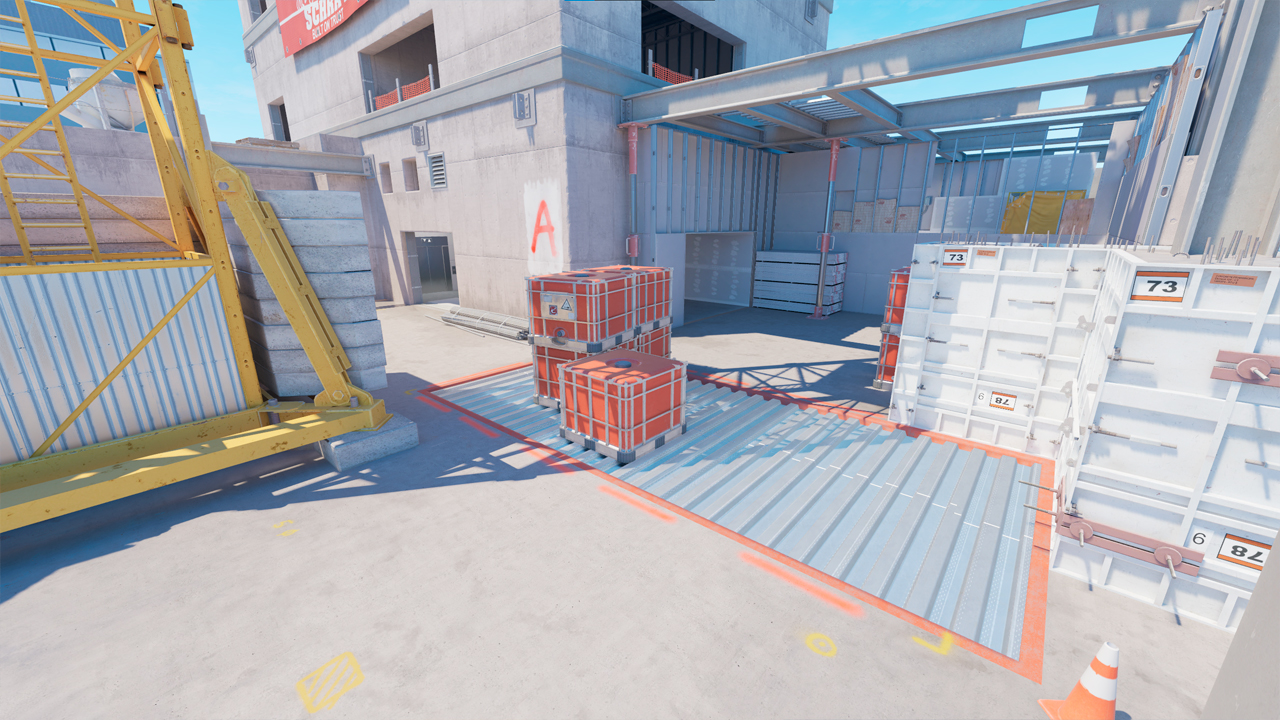
Vertigo’s A Site is one of the most contested areas on the map, with multiple angles that make both attacking and defending tricky.
- A Ramp: The long sloped path attackers take to enter the A side of the map.
- Dark: A shadowy corner near A Ramp that players often use to hide.
- Fence: A raised position next to A Ramp that gives defenders an early look at incoming enemies.
- Sand Bags: A stack of sandbags near the site that works as a common close-range cover spot.
- Scaffold: A structural walkway that leads players toward A Site.
- Lane: A narrow passage that connects Scaffold to the short approach on A.
- Double: Two stacked crates on A that players use for cover or peeking.
- A Site: The main plant zone on the A bombsite.
Vertigo B Site
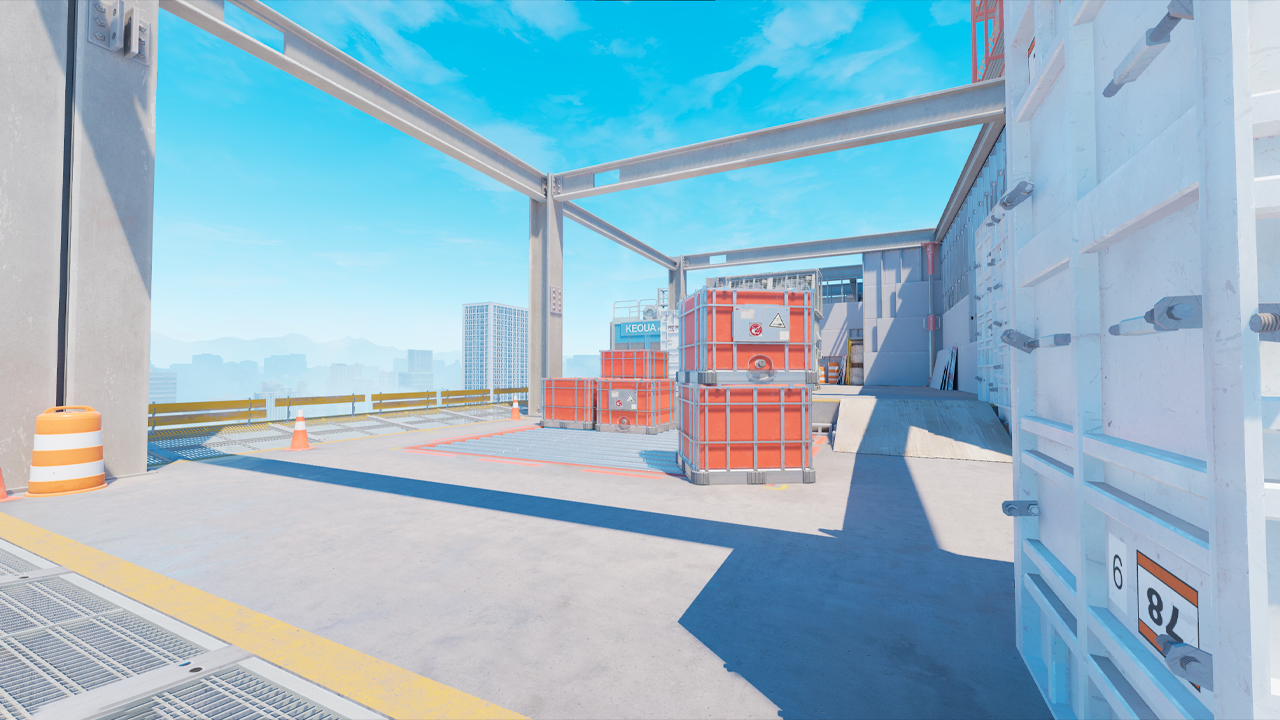
B Site on Vertigo is a tighter area that often leads to close-range fights. It is commonly attacked through B Stairs and Catwalk, while defenders try to control space from safer positions deeper on the site.
- B Stairs: The staircase route attackers use to move toward B Site.
- Under Stairs: The space below B Stairs, often checked for lurking players.
- Catwalk: A narrow exposed walkway leading into the B bombsite.
- Back B: The rear area of B Site, usually used as a defensive hold position.
- B Site: The main bomb plant area on the B side.
- Electric Box: A large piece of cover near B that is often used during fights and retakes.
- Connector: The linking area that joins Mid, B Site, and CT-side rotations.
Vertigo Mid
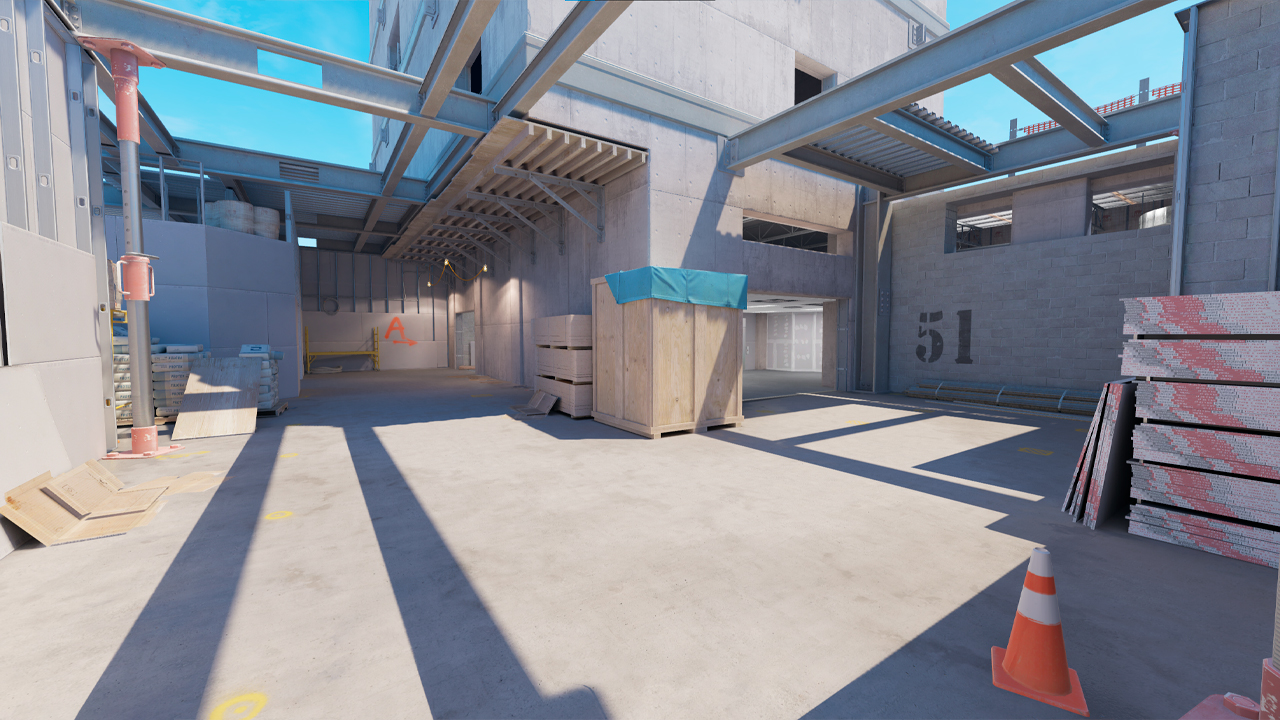
Mid callouts are especially useful for sharing enemy locations and planning rotations.
- T Mid: The Terrorist-side entrance to Mid.
- Mid: The central section of the map that connects several important rotation paths.
- Top Mid: The upper part of Mid closest to the defending side.
- Headshot: A tight angle where usually only a player’s head is visible.
- Boost: A stack or position players use to elevate themselves for extra vision.
- Iron: The metal-bar area between T Mid and Mid.
- Elevator: The section that connects Mid with the A-side approach.
Other Key Vertigo Callouts
- T Spawn: The starting area for the attacking team.
- Toilets: A small room in T Spawn that can be used for hiding or utility setups.
- Stairs: The staircase in T Spawn that leads upward.
- T Stairs: The stairs attackers use to reach Mid more quickly.
- Generator: An upper T-side area that connects into Mid routes.
- Ladder: A ladder path that helps players move up toward Mid.
- Underpass: A lower corridor that links parts of T-side movement toward B.
- Save Spot: A tucked-away corner where players often hide to save weapons.
- Bridge: The walkway that links the lower T-side area to A Ramp.
- Big Box: A large box near A Ramp that provides strong cover.
- Sheets: A small tucked corner near A with construction materials around it.
- Door: A narrow passage that connects Mid-side movement with the defender rotation.
- Heaven: An elevated position that overlooks key parts of the map.
- CT Spawn: The starting area for the defending team.
Navigating CS2 Vertigo
Understanding Vertigo callouts is essential for any team that wants to play the map with structure and control. Clear callouts allow players to share information quickly, track rotations, and react with purpose in every phase of the round. From T-Spawn to the B site, each position gives teams a common reference point that supports better decision-making under pressure. Good communication can set the tone for the round from the start, whether you are trying to hold territory, run an execute, or retake control. Knowing Vertigo callouts won’t automatically win you games, but it’ll make your team more structured, more reliable from round to round, and better equipped to handle each phase of play.
FAQ
-
How do you play Vertigo in CS2?
Vertigo in CS2 requires a strategic approach. For the T side, control mid and make use of various boost spots. CTs should focus on defending A site and holding mid control. Communication and map awareness are crucial for success.
-
When was de_vertigo released?
The original version of de_vertigo was released in 1999. The modern version, featured in CS2, was released on January 24, 2019.
-
What sided map is Vertigo?
Vertigo is considered a slightly CT-sided map, meaning Counter-Terrorists have a slight advantage in terms of map control and positioning.



![How to Get a Service Medal in CS2: Full Guide [2026]](https://community.skin.club/wp-content/uploads/2024/10/Main-x-Name-19-768x432.jpg)
![CS2 Chicken Eggs Explained: How Pets Work [2026]](https://community.skin.club/wp-content/uploads/2026/10/Main-x-Name-768x432.jpg)
![CS2 Weekly Drop Pool: Cases, Skins & How It Works [2026]](https://community.skin.club/wp-content/uploads/2025/10/Main-x-Name-11-768x432.jpg)