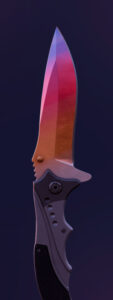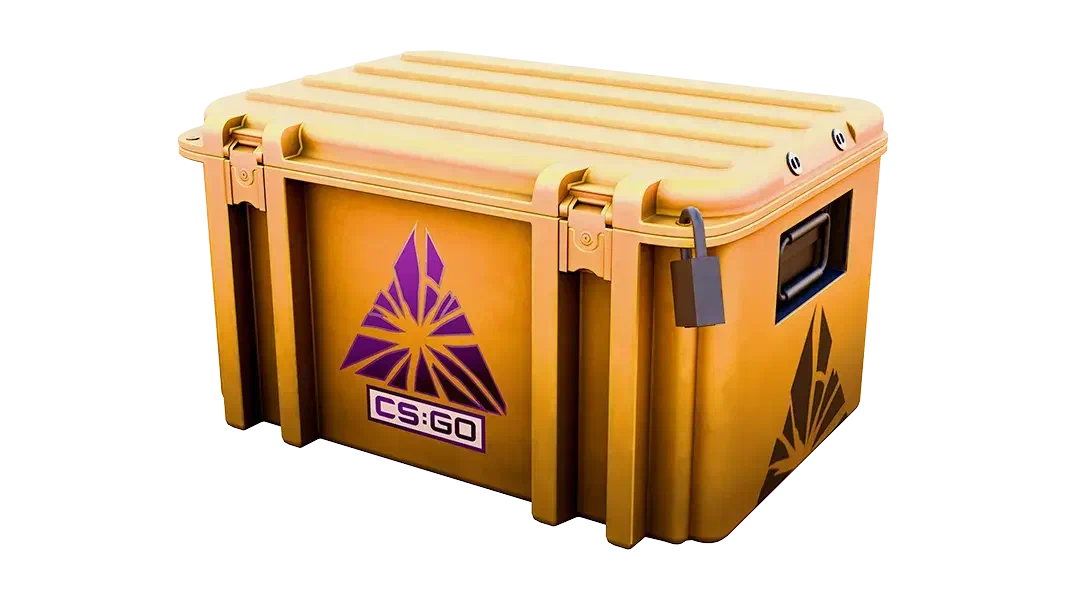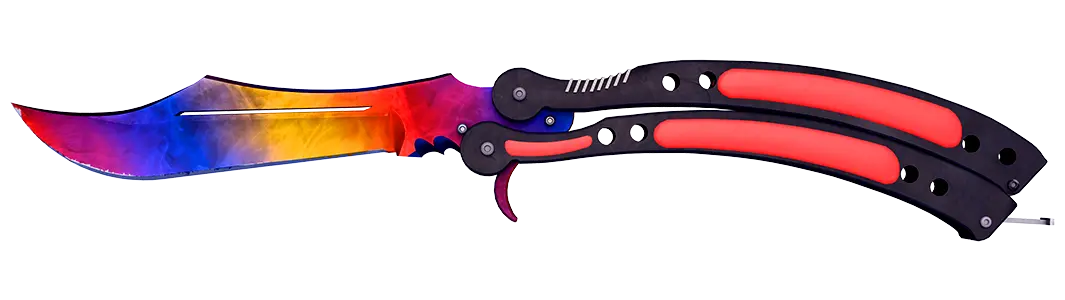
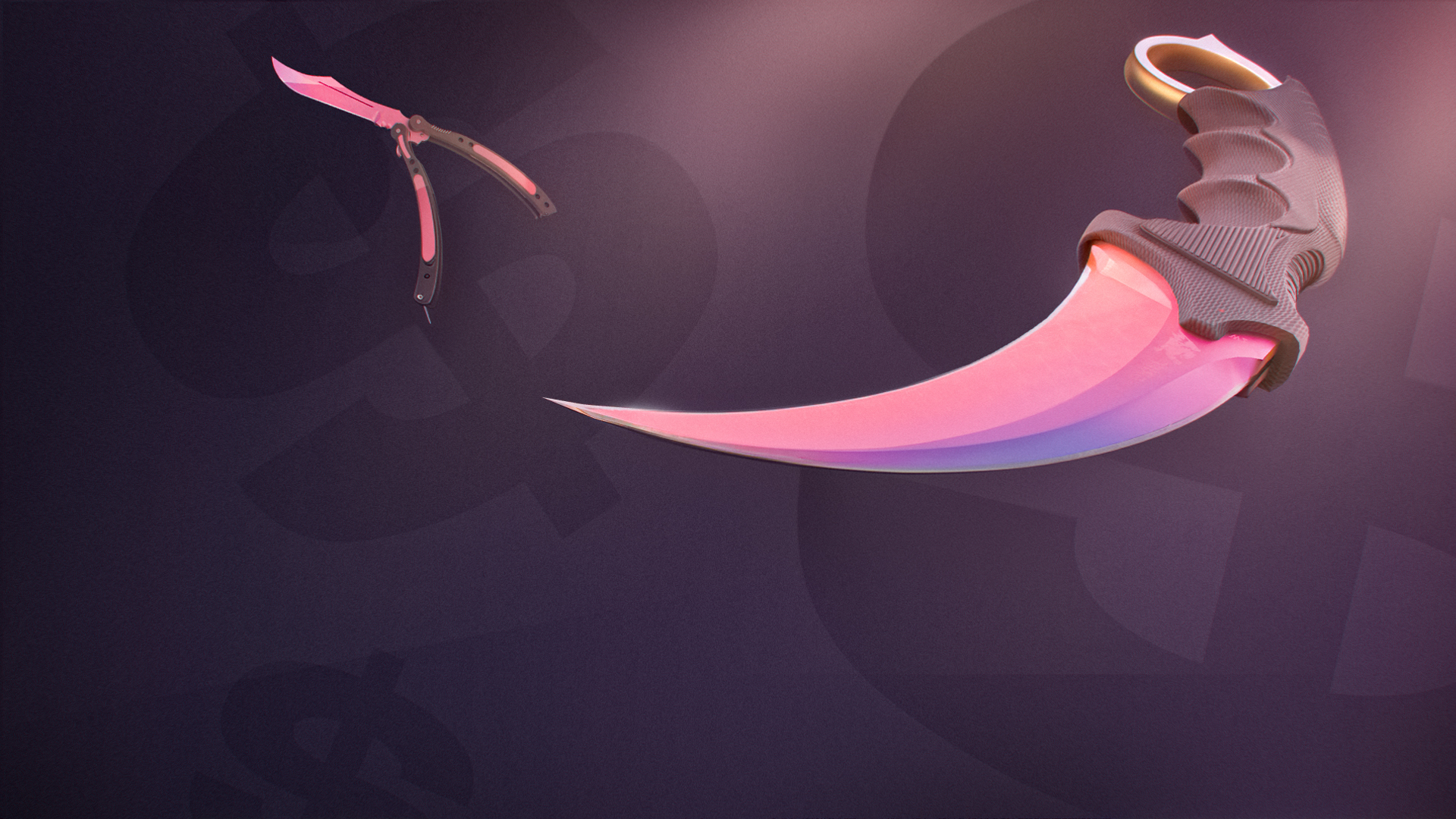

Knives are cosmetic items in Counter-Strike, but they have long evolved into collectibles and true luxury items. The game now features 20 knife types and 428 indexed knife skins, which together form one of the largest and most visible segments of the skin economy. That broader Counter-Strike skin market is now worth about $8 billion, while knife prices can range from roughly $50 at the low end to more than $1.5 million for the rarest collector pieces.
Why Are Some CS2 Knives So Expensive?
- Base rarity: Every knife starts from limited supply because knives sit in the Gold tier at 0.26%, which already places them above regular weapon skins in overall scarcity.
- Model: The knife model affects price before the finish is even considered. The same finish usually sells much higher on a Karambit or Butterfly Knife than on lower-demand models because those knives have stronger demand and better resale speed.
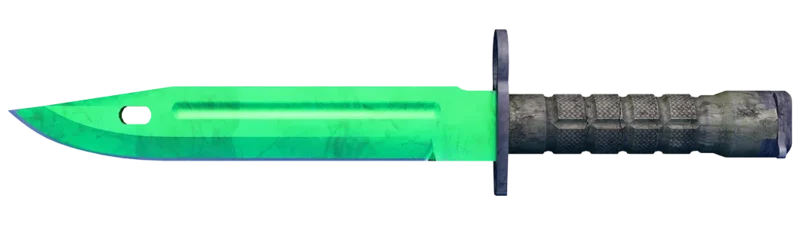
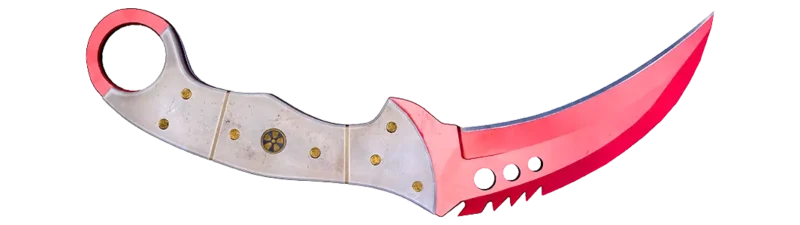
- Finish: Some finishes enter the expensive segment by default because supply is tighter from the start. Variants like Sapphire, Ruby, and Emerald are often limited to Factory New and Minimal Wear, which reduces the number of available examples on the market.
- Pattern and float: This is where the biggest price gaps appear. A top Karambit Case Hardened Blue Gem #387 can be 7,500 times more expensive than a regular Karambit Case Hardened, while 100% Fade seeds and strong Crimson Web placements also trade far above standard versions. Float matters because it affects wear, edge condition, and how clean or worn the finish looks.
- Liquidity: Price also depends on how easily a knife can be sold. Karambit, Butterfly Knife, and M9 Bayonet usually have deeper buyer demand and steadier pricing, while less liquid models often stay listed longer and need a discount to move.
- StatTrak: On knives, StatTrak doesn’t always add value. Many CS2 buyers prefer the standard version because it keeps the blade cleaner, so StatTrak knives often sell close to non-StatTrak ones or even lower.
In CS2, the highest-priced knives usually sit at the intersection of several factors at once, including a top-tier model, a scarce finish, a strong pattern, low wear, and enough market demand to keep pricing firm.
Knives Case Drop Probabilities
In CS2, every knife comes from the Rare Special Item, or Gold, tier. That part of the drop system doesn’t change from one case to another, so whether the target is a standard knife or one of the most expensive knife skins in the game, the base knife odds remain the same across cases. These figures are based on large community-tracked datasets built from thousands of case openings. At 0.26%, the average works out to roughly 1 knife per 385 openings.
The same drop barrier applies to even the highest-value knives in CS2, because no standard case gives better knife odds. The chance of pulling a knife stays the same even at the Gold tier, so only the knife model, finish, pattern, and float vary. That’s where the real price gap begins, since two knives can come from the same Gold tier and still end up in completely different market brackets depending on the finish, the seed, and the wear. That’s how one result stays in the hundreds of dollars while another moves into the thousands or far beyond. The current drop odds look like this:
Rarity Tier | Drop % |
|---|---|
Mil-Spec (Blue) |
79.92% |
Restricted (Purple) |
15.98% |
Classified (Pink) |
3.2% |
Covert (Red) |
0.64% |
Rare Special Item / Knife (Gold) |
0.26% |
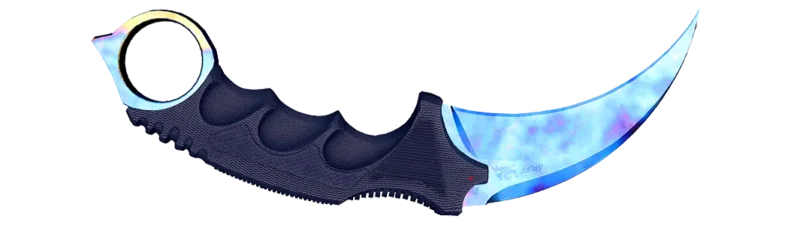
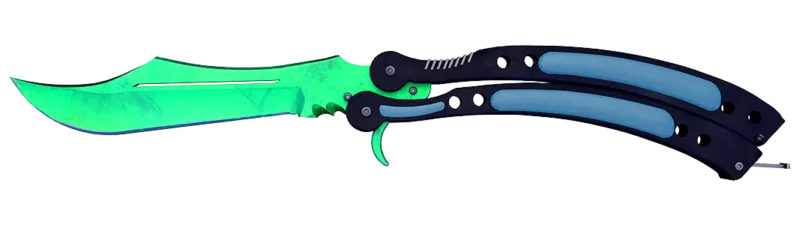
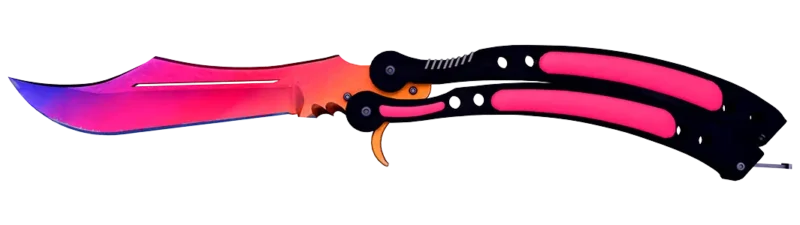
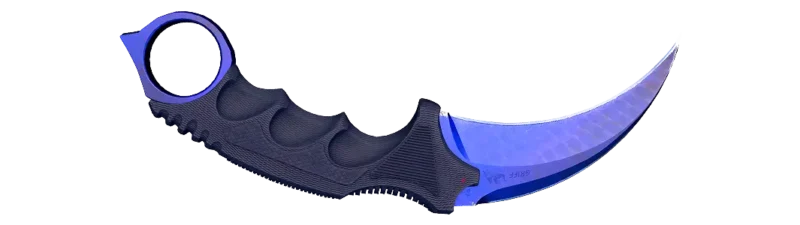
The Top 10 Most Expensive CS2 Knives
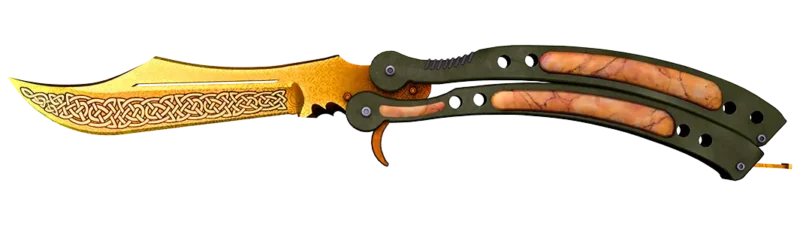
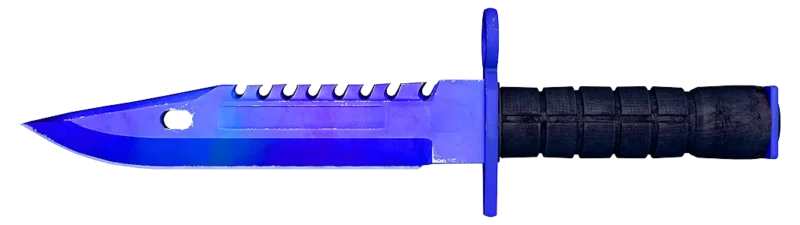
How to Get Expensive CS2 Knives
CS2 knives can be obtained through direct purchase or through methods based on item rolls. Each player can choose the way that feels the most suitable for their budget and goal.
- Buying: Buying is the safest and most direct approach. The main advantage is full control over the knife’s model, finish, wear level, and price before payment. There’s no random result, so this is usually the most cost-effective option for a specific knife.
- Opening cases: Opening cases is based on chance. Knives are part of the Rare Special Item tier, with an estimated drop rate of about 0.26%, or around 1 knife in 385 case openings. Even when a knife drops, the exact model, finish, pattern, and wear level are random. So case opening is the least cost-effective method in most situations. It can cost much more than buying the knife directly.
- Using Trade-Up Contracts: Trade-up contracts can be used to get high-tier items from Covert skins. Five StatTrak Covert skins can give a StatTrak knife, while five regular Covert skins can give a regular knife or gloves from the collections used in the contract. This method is less random than case opening, but the result is still shaped by the input skins and their collections. It may cost less than case opening with the right inputs, though the final outcome comes down to contract luck.
In most cases, buying is the best way to get a specific expensive CS2 knife. Trade-up contracts may work better for players who understand skin collections and market prices. Case opening has the lowest chance of success and is usually the most expensive option over time.
CS2 Skin Market Trends
If the expensive CS2 knife segment is analyzed in terms of price behavior and market structure, the Karambit Case Hardened Blue Gem remains the main reference point for the highest price ceiling. Its value depends primarily on the rarity of specific patterns and on how much buyers are willing to pay for the best examples. The Karambit Doppler Sapphire is a more stable reference for buyers who care about price predictability, because its market range is usually easier to read and deals can be evaluated without an unusually wide spread. The Butterfly Knife Gamma Doppler Emerald keeps a high price because, even within the premium segment, it’s easier to find a buyer for it without a noticeable price cut, while its price floor tends to hold more firmly than that of many other top-tier items. The CS2 knife market remains volatile, so it’s always important to check current prices and demand before buying.
Every Item at a Glance
Accurate pricing as of 09/2026.
Knife Skin | Drop Chance % | Price Range | Key Pricing Factor |
|---|---|---|---|
Karambit Case Hardened Blue Gem |
0.00064% |
$14,000 – $1,500,000 |
Pattern and float drive value here, with Factory New Pattern #387 estimated at over $1.5 million. It is the only known near-100% blue playside seed, and the only known FN copy is held by a Chinese collector and is off-market. |
Butterfly Knife Gamma Doppler Emerald |
0.002% |
$7,200 – $8,500 |
Separate Gamma Doppler variant, not a phase, and only exists in FN and MW. MW is rarer by float range, but FN sells higher because it looks cleaner. Top FN patterns such as #602 and #72 trade around $10,000. |
Butterfly Knife Fade |
0.02% |
$2,162 – $2,452 |
100% Full Fade FN is the top version with a ~0.00009% drop chance. Percentage is seed-based, and a true 100% shows an uninterrupted yellow-to-purple transition. |
Karambit Doppler Sapphire |
0.001% |
$4,329 – $5,029 |
Price moves are steadier here because condition matters more than minor pattern differences, and the drop chance is 0.00003%. |
Bayonet Gamma Doppler Emerald |
0.002% |
$1,534 – $2,744 |
Factory New is the most expensive condition, and this knife shows an unusually wide price gap between MW and FN. |
Talon Knife Doppler Ruby |
0.001% |
$2,353 – $3,156 |
Among the rarest standard Doppler gem variants, only available in FN and MW, with FN priced highest. |
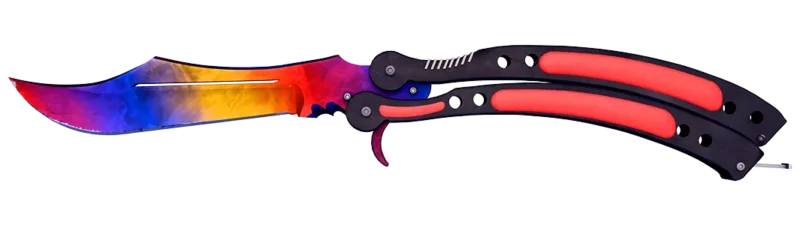
Butterfly Knife Marble Fade |
0.009% |
$1,314– $1,557 |
The rarest and most expensive version is considered to be the Factory New Max Red Tip, with a fully red blade tip. |
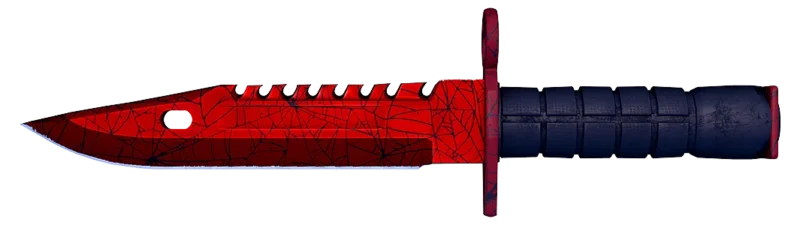
M9 Bayonet Crimson Web |
0.004% |
$420 – $5,525 |
Centered large web in Factory New is the rarest and most expensive version, and appears on only about 5% of Crimson Web seeds. |
Butterfly Knife Lore |
0.009% |
$480 – $2,077 |
No rare pattern here, with value driven almost entirely by float. Available in all five conditions, so clean FN examples carry the premium. |
M9 Bayonet Doppler Sapphire |
0.002% |
$3,700 – $4,600 |
Only exists in FN and MW, and the large blade makes dark spots easier to see, so cleaner blue coverage is valued more highly. |
In CS2, the biggest price gaps come from two different categories. Gem finishes are easier to price because value depends more on the finish tier, the knife model, and condition. That’s why Karambit and Butterfly stay at the top, while Factory New Butterfly Knife Gamma Doppler Emerald usually trades around $7,900 to $9,000. Pattern-driven finishes behave differently. Karambit Case Hardened Blue Gem Pattern #387 is widely valued above $1.5 million, and 100% Full Fade stays above 99% because the seed determines the percentage.
The next split comes from condition availability, float, and pattern placement. FN and MW only finishes keep supply tighter, while skins available in all five conditions have lower entry points but much bigger jumps into clean FN. M9 Bayonet Crimson Web spans 0.06 to 0.80 float, so both wear and centered webs can move it into a different price tier. On gem finishes, MW is statistically rarer than FN because 0.07 to 0.08 is narrower than 0.00 to 0.07, but FN still sells higher because the cleaner look is valued more.
FAQ
-
What is the most expensive knife in CS2?
The most expensive CS2 knife is the Karambit | Case Hardened Blue Gem, with Pattern #387 as the main reference. Its value is driven by near-full blue coverage on the playside and Factory New rarity. The knife originates from the CS:GO era: it was during CS:GO that a $1.5 million offer for this pattern was rejected by its Chinese owner. It remains the most expensive CS:GO knife ever documented. In CS2, market estimates for #387 FN still place it above $1.5 million, with some collectors valuing it higher.
-
What is the rarest knife in CS2?
The rarest reference in CS2 is the Karambit Case | Hardened Blue Gem Pattern #387. Fewer than ten copies are often reported in collector circles, while only one Factory New copy is widely confirmed. This makes Pattern #387 the main rarity benchmark for the skin.
-
How much are knives worth in CS2?
Knife prices in CS2 usually range from about $50 to $1,000, depending on the model, finish, condition, float, and pattern. Some rare models can still sell for tens of thousands of dollars when supply is extremely limited, the pattern is especially desirable, and demand comes from collectors competing for very few available examples.
-
Is opening cases a good way to get an expensive knife?
No. Knife odds are about 0.26%, and the pattern is still random, so buying on the market is more efficient for a specific skin. As an example, on Skin.Club average case ROI often sits around 80-90%, and curated knife cases can offer much higher odds of a good drop than standard CS2 cases.




![The Best Bowie Knife Skins In CS2 [2026]](https://community.skin.club/wp-content/uploads/2023/12/Vertical-Thumbnail-1-1-113x300.jpg)
![Cheapest CS2 Karambit Knife Skins [2026]](https://community.skin.club/wp-content/uploads/2023/08/Vertical-Thumbnail-4-113x300.jpg)
![The Best Moto Gloves in CS2: Ranked List [2026]](https://community.skin.club/wp-content/uploads/2023/10/Vertical-Thumbnail-4-1-113x300.jpg)
![Best Flip Knife Skins in CS2: Gamers’ Choice [2026]](https://community.skin.club/wp-content/uploads/2023/08/Vertical-Thumbnail-113x300.jpg)
![Best Golden Skins In CS2 To Buy [2026]](https://community.skin.club/wp-content/uploads/2023/11/Vertical-Thumbnail-15-113x300.jpg)
![How to Play Glock-18 in CS2: Full Guide [2026]](https://community.skin.club/wp-content/uploads/2024/07/Collection_15-113x300.webp)