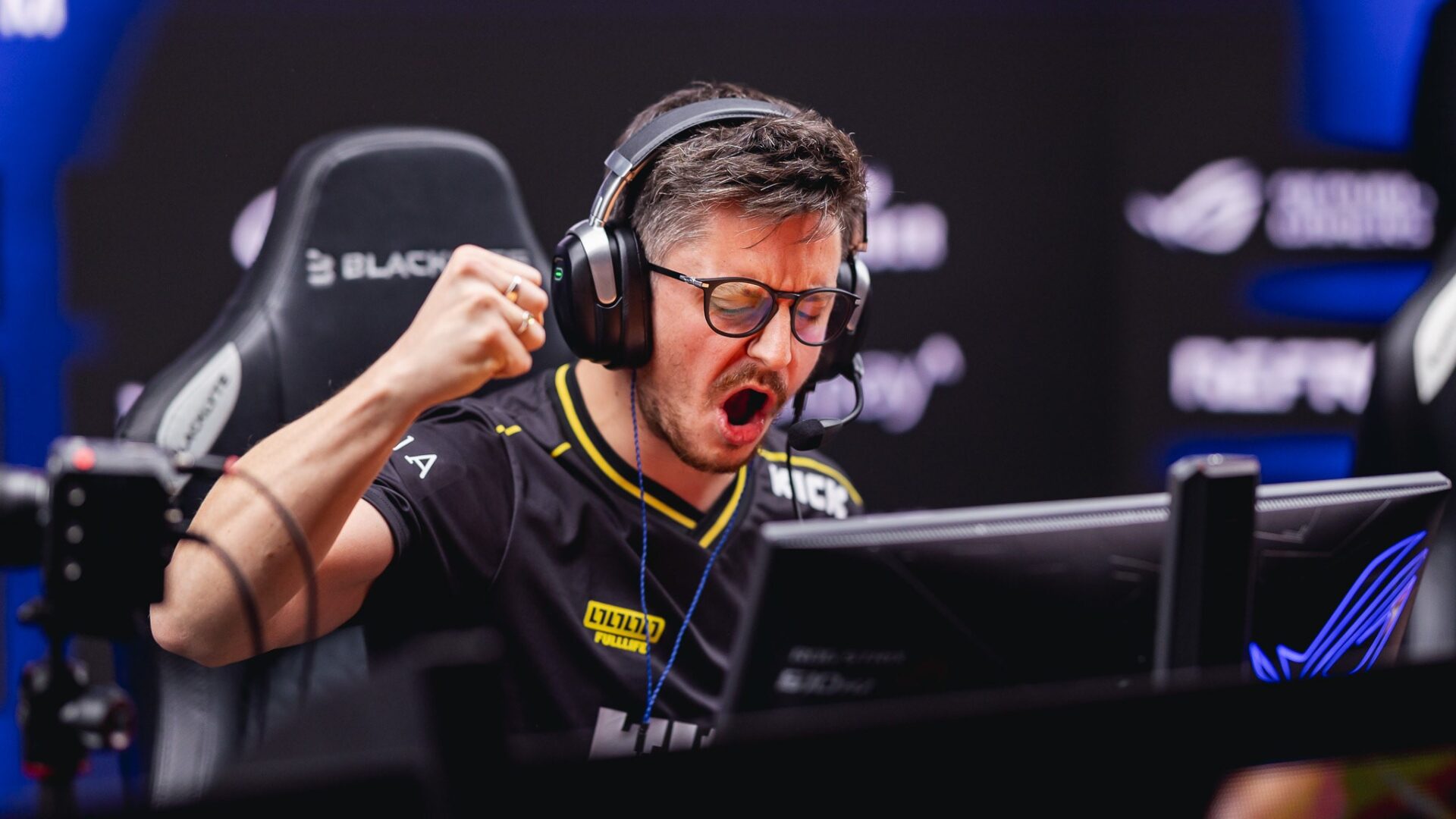

Ideal national teams in Counter-Strike are always more than just a game of names. Lists like these quickly show who is truly seen as the face of a country beyond its borders, and who is viewed as an underrated asset. This time, apEX and mezii joined that kind of small fan experiment by putting together their own versions of the France and Ukraine national teams.
How apEX and mezii saw the Ukraine national team
In the Vitality players’ version, the Ukraine national team looks like this: b1t, s1mple, fear, Kvem, JACKASMO. It was exactly this list that became the main object of attention, because it combines both the most obvious names and choices that already look a little broader than the classic “let’s just pick the most famous players.”
And that is probably the most interesting thing about the story itself. When foreign top players build a Ukrainian five not only around historical weight, but also around the current perception of the scene, it means that the Ukrainian player pool is no longer read from the outside as just one or two major brands, but as a much broader ecosystem.

This five includes both respect for legacy and a bet on the present
The presence of s1mple and b1t here is not surprising at all. These are names that, for any outside audience, are automatically associated with Ukrainian Counter-Strike. One is historically the country’s most powerful individual brand, while the other is a player who has long established himself on the big stage and has become synonymous with consistent quality.
But the other three names make this list more interesting. fear, Kvem, and JACKASMO are already choices based not on the loudest past, but on a sense of current potential and importance within the modern Ukrainian player pool. That is why this lineup does not look like a nostalgic national team of “all the most famous names,” but rather like a more alive version of a team that combines a major name, systemic top-level quality, and newer talent.

Why the Ukrainian five looks especially telling here
In lists like these, what matters is not only the set of players, but also how the country is perceived from the outside in general. And the choice made by apEX and mezii highlights one thing very clearly: the Ukrainian scene is not read as a market living only off NAVI’s old glory and the legacy of a few legendary names.
On the contrary, this lineup shows that even for people outside the Ukrainian context, the country has enough depth for its national team not to be reduced to two obvious names and an arbitrary selection of the rest. In other words, Ukraine is already seen as a scene that has both a great legacy and new faces who are genuinely noticeable.

The French national team also says a lot, but the Ukrainian one creates more discussion
For France, apEX and mezii chose apEX, ZywOo, Maka, neityu, and bodyy. This is also a fairly telling lineup: it is built around the current strength of French CS and demonstrates that even after many years, the scene still has a clearly visible core.
But while the French five feels fairly expected, the Ukrainian one immediately provokes more discussion. That is because it opens the door to debate: who should be considered an automatic pick, where the line lies between legendary status and current form, and how much the outside view matches the way the Ukrainian community itself sees its ideal lineup.
Lists like these are valuable not for their accuracy, but for how they highlight the scene’s reputation
The story of the national teams from apEX and mezii is interesting not because anyone is actually going to assemble these teams on a server. Its value lies elsewhere: choices like these show very well how strong players from the top scene perceive national Counter-Strike schools outside their own bubble.
And if we are talking specifically about Ukraine, their list sounds like a compliment to the depth of the scene. Because when your country can be built not only from obvious legends, but also from a newer layer of genuinely noticeable players, it means that your place in CS has long remained not only historically important, but also presently strong.