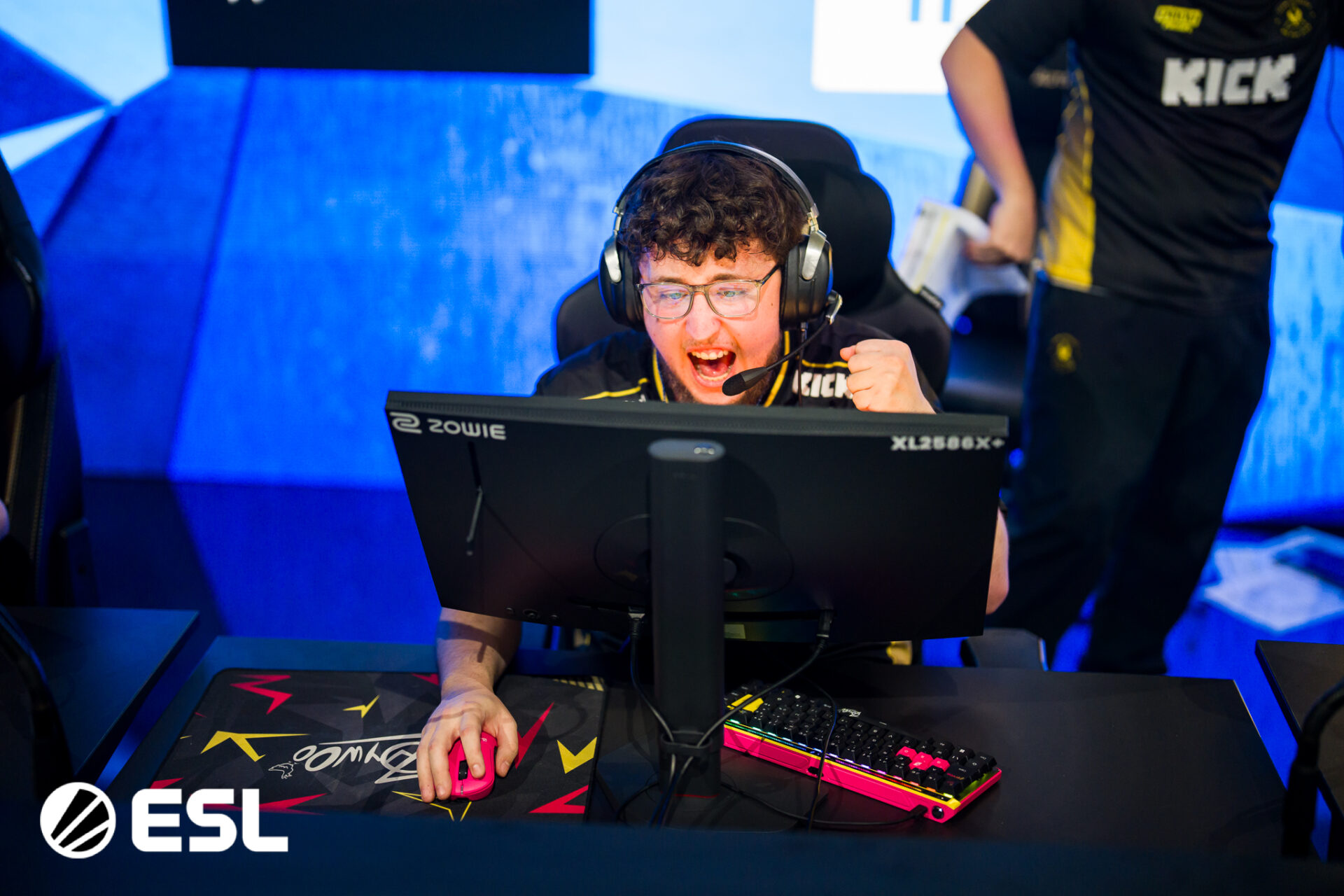

For nearly twenty years, finding a world-class AWPer was considered one of the most important steps in building a championship roster. From the dominance of players like GuardiaN, FalleN and dev1ce to the era of s1mple, ZywOo and sh1ro, the AWP was more than just the game’s most expensive weapon—it was often the centerpiece of an entire team’s identity. Economies were managed around it, defaults were designed to create favorable sniper duels, and countless rounds were won because one player could control half the map with a single rifle.
Some of the players who defined the AWP role across different eras include:
- GuardiaN
- FalleN
- dev1ce
- kennyS
- s1mple
- ZywOo
- sh1ro
- m0NESY
That philosophy shaped professional Counter-Strike for more than a decade, but the modern game is beginning to tell a different story. Recent data collected across 144 players during the 2026 season suggests that teams are relying on the AWP less frequently than ever before. The weapon contributes a smaller share of total damage, accounts for fewer kills than many would expect, and, perhaps most surprisingly, buying it more often no longer appears to correlate with winning more rounds. While elite snipers continue to make the difference at the highest level, successful teams increasingly rely on the consistency and versatility of their rifle core rather than on one dedicated specialist. This does not necessarily mean that the AWP has become weaker. Instead, it suggests that the expectations placed upon the player holding it have fundamentally changed. Interestingly, Counter-Strike has already experienced a remarkably similar transformation.

From Non-Shooting IGLs to Non-Shooting AWPers
There was a time when the biggest concern in roster building had little to do with firepower. Throughout much of the CS:GO era, many elite teams accepted an in-game leader whose primary responsibility was tactical decision-making rather than fragging. Players such as Zeus, gob b, pronax and MSL often finished tournaments with some of the lowest ratings in Tier 1 Counter-Strike, yet their value was rarely questioned. The strategic structure they provided outweighed their lack of individual production, particularly during an era when coaches could actively communicate throughout official matches.
As Valve gradually restricted coaching involvement and the overall mechanical level of professional Counter-Strike continued to rise, that model became increasingly difficult to sustain. Every player on the server was expected to contribute individually, regardless of their role. Calling remained essential, but surviving without producing consistent impact no longer satisfied the demands of elite competition.
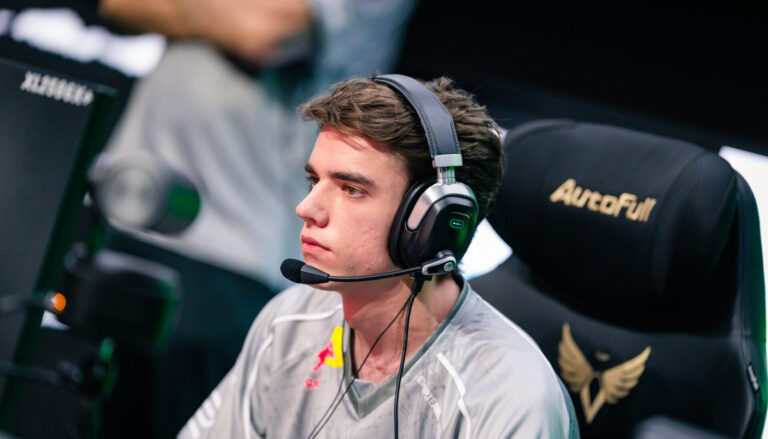
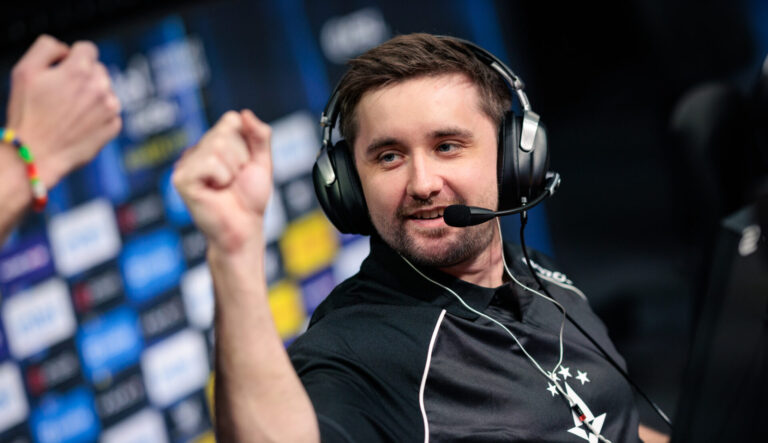
Today’s leading in-game leaders illustrate that evolution perfectly. Dan “apEX” Madesclaire remains one of Vitality’s emotional and tactical leaders while consistently delivering important individual performances. Finn “karrigan” Andersen continues adapting his game despite competing at the highest level well into his thirties, while Kamil “siuhy” Szkaradek and Damjan “kyxsan” Stoilkovski are expected to create opening opportunities rather than simply directing teammates from behind. The dedicated “non-fragging IGL” has largely disappeared from top-level Counter-Strike. Now, the same pressure appears to be reaching another role that has historically enjoyed far greater patience than any other. The primary AWPer.

A Role That Has Long Been Protected
For most of Counter-Strike’s history, the primary sniper occupied a unique position within a roster. Unlike riflers, whose performances were judged almost entirely by their consistency and impact, AWPers were often evaluated under a different set of expectations. Organizations remained willing to invest significant resources into the role because of the weapon’s perceived ability to win rounds almost single-handedly. An inconsistent sniper was often viewed as a temporary problem rather than a structural one, largely because teams believed the next game—or even the next half—could justify months of patience.
read more
That approach was understandable during the height of the AWP era. The weapon’s influence frequently dictated the pace of entire matches. Teams prioritized keeping their sniper equipped, adjusted their economy around expensive rebuys, and designed both offensive and defensive systems to maximize the weapon’s strengths.

Modern Counter-Strike has gradually reduced those advantages. The economy is less forgiving, utility usage is significantly more refined, and riflers are creating opening advantages with increasing consistency. Rather than waiting for the AWP to dictate the pace of a round, many teams now generate momentum through coordinated rifle aggression, efficient trading and faster map control. In this environment, a player who only reaches peak impact when holding a $4,750 weapon naturally becomes less valuable than one capable of producing the same influence with an AK-47 or an M4. This shift raises an important question. Has professional Counter-Strike begun moving away from the concept of the dedicated AWPer altogether?
What the Numbers Tell Us
Until recently, the discussion surrounding the AWP was almost entirely based on perception. Every fan remembers the spectacular highlights—s1mple’s falling no-scope, ZywOo’s impossible clutches or m0NESY’s flicks—but highlights rarely explain how teams consistently win matches over an entire season.
A recent statistical study published by Xtrimis, based on data from 144 qualified players across the 2026 competitive season, paints a far more nuanced picture. Instead of focusing on individual ratings, the study examines how often teams actually buy the AWP, how much damage it contributes, how many kills it secures, and whether relying on the weapon translates into winning more rounds. Taken individually, each visualization tells an interesting story. Together, however, they suggest that professional Counter-Strike is becoming increasingly rifle-driven.
- 144 Tier 1 players analyzed
- Average T-side AWP purchase rate — 35%
- Average AWP damage share — 13%
- Average AWP kill share — 11%
Teams No Longer Build Their T Sides Around the AWP
The first visualization immediately challenges one of Counter-Strike’s oldest assumptions. Across all teams included in the study, the median roster fields an AWP in just 35% of its Terrorist rounds. In other words, even the average Tier 1 team chooses to play without a sniper in nearly two out of every three gun rounds.
Perhaps even more revealing is the upper limit of the graph. No team reaches a 60% AWP usage rate, something that would have been almost unthinkable during the peak of the CS:GO era. There was a time when organizations rebuilt entire economies around replacing a lost AWP. Today, even the most sniper-oriented teams frequently prefer five rifles instead. The graph also demonstrates that buying the weapon more frequently does not automatically improve results.
Players like sh1ro, woxic and m0NESY appear in the upper-right section of the graph, combining above-average Terrorist win rates with relatively frequent AWP purchases. Their teams clearly generate value from the weapon because their snipers consistently convert opening opportunities into round victories.
However, several other teams invest in the AWP at a similar or even higher rate while producing significantly weaker results. aliStair, sl3nd, ultimate and gr1ks all sit below the average Terrorist win percentage despite purchasing the AWP regularly.
The opposite trend can also be observed. Several successful teams remain close to—or even below—the median AWP usage while maintaining excellent T-side performances. Rather than depending on expensive sniper rifles, they create advantages through coordinated rifle entries, efficient trading and superior utility usage. The conclusion is difficult to ignore. Simply buying an AWP no longer guarantees a stronger Terrorist side.

The Rifle Core Is Carrying More of the Work
The second graph reinforces the same idea from a different perspective. Rather than measuring how often teams purchase the AWP, it measures how much of a team’s total damage actually comes from its primary sniper. The benchmark is particularly interesting.
Since every lineup consists of five players, an equal distribution would suggest that each role contributes roughly 20% of overall team damage. Xtrimis marks this threshold with a gold horizontal line. No team reaches it. Not one.
Instead, the median team receives only around 13% of its total damage from the AWP, while even the most sniper-dependent lineups remain below 17%. This is a remarkable finding.
For years, the AWP has been regarded as the game’s defining weapon, yet its actual contribution to overall offensive production is substantially lower than many would expect. The strongest teams illustrate this perfectly.
Although players such as sh1ro, woxic, m0NESY and molodoy all belong to winning teams, none of them account for anywhere near one-fifth of their team’s total damage. Their success comes from complementing an already dominant rifle core rather than carrying the entire offense themselves.
At the opposite end of the spectrum, several struggling teams actually receive a relatively larger share of their damage from the AWP without translating that into victories. Simply put, rifles are doing most of the heavy lifting. The sniper is no longer the centerpiece of every successful attack.

The AK-47 Remains the Most Valuable Weapon in Counter-Strike
If there were still any doubts about what drives modern Counter-Strike, the weapon distribution graph removes them. The AK-47 sits alone in the upper-right corner, leading every weapon in both total kills and total damage. The M4A1-S follows comfortably behind, once again outperforming every other firearm in the game.
read more
Only then comes the AWP. Considering its reputation—and its $4,750 price tag—its position is surprisingly modest. The AWP certainly remains lethal, but it no longer dominates offensive production the way it once did. Instead, the overwhelming majority of damage throughout professional Counter-Strike now comes from rifles.
The graph also highlights another often-overlooked trend. Grenades collectively contribute more damage than nearly the entire pistol category, underlining just how utility-focused modern Counter-Strike has become. Winning rounds is increasingly about layered utility, coordinated rifle fights and efficient trading rather than simply giving one player an expensive sniper rifle. The modern game rewards consistency over specialization.

AWP Kills Do Not Necessarily Create More Value
Perhaps the most revealing visualization in the entire study examines something more important than kills alone.
Instead of counting frags, Xtrimis compares the percentage of a team’s kills secured with the AWP against Team Net Win Swing, a metric designed to estimate how much value those kills actually generate toward winning rounds. Once again, the expected relationship simply isn’t there.
The median team records only around 11% of its kills with the AWP, while no roster reaches the theoretical 20% benchmark representing an equal contribution from all five players. More importantly, increasing the proportion of AWP kills does not automatically increase overall team value.
Players such as m0NESY, woxic, torzsi and hypex generate exceptionally strong Win Swing values despite relatively modest AWP kill shares. Their impact comes from winning important rounds, creating opening advantages and converting key situations—not simply accumulating sniper kills.
Meanwhile, several players who rely more heavily on the AWP remain below the zero-value line, suggesting that a larger percentage of AWP kills alone is not enough to improve a team’s chances of winning.
This distinction is crucial. Counter-Strike has never rewarded statistics for their own sake. A spectacular highlight means little if it arrives after the round has already been lost. The best AWPers in modern Counter-Strike are no longer defined by how many kills they collect with the sniper rifle. They are defined by how much value they create regardless of the weapon in their hands.

The Future of the AWPer
The AWP isn’t disappearing from professional Counter-Strike. It remains the game’s most impactful weapon in the right hands, and players like ZywOo, sh1ro, m0NESY and woxic continue to prove that an elite sniper can still decide championships. What is changing is the profile of the player holding it. For years, teams searched for specialists—players whose primary responsibility was to carry the AWP. Today’s data suggests organizations are beginning to value something different. They are looking for complete Counter-Strike players who can rifle, trade, entry and clutch just as effectively as they can snipe.

The numbers presented by Xtrimis reflect that evolution. Teams buy the AWP in only 35% of their T rounds on average, receive just 13% of their total damage and around 11% of their kills from the weapon, while no roster comes close to the theoretical 20% contribution expected from one player in a five-man lineup. At the same time, rifles continue to dominate every major offensive metric, and increasing AWP usage alone shows little correlation with winning more rounds or generating more value.

Counter-Strike has already experienced this type of evolution once before. The era of in-game leaders who could survive without fragging eventually came to an end as every player became responsible for contributing individually. The same standard now appears to be reaching the AWP role. Being an elite sniper is no longer enough. The modern AWPer is expected to be one of the team’s best players first—and its sniper second.
Perhaps that is the biggest shift in professional Counter-Strike over the past decade. Teams are no longer asking, “Who is our AWPer?” Instead, they are asking, “Which of our best players should carry the AWP?”