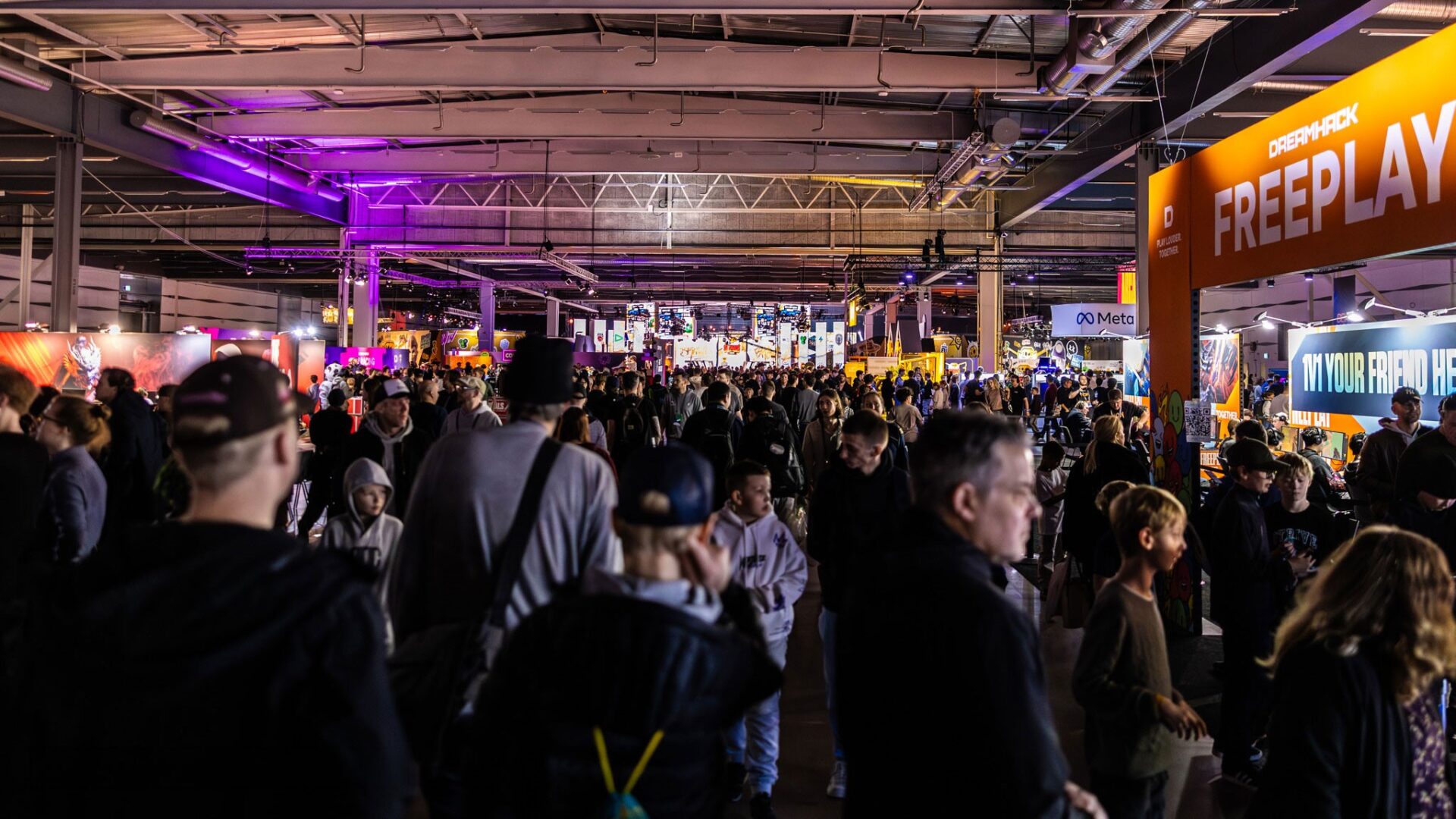

DreamHack is officially moving away from the BYOC system — the format in which visitors came to the festival with their own computers. For the scene, this is not just an organizational change, but the effective end of an entire era: for decades, the ocean of thousands of monitors and rows of PCs was one of the main symbols of DreamHack.
DreamHack
The organizers explain the decision simply: fewer and fewer people are actually bringing their own equipment to the festival, while maintaining that infrastructure becomes more expensive every year. According to them, in 2025 fewer than 10% of all visitors brought their own computers. Against that backdrop, DreamHack decided to shift the focus away from the classic LAN format toward a more accessible version, where people will be able to play without needing to drag an entire setup with them.
DreamHack is closing one of its main symbols
In its statement, the DreamHack team directly emphasizes that the festival was born back in 1994 around a very simple idea: pack up your digital life, bring it into a huge hall, and connect to something bigger than just playing at home. That is exactly what the whole BYOC culture grew out of.
So this decision hits not only the practice, but also the image of DreamHack itself. For many people, the brand was associated for years not so much with the stage or the show, but with giant rows of tables, cables, towers, and monitors that created the iconic vibe of old LAN festivals.
Why they are giving up BYOC right now
The main reason is a simple change of times. DreamHack admits that over the last twelve years, the culture of attending festivals has changed significantly. People still want to come to events, but they no longer do it the same way they once did.
Today, most people come not to haul in their own PC and sit in the LAN zone for several days straight. The festival has become more of a place for watching esports, meeting people, enjoying activities, and taking in the overall social experience. Against that background, BYOC gradually stopped being the center of the event and became an expensive element used by a very small part of the audience.
The focus will now be on ready-made gaming zones
DreamHack specifically stresses that the spirit of playing at the festival will not disappear. They are not removing the possibility to sit down and play with friends, win prizes, or simply spend time in a competitive environment. It is just that now this will be built not around PCs brought by the participants, but around ready-made infrastructure provided by the organizers themselves.
In practice, this means a shift toward a more open model, where a player no longer needs logistics, hardware, a monitor, peripherals, and the willingness to carry all of that across the country or the world. For a new audience, this is more convenient, but for the old one, obviously less romantic.
This decision shows very clearly how the very meaning of the festival has changed
Once, DreamHack was a place people genuinely traveled to in order to play. In the early 2000s, this had very practical importance: many people simply did not have proper high-speed internet at home, while at the festival they could get a true LAN experience with a huge number of people.
That is exactly why important chapters in Counter-Strike history also unfolded in this format. For example, the LAN qualifier for the first CS:GO Major in 2013 was also part of this culture, where people came with their own machines and truly played in conditions of physical presence with all participants on site.
The festival is not shrinking, it is rebuilding
DreamHack also emphasizes that it does not intend to become smaller. On the contrary, it wants to use the newly freed-up space for even more interactive content. So the BYOC zone is disappearing not because the festival is dying, but because the organizers want to use that area for other formats that are now more interesting to a wider audience.
This is a very important point. DreamHack is essentially saying: the heart of the festival is not the cable under the table, but the person sitting at that table. From a romantic point of view, that sounds beautiful, but for the old school it still sounds like an official farewell to the version of DreamHack they once fell in love with.

BYOC is not completely dead, but it will no longer be part of DreamHack
Another important message in the statement is that the organizers are not trying to say that the LAN format with personal PCs is no longer needed by anyone. On the contrary, they acknowledge that around the world, especially in Sweden, there are still strong local LAN events, and they encourage those who truly live for the BYOC experience to support those events.
So DreamHack is not killing the culture completely — it is simply stepping out of it itself. And that is probably the most accurate way to describe the whole news story.