The commercial landscape of esports continues to evolve beyond traditional gaming brands. A new Esports Charts analysis of organizations competing at the Esports World Cup 2026 shows that hardware manufacturers remain the biggest investors in esports. Betting and cryptocurrency companies, meanwhile, represent only a small share of sponsorships.
Hardware brands remain the backbone of the CS2 ecosystem
Esports Charts analyzed 212 organizations competing at the Esports World Cup 2026. The study identified more than 890 publicly disclosed sponsorship deals involving over 640 different brands. The dataset provides one of the clearest snapshots of today’s esports sponsorship market.
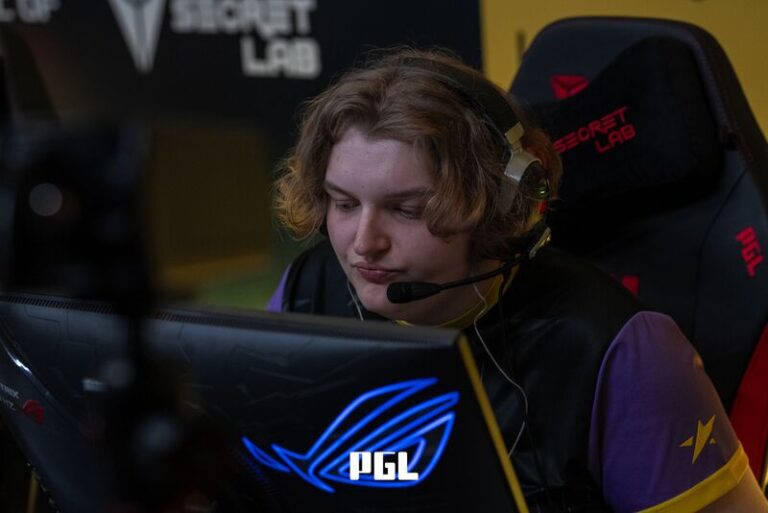
Gaming Hardware & Peripherals is the largest sponsorship category, accounting for 27.1% of all partnerships. Logitech, ZOWIE, Razer, and ASUS ROG rank among the most active sponsors and support organizations across multiple regions.
For the Counter-Strike scene, these numbers are expected. Peripheral manufacturers have supported professional CS for years. Mice, keyboards, monitors, and other gaming equipment remain central to both player performance and team branding.
Food and finance outperform betting sponsorships
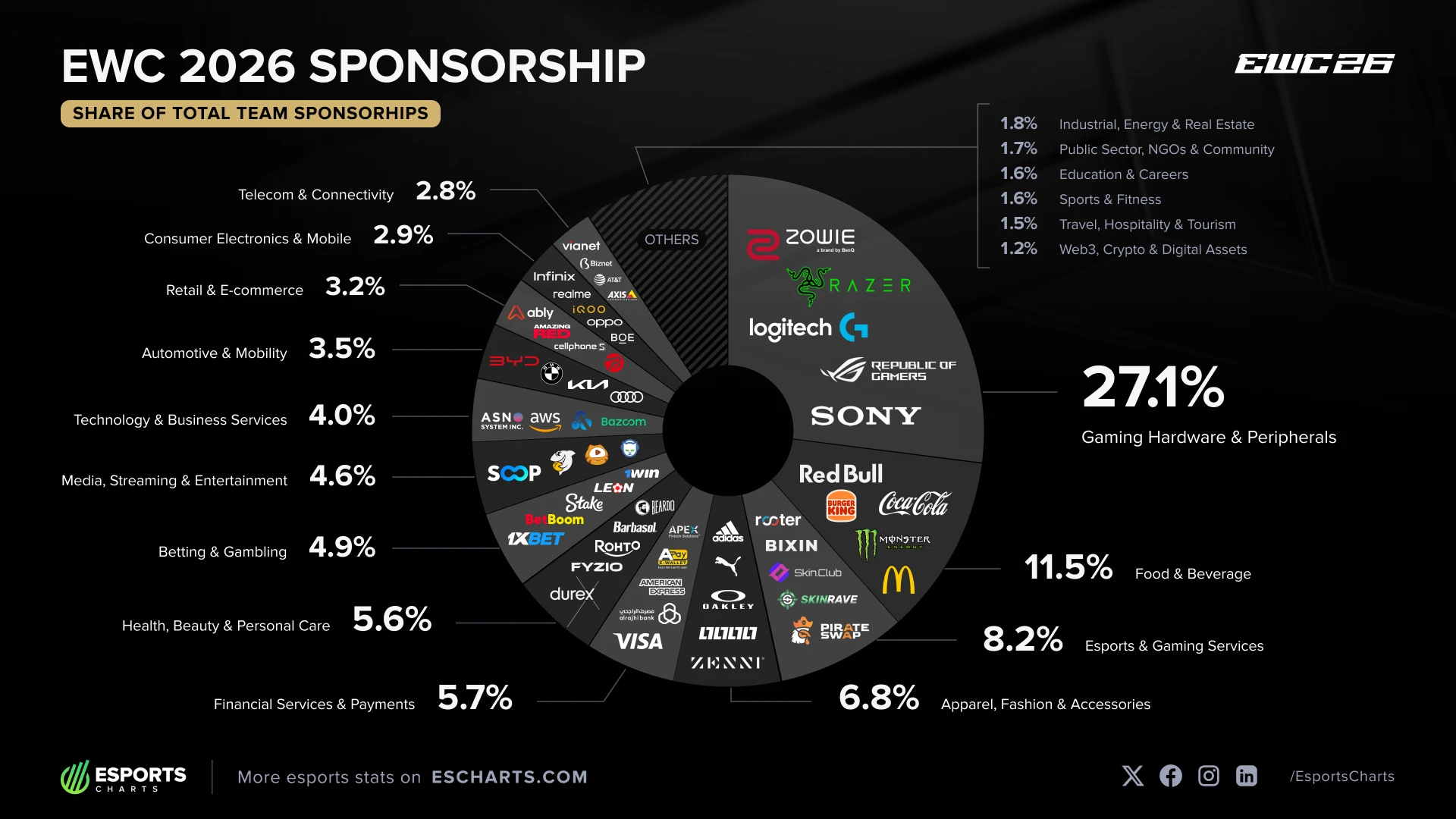
After gaming hardware, the largest sponsorship categories are:
- Food & Beverage — 11.5%
- Esports & Gaming Services — 8.2%
- Apparel, Fashion & Accessories — 6.8%
- Financial Services & Payments — 5.7%
- Health, Beauty & Personal Care — 5.6%
Betting and gambling account for only 4.9% of all disclosed partnerships. Crypto and digital assets represent just 1.2%. These figures challenge the common belief that esports depends mainly on gambling companies. Instead, sponsorships span 19 different business categories, creating a far more diversified commercial ecosystem.
CS2 organizations continue attracting global brands
The report also highlights the growing presence of internationally recognized companies. Alongside endemic gaming brands, organizations competing at EWC work with Sony, Coca-Cola, Amazon, Visa, AT&T, McDonald’s, KFC, Red Bull, and Monster Energy. Counter-Strike organizations reflect this trend. Successful teams increasingly attract mainstream companies instead of relying only on gaming-related sponsors.
A healthier commercial future for esports
Another key finding is the fragmented sponsorship market. More than 86% of identified brands sponsor only one club. This trend suggests that organizations build unique commercial portfolios instead of competing for the same global partners.
For the Counter-Strike ecosystem, the report paints an encouraging picture. Hardware companies remain the foundation of sponsorship. At the same time, clubs continue expanding into partnerships with food, finance, consumer technology, and lifestyle brands. As more global companies enter esports, the commercial foundation of professional CS2 becomes stronger and more diverse.