
Peekers advantage and why it feels bigger than it is
Peeker’s advantage is one of those ideas that sits somewhere between real and exaggerated. Most players have experienced it in some form. A fight where the opponent appears instantly, or a duel that feels decided before it fully registers.
Because of that, it often becomes a default explanation. When something feels off, it is easy to point to the peekers advantage as the reason. The reality is more specific. The mechanic exists, but its impact depends heavily on timing, connection, and how the fight actually unfolds.
Understanding what is happening behind the scenes makes it easier to separate the situations where it matters from the ones where it does not.
Where the timing difference comes from
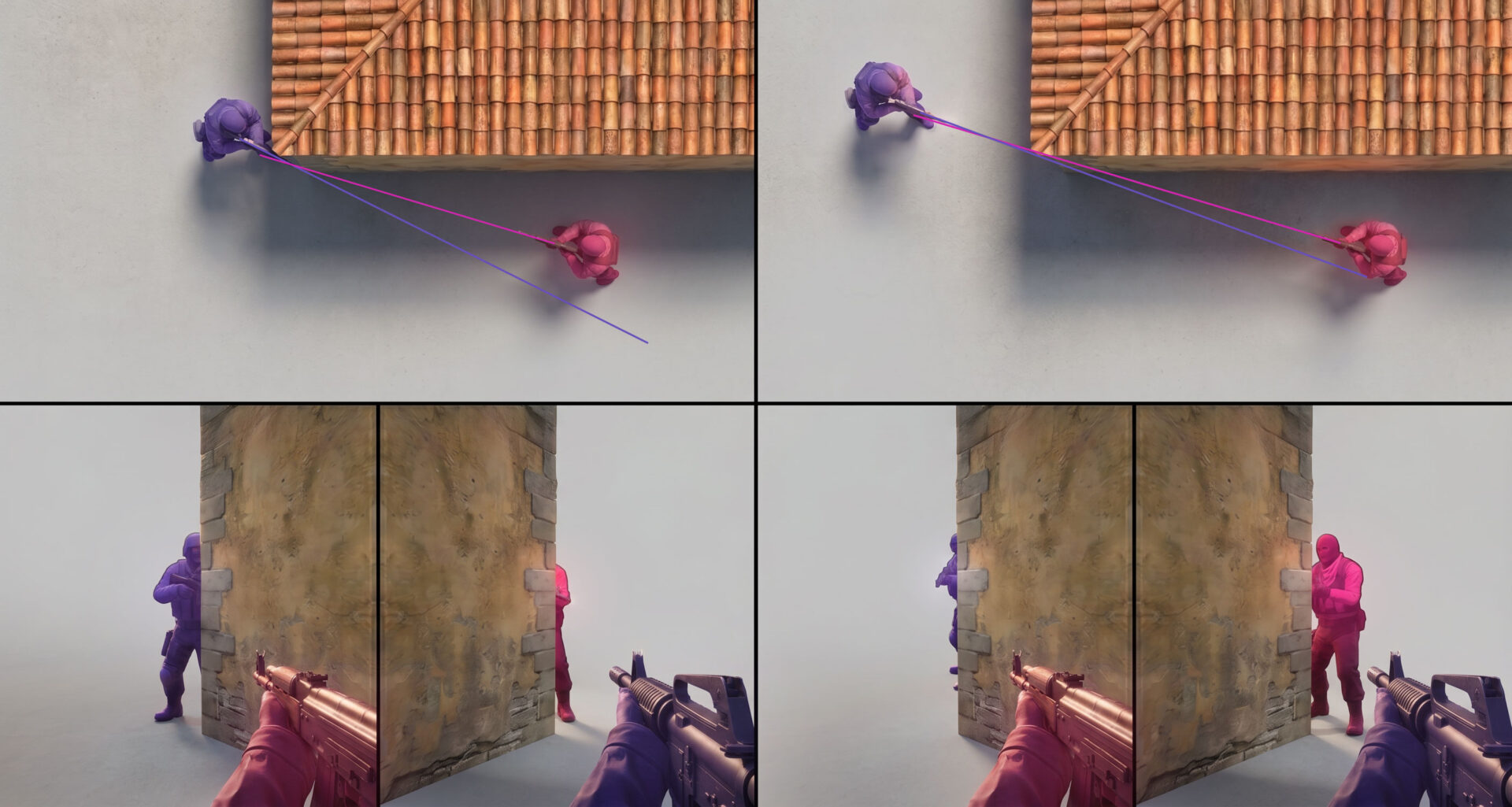
At its core, peekers advantage comes from delay. Not a large delay, but enough to matter in a fast game.
When a player moves, that information is first processed locally. It is then sent to the server, which relays it to other players. Even under good conditions, this takes time. Usually measured in milliseconds, but still enough to create a gap between what two players see.
The player initiating movement sees their own action immediately. The opponent sees it only after that information arrives. In a direct angle fight, this creates a small window where one player has access to information slightly earlier.
That window is what people refer to as a peekers advantage.
Why it is built into the system
It is tempting to treat this as something that could be removed with better design. In practice, it is tied to how responsiveness works.
If the game waited for server confirmation before showing movement, everything would feel delayed. Inputs would not feel immediate, and basic actions would lose their precision. To avoid that, games prioritize local feedback first and resolve differences afterward.
Most of the time, this approach works cleanly. The game feels responsive, and interactions appear consistent. In situations where two players meet at an angle, that same system creates a slight mismatch in timing.
It is less a flaw and more a consequence of keeping the game playable at a high level.
How latency changes the interaction
Not all fights are affected equally. The size of the timing window depends on latency and connection stability.
With low and stable latency, the gap between players is small. It exists, but it rarely dominates the outcome of a duel. Mechanical execution and positioning still carry most of the weight.
As latency increases, the delay between players becomes more noticeable. The peeking player’s window grows slightly, while the defending player receives information later. At the same time, higher latency introduces other issues. Inputs feel less precise, and outcomes become less predictable overall.
This is why the mechanic feels inconsistent across matches. It is not just about whether it exists, but how conditions change from one game to another.
The role of movement in engagements
Movement plays a larger role than the term itself suggests.
A fast, committed swing forces the opponent to react to a full change in position. There is more visual information to process, and less time to adjust. In those situations, the timing gap becomes more noticeable.
Slower movement often reduces that pressure. If a player edges into an angle or hesitates mid peek, the defender has more time to respond. The fight becomes less about timing differences and more about crosshair placement and control.
This is why decisive movement tends to be favored at higher levels. It aligns better with how engagements are resolved, regardless of how players describe the mechanic.
Holding angles still Works
One of the more common assumptions is that peekerss advantage makes holding angles unreliable. In practice, that is not how it plays out.
Strong positioning and preparation still determine most outcomes. A player holding an angle with correct crosshair placement does not need to adjust much when an opponent appears. The response is already prepared.
read more
What tends to matter more is how predictable the position is. Static, repeated holds become easier to challenge. Changing positions, using utility, and adjusting timing between rounds makes holding far more effective.
The mechanic does not remove the value of defensive play. It just places more emphasis on how it is executed.
Why certain deaths feel different
Not every fight is remembered the same way. A standard duel where both players see each other clearly blends into the background. A sudden death where the opponent appears instantly stands out.
Over time, those moments shape perception. It starts to feel like the timing gap is deciding more fights than it actually is. In reality, those cases are just more noticeable.
Most engagements still follow familiar patterns. Positioning, awareness, and preparation determine the majority of outcomes. The timing difference is present, but it is rarely the only factor involved.
The balance between consistency and fairness
There is an ongoing balance between making the game feel responsive and making interactions feel fair.
Systems that reduce delay too aggressively can introduce other problems. Shots may feel disconnected, or movement may lose its immediacy. Systems that prioritize responsiveness, on the other hand, accept small timing differences as part of the tradeoff.
What players experience is the result of that balance. It is not perfectly equal in every moment, but it remains consistent enough for competitive play to function.
At higher levels, players adapt to this without necessarily thinking about it in technical terms.
Applying it in real games
For most players, the practical takeaway is fairly limited.
Taking space with clear, committed movement tends to produce better results than hesitant peeks. When holding positions, small adjustments and variation reduce predictability. Avoiding unnecessary fights often has a larger impact than trying to win every duel on raw timing.
Understanding the mechanic helps, but it does not need to become a constant focus. Overanalyzing it can lead to worse decisions, especially in fast rounds where clarity matters more than theory.
Keeping it in perspective
Peekers advantage is part of how online shooters function. It is not unique, and it is not likely to disappear.
What matters more is how much weight is given to it. In most cases, it plays a supporting role rather than a deciding one. Players who treat it as the main reason for losses tend to overlook more consistent issues.
Across a full match, fundamentals still decide outcomes. Positioning, communication, and timing across the round matter far more than any single interaction at an angle.
The mechanic is there, but it sits in the background.