
A single tweet asking Polish fans what they thought of their favorite team accepting an invite to a Russian LAN tournament turned into one of the biggest controversies in Counter-Strike 2 this month. What started as a question about optics ended with a Polish team forfeiting every match, a tax rule sending 30% of prize money to Moscow, and an American organization publicly accusing tournament staff of dodging an invite they were owed.
Why has this pulled in so many names? Because it links three separate issues that CS2 fans already argue about constantly: money going to Russia during the war, unequal treatment of players by nationality, and whether smaller teams can even afford to say no to problematic invites. GLuck Moscow Cyber Games 2026 managed to touch all three at once.
How the Controversy Started
Oleksandr Petryk, known online as petr1k, started the whole story with one tweet. He asked Polish fans a simple question: what did they think of Walczaki accepting an invite to a closed qualifier for a Russian LAN tournament?
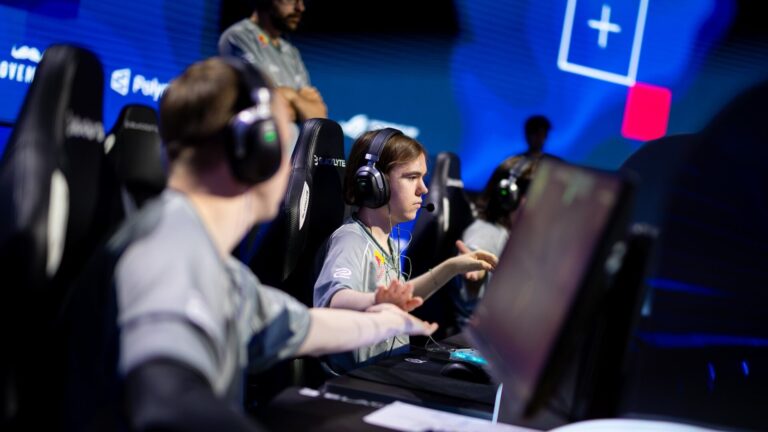
Walczaki answered. The team said organizers would cover 100% of their travel and hotel costs if they advanced. They called it a real chance to compete and grow. Walczaki also explained their situation plainly: they have no organization and no sponsors right now. They cannot pay for flights, hotels, or entry fees at other events on their own. So, unless someone offered to cover those costs elsewhere, they planned to keep playing wherever the bills got paid.

That answer did not end things, though. It just paused the story for ten days. Petr1k then revealed two rules buried in the tournament’s own rulebook. First, organizers would take 30% of any prize money and send it to Russia. Second, the rules banned players from Ukraine, Lithuania, Estonia, and Latvia outright. This delay mattered: Walczaki had already committed to playing before fans learned the full terms.
The Prize Money and Nationality Rules
The rulebook backs up Petr1k’s claims. It states that a foreign partner pays the prize pool. However, it also makes winners responsible for Russian tax law, specifically Article 208(1) of the Russian Tax Code. Multiple reports put the required payment at around 30% of any winnings.

A separate rule blocks players from Estonia, Latvia, Lithuania, or Ukraine. Organizers do grant exceptions, but only if a player can prove permanent residency abroad or a long period living outside those countries. The stated reasons include visa issues, logistics, and network latency concerns.

GLuck Moscow Cyber Games 2026 runs from August 22 to September 1, 2026. The total prize pool sits at $178,724. Seventeen teams competed in the European Qualifier alone, including Nemiga Gaming, Team Nemesis, 1win, HOTU, Rune Eaters, K27, Nuclear TigeRES, Ex-RUBY, and Walczaki. Organizers also invited several European teams directly: Nuclear Tigeres, HOTU, Team Nemesis, 1W, Walczaki, K27, Nemiga, and Ex-Ruby.
The FlyQuest Invite Dispute
A separate incident added more fuel to the fire. FlyQuest ranked fourth in Asia by VRS points. That ranking should have guaranteed them an automatic invite under the tournament’s own rules. No invite ever arrived.
Chris “GoMeZ” Orfanellis, FlyQuest’s CS2 manager, called this out publicly. He noted that FlyQuest would have declined the invite anyway. Still, he argued, the tournament broke its own stated rules by never sending one.

GLuck Esports responded under his post. The organizers said they never meant to overlook FlyQuest. They explained that no official standard method exists for inviting teams. Instead, they said, their head admin found a Discord contact through the VRS Discord server, since neither FlyQuest’s X account nor its Discord listed an email address. According to the organizers, that admin sent an invite via Discord DM on July 23 and waited until July 29 for a reply. They also noted that the tournament had appeared on Liquipedia since July 3, giving teams time to reach out first.

GoMeZ rejected that explanation. He said organizers never sent him any email. Instead, he received a plain message request from an unfamiliar account, not a confirmed DM from a known contact, the organization, or any player. He pointed out that other teams got emails while FlyQuest got only an unconfirmed request with no follow-up.
GoMeZ then shared a screenshot to prove his point further. It showed something simple: anyone visiting his X profile could click straight through to FlyQuest’s organization account. That account’s profile page lists a business email address made exactly for requests like this one. In other words, organizers did not need to guess a contact method at all. A working, public email sat one click away the entire time.

Walczaki’s Withdrawal and the Fallout
Eventually, Walczaki issued a formal statement. The team announced its withdrawal from GLuck Moscow Cyber Games 2026 and gave two reasons. First, an ongoing roster restructuring left them unable to field a full lineup, so they forfeited all remaining matches. Second, they felt uncomfortable knowing that part of any prize money would go to the Russian government as mandatory fees. Walczaki called it a considered decision and said the team now plans to stabilize its roster for future tournaments.
Petr1k praised the move right away. He called the withdrawal respectable and commended Walczaki for admitting what he framed as a mistake. He then urged two other teams, Rare Atom and AlterEgo, to follow suit. In a later post, he cited section 7.1 of the rulebook on the 30% payment and named several teams directly: Walczaki, The Huns, Chinggis Warriors, Rare Atom, AlterEgo, and Team Nemesis. He also called on Counter-Strike’s official account and HLTV to update the VRS system and review the event’s ranking status, referencing a point GoMeZ raised earlier. In a separate post, he asked HLTV and Counter-Strike directly whether organizers should be allowed to bar players by nationality from a VRS-ranked event.

Why This Story Matters
This story now reaches far beyond one team’s travel budget. It raises a direct question for Valve’s VRS ranking system and for HLTV, which grants ranking status to qualifying events. Should a tournament that taxes winnings for the Russian state, and excludes players from Ukraine and the Baltic states, keep counting toward official rankings? The FlyQuest dispute adds another layer to that question, since even the invite process itself may not have followed the tournament’s own rules consistently.
For now, Walczaki has exited the event through forfeits. The pressure has shifted to Rare Atom and AlterEgo, the two teams still named as remaining participants. Whether HLTV or Valve responds to these calls for a VRS review will decide something important: whether GLuck Moscow Cyber Games 2026 becomes an isolated incident, or a turning point for how the scene treats Russian-hosted CS2 events going forward.