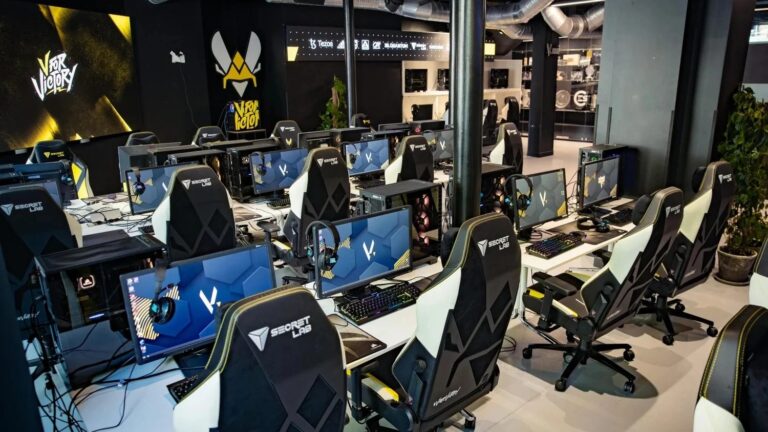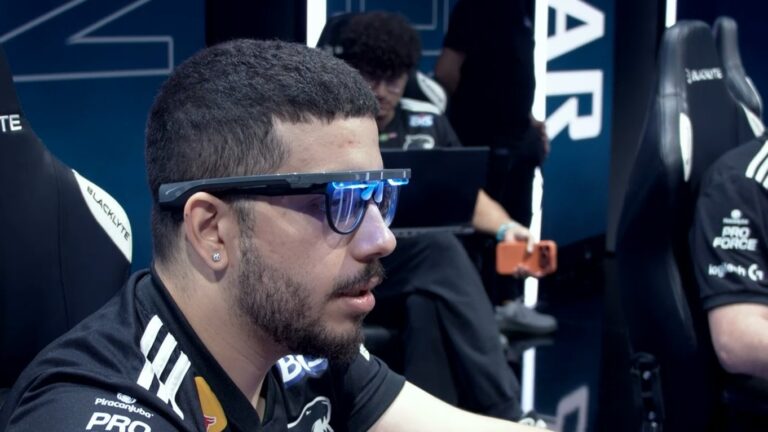

The idea of academies has been traditional in Sports, but the same cannot be said for Esports. For most of Counter-Strike’s history, talent development used to be unstructured and unpredictable. During the early and mid CS:GO era, organizations relied mostly on scouting players from FACEIT ladders, FPL, or lesser-known teams. There was never a clear system to nurture talent from the ground up and players either broke through or they didn’t.
That dynamic began to change toward the later years of CS:GO when organizations started experimenting with academy teams. fnatic was the first team to form an academy team, fnatic Rising in 2016 including Golden, Lekr0, and Plessen. However, that project did not last long, as they were not allowed to compete under the banner at the PGL Krakow Major qualifier due to a conflict with the main team. The idea was there, though, and soon after, in 2019, NAVI formed their own academy team.

Initially, these projects felt secondary. There wasn’t a clear structure, exposure, or sometimes even purpose. Then came the WePlay Academy League in June 2021, featuring a $100k prize pool for academies, and the idea of ogranised player development started to form a structure. And as a result, other orgs started to invest in academies, and the tournament received participations from the likes of MOUZ NXT, Navi Junior, BIG Academy, VP.Prodigy, Astralis Talent, Young NInjas, FURIA Academy, and fnatic Rising.

Now in CS2, that experiment has matured into a standard. Academies are no longer side projects or optional investments. They are becoming a fundamental part of how serious organizations operate. The game has become too competitive and too expensive to rely only on external signings. The shift has already happened. The teams that understand this are building systems, while others are still chasing short-term fixes.
Why Orgs are investing heavily
Organizations have been investing heavily in academies because they provide something the open market cannot offer, which is control. In a scene where top players are limited and buyouts continue to rise, it is not possible to rely on transfers alone, as it is iinefficient and risky. Teams either overpay for proven players or gamble on unknown ones. Neither approach guarantees long-term success.’
Academies have allowed organizations to shape players early. They can define roles, instill discipline, and integrate individuals into their systems long before they reach the main roster. This has created consistency across the organization. Instead of constantly rebuilding, teams can promote players who already understand how they operate.

There is also a strategic advantage. Teams with strong academies are less reactive. They are not forced into panic signings after poor results. Instead, they have options ready within their own system. This reduces both financial pressure and performance volatility. In a competitive environment where stability is rare, that kind of internal pipeline becomes incredibly valuable.
Financial upside for Organizations
From a business perspective, academies are one of the most efficient investments an organization can make. Developing talent internally is significantly cheaper than acquiring it externally. More importantly, it opens up multiple avenues for return.
The most obvious example is player transfers. When a player like m0NESY is developed in-house and then sold, the financial return can be substantial. This turns academies into revenue-generating assets rather than cost centers.
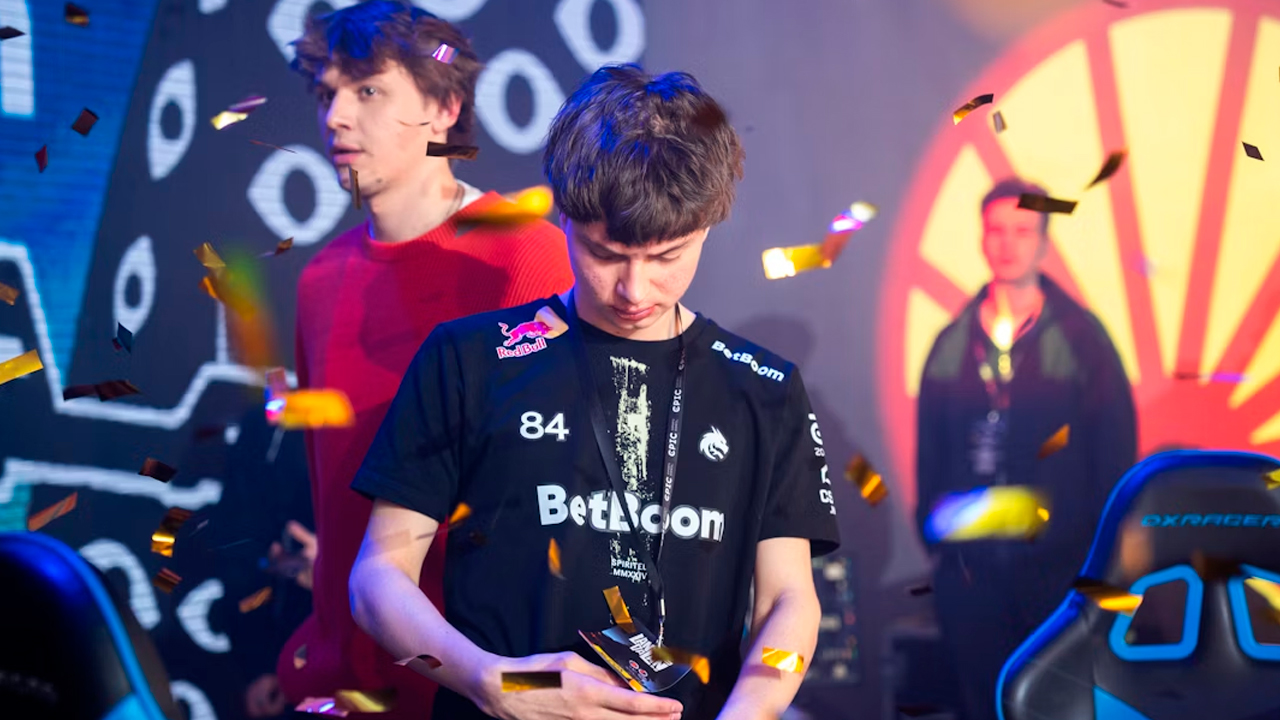
Even when players are not sold, the savings are clear. Promoting from within eliminates the need for expensive buyouts. It also reduces the risk associated with signings, since the organization already understands the player’s strengths, weaknesses, and mentality.
There is also long-term value in brand building. Fans are more likely to connect with players who rise through the system. It creates a narrative that extends beyond individual tournaments. Organizations are no longer just assembling teams. They are telling stories of growth and progression. In a scene where financial sustainability is becoming increasingly important, academies offer a model that balances competitive success with economic efficiency.

A clear path for Young Players
For aspiring players, academies have transformed the journey to professional Counter-Strike. What was once an uncertain and chaotic process is now becoming more structured and accessible.
Previously, breaking into the professional scene required a combination of skill, exposure, and luck. There were few clear entry points. Now, academies provide a defined pathway. Players can move from amateur competition into structured environments where they receive coaching, analysis, and consistent practice.\
This not only improves individual performance but also prepares players for the realities of professional play. They learn how to communicate, how to function within a team, and how to handle pressure. These are skills that cannot be developed through solo play.
Academies also provide visibility. Being part of an established system puts players on the radar of scouts and organizations. It legitimizes their talent and gives them opportunities that would otherwise be difficult to access.
The result is a more efficient talent pipeline. Players are no longer waiting to be discovered. They are actively being developed.

Players who have come out of Academies
The strongest argument in favor of academies is the players they have already produced. This is no longer about potential. It is about results. Several of the biggest names in modern Counter-Strike have emerged from structured development systems.
m0NESY is one of the most obvious examples. Coming from NAVI Junior, he quickly established himself as one of the most explosive AWPers in the world after joining G2. His transition from academy to tier one was really smooth, and his value as a player was evident almost immediately.
b1t represents another success story from the same system. Unlike m0NESY, his journey led directly into NAVI’s main roster, where he became a key part of both the Major-winning campaigns led by the team. His consistency and composure at the highest level has shown what structured development can produce.

The MOUZ system has arguably been the most consistent in delivering talent. torzsi, xertioN, and Jimpphat all progressed through MOUZ NXT before earning their places at higher levels. Their transitions did not feel like gambles but like natural progressions. siuhy’s path adds another layer to this narrative. After developing through the academy structure, he returned to lead MOUZ, showing that academies can produce not just skilled players but also leaders.
Beyond these names, the conversation has expanded with the rise of players like donk and kyousuke. donk’s emergence as one of the most dominant riflers in CS2 highlights what happens when young talent is given the right environment and support. His impact has been immediate and overwhelming. Players like kyousuke represent the next wave. The difference here is that when these players arrive at the highest echelon, they are already prepared for competitive experience, and know how a team functions. They don’t just have FACEIT games under their belt and no experience to show for.
read more

Why some Academies fail
It is not to be expected that an academy will succeed if it is treated as a secondary project. Minimal investment, expectations of quick returns, and early abandonment tend to undermine the process. Development requires time, and without long-term commitment, progress is unlikely to hold.
It is also unrealistic to expect strong outcomes without integration with the main team. If academy players are not being prepared for promotion, the system loses its purpose. Individual improvement may still occur, but without a defined pathway to the top level, development becomes disconnected.
Similarly, success is unlikely when there is a lack of alignment. Effective academies mirror the structure and philosophy of the main team, making transitions more natural. It should also not be expected that short-term success in academy leagues will translate into long-term results. Instances from the WePlay Academy League era showed that strong placements did not always lead to Tier 1 promotions. Winning at the junior level alone is not a reliable indicator of readiness.


Nor is it reasonable to expect consistent development in unstable environments. Frequent roster changes, limited time for players to settle, and unclear roles can disrupt growth and prevent meaningful progression. The failure of some academy systems does not reflect the model itself. It reflects how it is implemented. When done properly, the results are already evident.
If we look at things from the VRS angle, it does not directly ban academy teams, but it limits them indirectly through how invites and eligibility work. Since rankings are roster based, an academy team can technically climb the standings, but tournaments generally do not allow two teams from the same organization, meaning main team and academy, to compete in the same event. This creates a built in conflict where the main team almost always takes priority.
On top of that, academy teams usually play weaker events and earn fewer VRS points, making it even harder to rank high enough. So while they are not officially restricted, the combination of shared ownership rules and performance based ranking effectively keeps academy teams out of top tier events like Majors.
The future belongs to talent pipelines
The direction of Counter-Strike is becoming increasingly clear. The organizations that will succeed in CS2 are not just those with the best current rosters, but those with the ability to continuously produce talent.
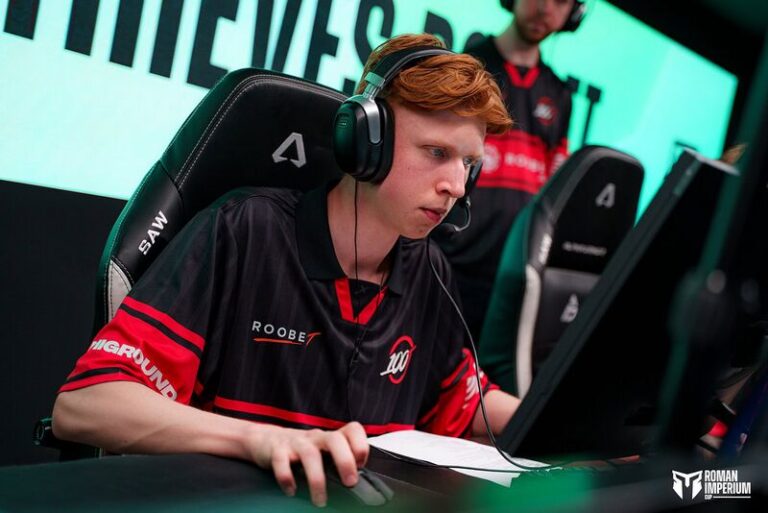
Talent pipelines are emerging as the most sustainable competitive advantage. Instead of relying on external markets, teams can build internally and evolve over time. This creates stability in a scene that is often defined by constant change. Organizations with strong pipelines are better equipped to handle roster transitions. They do not need to rebuild from scratch. They can promote, adapt, and maintain continuity. This reduces downtime and keeps teams competitive over longer periods.
The rise of players like donk further reinforces this idea. When young talent is developed correctly, the impact can be immediate and game-changing. The gap between academy and tier one is shrinking, and in some cases, it no longer exists. Ultimately, the future of Counter-Strike will belong to organizations that invest in development.