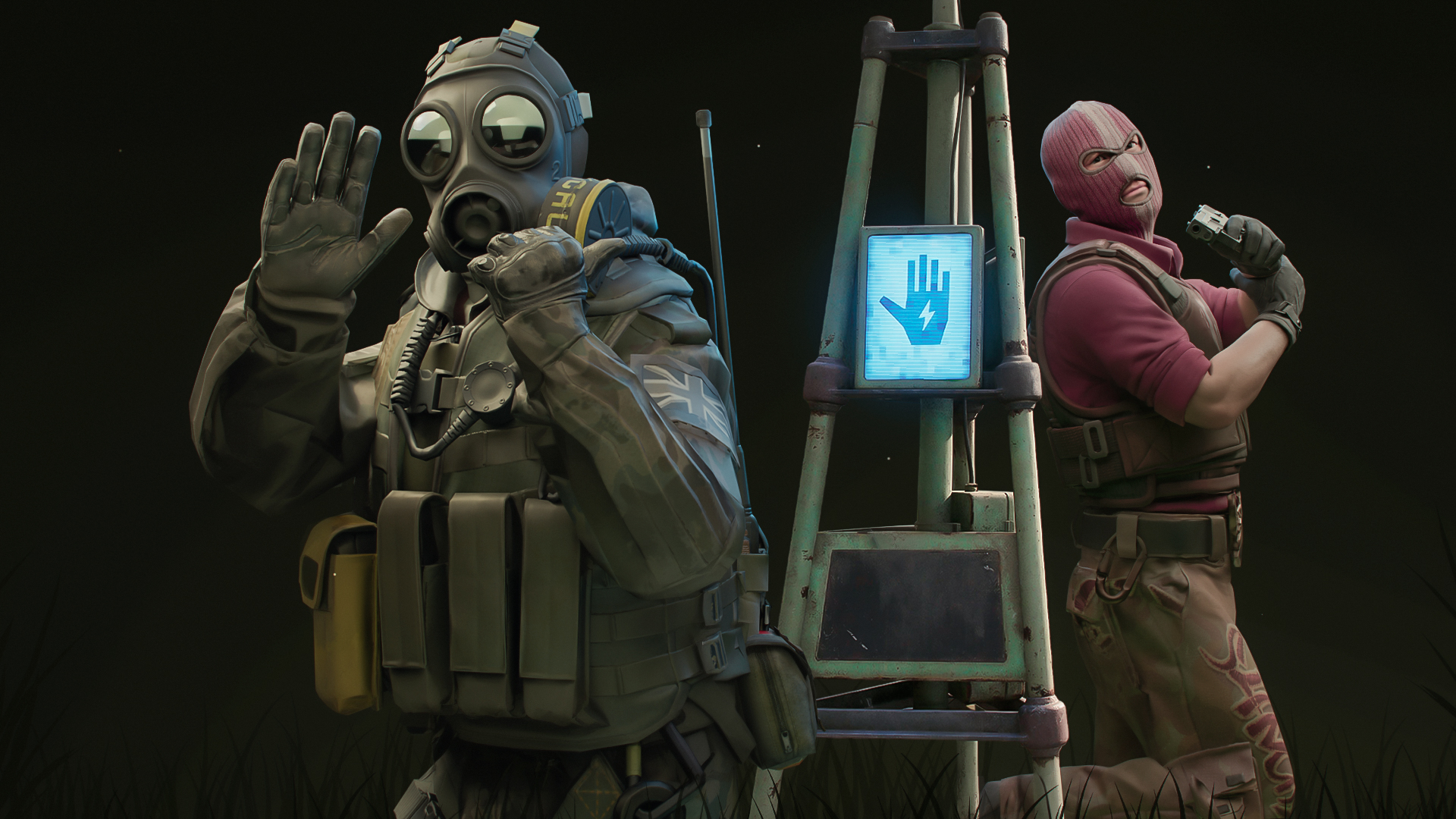

Valve added Rush to Counter-Strike 2 on September 22, 2026, as part of the Rush Hour update. It’s a dedicated 3v3 queue built around short fights. Matches move through randomly selected battle arenas as teams push toward the opponent’s castle. The same update also changed Premier map selection, introduced slower silent reloads and silent unscoping, reworked crosshair settings, and brought back Clan Tags. Rush keeps Counter-Strike’s economy and gunplay, but uses them in a much shorter format.
What Is Rush Mode in CS2?
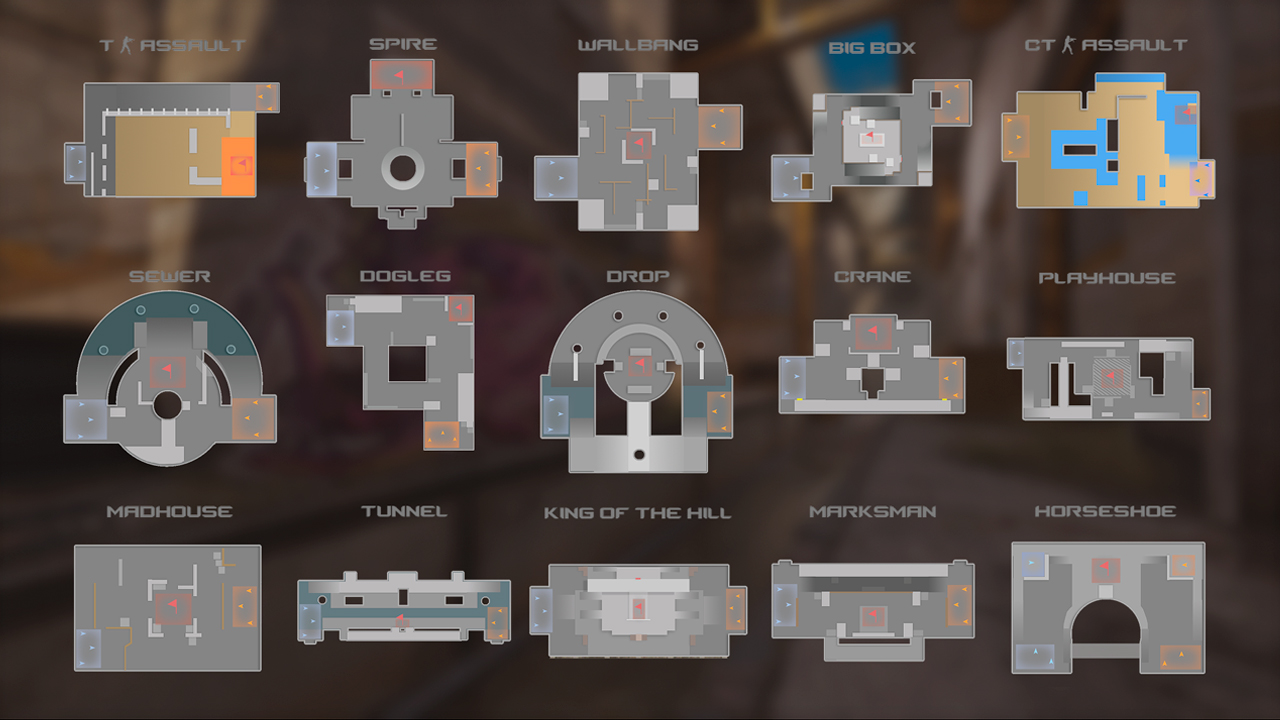
Rush is a queued 3v3 CS2 mode built around tower control across a series of compact battle arenas. The mode has a pool of 15 maps, with seven randomly selected for each match:
- T Assault
- Spire
- Wallbang
- Big Box
- Sewer
- Dogleg
- Drop
- Crane
- Playhouse
- Madhouse
- Tunnel
- King of the Hill
- Marksman
- Horseshoe
- CT Assault
Both teams start in the middle of the route. Winning a round moves the fight one step toward the opposing side, while a loss pushes it back. When the opposing team takes control of the tower, the interface displays the message ‘Enemy owns the tower.’ A round is won by controlling the tower after the enemy team is eliminated or when the timer expires. Standard rounds last only 40 seconds, while rounds at the castles last 60 seconds.
The match ends once a team captures the tower at the opponent’s castle. Four consecutive round wins can end a match, while a close game can reach 15 rounds. If the score reaches 7-7, the deciding 15th round takes place on a moving train instead of a standard arena, and players can fall off during the fight. Since both the selected arenas and their order change from match to match, identical routes are uncommon. There’s no fixed route to memorize, so every match plays out differently.
How to Play Rush Mode in CS2
Rush has its own matchmaking queue in the CS2 Play menu. Starting a match only takes a few steps:
- Launch Counter-Strike 2 and open Play.
- Select Rush from the available game modes.
- Invite teammates if needed. A full three-player party isn’t required.
- Start matchmaking and wait for the game to find a 3v3 lobby.
Prime Status isn’t required to access Rush. Prime still affects matchmaking and account rewards, with Prime players matched with other Prime players and eligible for Prime-exclusive drops.
How Tower Control Works in CS2 Rush
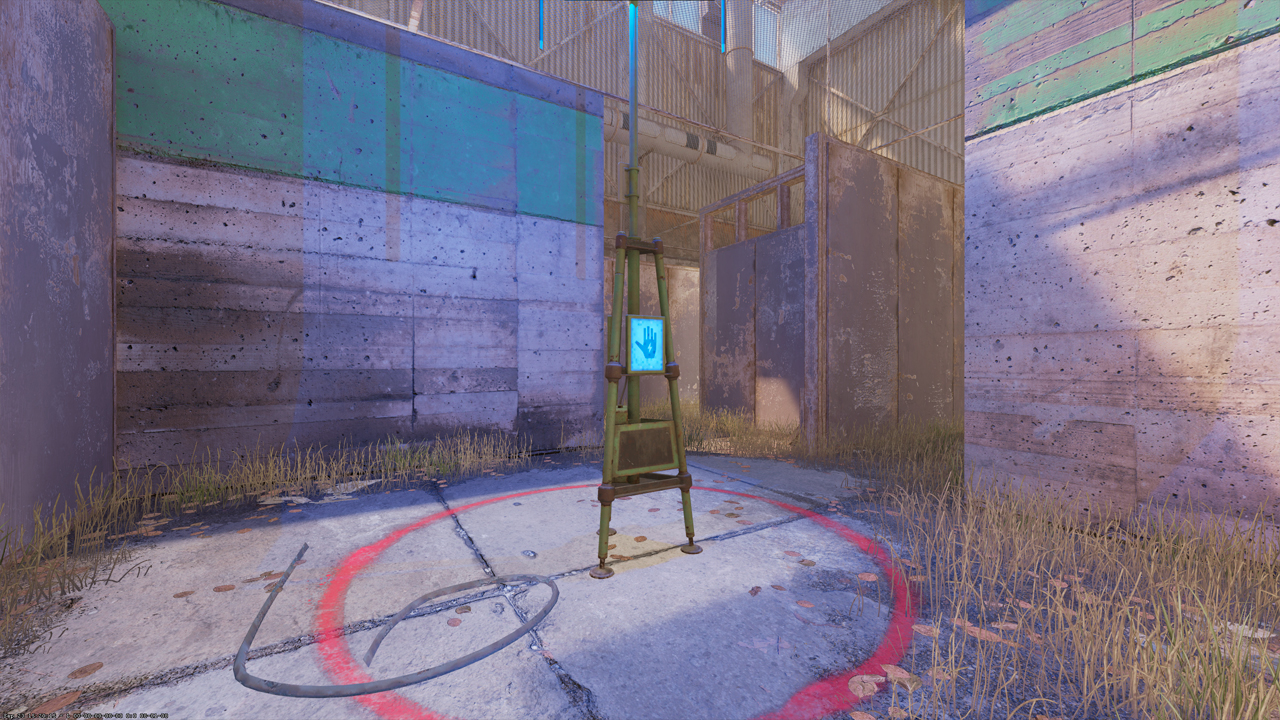
The tower is marked on every Rush arena and must be captured manually. Reaching it and pressing the Interact key (E) transfers control to the capturing team immediately, even while opponents are still alive. Eliminating the opposing team doesn’t transfer control automatically. A team can win the gunfight and still lose the round by abandoning the tower. If the team holding the tower is eliminated, the surviving team gets a short countdown to capture it. On Castle Rooms and Convoy, this countdown can last up to 14 seconds. However, this post-elimination countdown will not activate if an entire team is wiped out due to suicides, team kills, or disconnects. As the final seconds run down, the timer starts beeping, signaling that tower ownership will decide the round if time expires.
How to Win More Rounds in CS2 Rush
Utility is most useful at the start of a round, when both teams reach the main sightlines at almost the same time. Smokes can cut off an early angle, while HE grenades can damage players before the first duel. Molotovs and incendiaries can also block the tower when the other team tries to take control. Since every Rush arena is new, regular play helps with learning spawn exits, common positions, and where the first contact usually happens. With only 40 seconds in a standard round, there’s little time to hold a passive position for long. Fast reactions, quick trades, and early movement toward the tower are usually the better approach.
Rush Ranks and XP
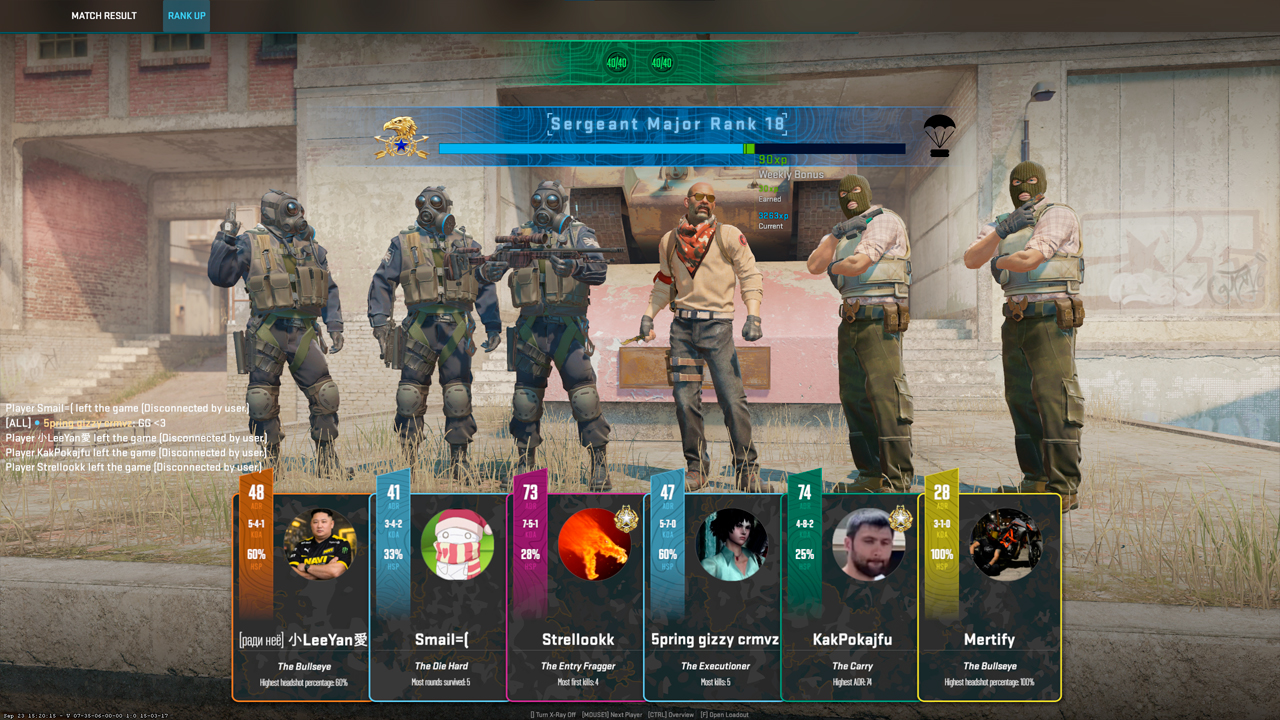
Rush doesn’t have a separate rank, rating, or placement system. Progress in the mode is represented by the Rush friends leaderboard, which tracks wins against players on the Steam friends list. Matches are also short, so four straight round wins can finish a game in under five minutes, while longer back-and-forth matches generally stay within about 10-15 minutes. Current launch-day testing reports 10 XP for each round won. This makes Rush a practical option for earning XP toward weekly drops, especially compared with Deathmatch, though Premier and Competitive still offer higher XP rewards per match.
CS2 Rush vs Competitive and Wingman
Rush sits between Competitive and Wingman in team size, but its match structure is different from both. Instead of playing repeated rounds on one map, Rush moves between randomly selected arenas as control shifts toward either team’s castle.
Feature | Rush | Competitive | Wingman |
|---|---|---|---|
Team size |
3v3 |
5v5 |
2v2 |
Main objective |
Control the tower and reach the enemy castle |
Bomb defusal or hostage rescue, depending on the map |
Bomb defusal on one bombsite |
Map format |
Seven arenas are selected from a pool of 15 |
Full-sized maps selected before matchmaking |
Compact maps or restricted sections of larger maps |
Map progression |
Changes during the match as teams win and lose rounds |
Entire match stays on one map |
Entire match stays on one map |
Match format |
Tug-of-war format, four straight wins can end a match, with up to 15 rounds |
MR12, first to 13, with a 12-12 draw |
MR8, first to 9, with up to 16 rounds |
Round time |
40 seconds, 60 seconds at the castles |
1 minute 55 seconds |
1 minute 30 seconds |
Ranking system |
No separate rank |
18 Skill Groups tracked separately for each map |
Separate 18-Skill-Group ladder |
Leaderboard |
Friends leaderboard based on Rush wins |
No dedicated Competitive leaderboard |
No dedicated leaderboard |
Base XP per round won |
10 XP |
30 XP |
15 XP |
Typical match length |
Usually under 15 minutes, four straight wins can finish a match in under five |
Roughly 25-45 minutes |
Roughly 10-20 minutes |
Rush gives less XP per match than Competitive or Premier, but its short match length makes the mode useful for quick XP sessions. A four-round win gives 40 base XP, and with the weekly x4 XP bonus active after the Wednesday reset, that becomes 160 XP from a match that can finish in under five minutes.
CS2 Rush Economy Explained
Rush uses its own economy settings, with lower starting money and a smaller cash limit than Competitive. Each player starts with $800, giving a full three-player team $2,400 at the beginning of the match.
- Starting money: $800 per player
- Maximum money: $10,000
- Buy time: 15 seconds
- Kill reward: $300 for standard pistol and rifle kills
- Loss bonus: Starts at $2,100 and increases by $750 after each consecutive loss, up to $5,100
- Grenade limit: One grenade per player
Purchases are made through the normal buy menu during the buy period and are restricted to the spawn buy zone. First-round purchases follow the same basic logic as other CS2 modes, usually favoring armor or a cheaper weapon setup. Money carries over between arenas, so overspending can leave the next round with a weak buy.
FAQ
-
What is Rush in CS2?
Rush is a queued 3v3 mode built around tower control. Teams advance toward the opposing castle by winning rounds across randomly selected arenas.
-
Are CS2 Rush arenas random?
Yes. Each match uses seven arenas randomly selected from the full Rush pool, and their order also changes.
-
Is CS2 Rush Mode 3v3?
Yes. Rush is played with two teams of three players.
-
How many maps are in CS2 Rush Mode?
Rush has a pool of 15 arenas. Seven are selected for each match.
-
How long is a Rush Mode round in CS2?
Standard Rush rounds last 40 seconds. Rounds played at the castles last 60 seconds.


![Desert Eagle Heat Treated CS2 Guide & Patterns [2026]](https://community.skin.club/wp-content/uploads/2024/10/Main-x-Name-9-768x432.jpg)
![How to Get a Service Medal in CS2: Full Guide [2026]](https://community.skin.club/wp-content/uploads/2024/10/Main-x-Name-5-768x432.jpg)
![Recoil Control in CS2: Explanation and Tips [2026]](https://community.skin.club/wp-content/uploads/2024/10/Main-768x432.jpg)