So a huge lawsuit has hit Valve, as the New York Attorney General Letitia James has sued Valve for promoting illegal gambling. The lawsuit is aimed at Valve’s in-game cases, which allegedly promote gambling among youth, and at Valve’s alleged complicity with third-party gambling and skin sites. James claims that Valve has structured the case system in a way that exploits gambling psychology, and that through this system, Valve has made billions of dollars globally (Complaint ¶10, ¶44).
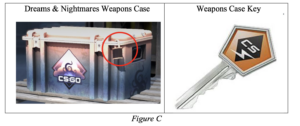
Now, the lawsuit is not entirely out of line. But there are still several areas where the complaint raises factual, technical, or legal concerns. Whether it is smaller inconsistencies like referencing a Dreams & Nightmares Case being opened with a Kilowatt Case Key, or making large financial claims without detailed breakdowns, there are parts of the lawsuit that invite scrutiny. In this article, we will look at areas where the complaint may be overstated, imprecise, or legally aggressive.
Near-miss during Case Animation
In Paragraph 65, James mentions that while opening a case, the spinning wheel may come to rest immediately next to a rare valuable item, giving the user the impression that they almost won it. She draws a comparison between a CS2 case opening and the near miss effect of a slot machine. However, this comparison may be technically inaccurate. In CS2 and previously CS:GO, the item outcome is determined server-side before the animation begins. It is not possible to see the rare gold item and not get it.

Complaint ¶65: “As the user opens the case, the virtual ‘spinning wheel’ may appear to slow and come to rest immediately next to a rare and valuable item, giving the user the impression that they almost won that item. This ‘near miss’ effect is similar to the psychological techniques used in slot machines to encourage continued gambling.”
Steam Wallet being equivalent to Cash
In Paragraph 77, James states that Steam Wallet funds are equivalent to cash, referencing an example where an OAG investigator purchased a Steam Deck after selling a Stiletto Knife. This characterization may be legally imprecise. Steam Wallet funds cannot be directly converted into real-world currency, cannot be withdrawn to a bank account, and are non-redeemable under Steam’s Subscriber Agreement. Valve’s SSA also prohibits selling skins for real-world money outside Steam. While Steam Wallet funds can be used to purchase goods within the Steam ecosystem including hardware like a Steam Deck, calling them equivalent to cash may overstate their legal and financial nature, as they function as restricted digital credits rather than transferable currency.
Complaint ¶77: “These funds have the equivalent purchasing power on the Steam platform as cash. For example, an OAG investigator sold a virtual Stiletto Knife on the Steam Community Market and used the proceeds to purchase a Steam Deck directly from Valve.”
Valve designing Steam to buy and sell on third-party websites
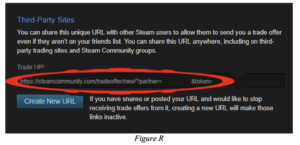
In Paragraphs 82 to 84, James alleges that Valve designed Steam to enable buying and selling virtual items on third-party websites. She references the Trade URL system and suggests that Valve encourages its use on third-party marketplaces. However, the Trade URL feature was originally designed to allow users to trade with other Steam users without requiring mutual friendship status. The complaint asserts that Valve encourages users to use Trade URLs on third-party sites, but this claim is not supported by direct documentary evidence within those cited paragraphs.
Additionally, Valve has repeatedly distanced itself from gambling websites. In 2016, it sent cease and desist letters to dozens of skin gambling sites, banned bot accounts tied to gambling operations, and clarified that using Steam APIs for commercial gambling violates its Subscriber Agreement. More recently, Valve updated its CS2 Tournament Operation Requirements to prohibit skin gambling and case-opening sponsors from licensed events, barring their branding from jerseys, streams, and stage signage.
Complaint ¶82–84: “Valve has designed Steam to enable users to buy and sell virtual items on third-party websites. Every Steam user has a unique Trade URL that can be shared on third-party sites to facilitate item transfers. Valve encourages users to use their Trade URLs in this manner.”
Valve fostering third-party marketplaces
In Paragraphs 89 and 90, James further claims that Valve has consistently fostered third-party marketplaces that allow the purchase and sale of virtual items for cash. This is presented as part of a broader argument that Valve knowingly supported an ecosystem where skins could be converted into real-world money. However, the complaint does not cite direct internal communications or policy documents demonstrating that Valve intended to promote cash marketplaces. At the same time, Valve has implemented measures that make third-party cash marketplaces more difficult to operate, including 7-day trade holds, 7-day market restrictions, two-factor authentication requirements, account bans for Terms of Service violations, Trade Protection allowing reversal of recent trades, and cease-and-desist actions against gambling sites in 2016. These measures increase friction in item transfers and are consistent with account safety enforcement. Whether they are sufficient is a legal question, but they complicate the claim that Valve actively fostered third-party cash marketplaces.
Complaint ¶89–90: “Valve has consistently fostered third-party marketplaces that allow the purchase and sale of virtual items for cash. Although Valve publicly claims that its Subscriber Agreement prohibits such sales, its actions have enabled and supported these marketplaces.”
Engaging in bookmaking
In Paragraph 172, the complaint alleges that Valve engaged in bookmaking by unlawfully accepting bets from members of the public as a business upon the outcome of future contingent events. This interpretation relies on New York Penal Law § 225.00(9). However, traditional bookmaking statutes historically apply to sports betting or wagering on external contingent events. In the case of CS2, Valve does not set secondary market prices for skins, as those prices are determined by supply and demand among users. The RNG outcome occurs within Valve’s own software and does not involve wagering against an external event or bookmaker. Expanding the definition of bookmaking to include a randomized digital item distribution system represents a broad and legally aggressive statutory interpretation that will likely face scrutiny.
Complaint ¶172: “Valve engaged in bookmaking by unlawfully accepting bets from members of the public as a business upon the outcomes of future contingent events, namely the randomized results of case openings.”