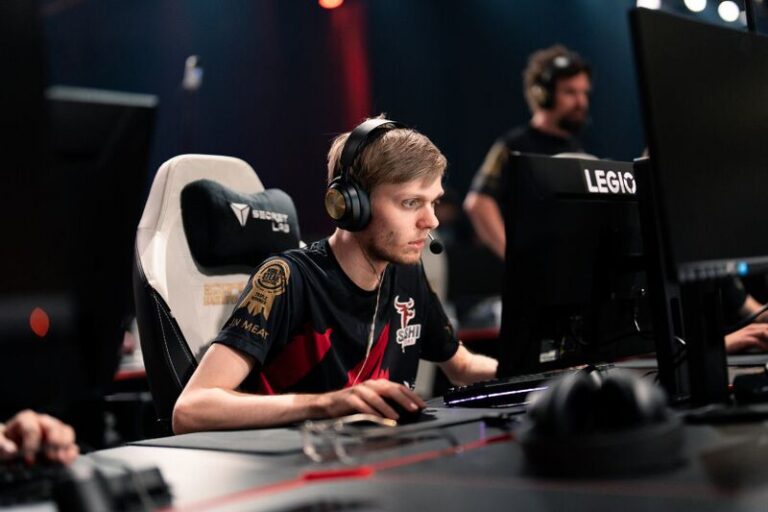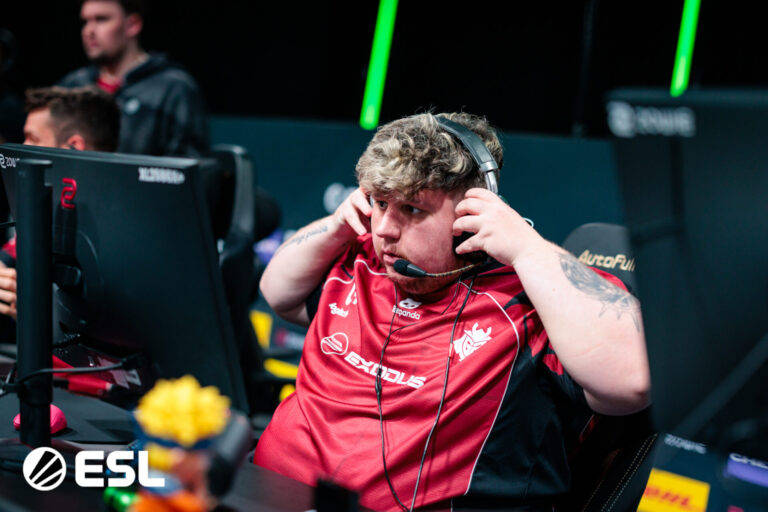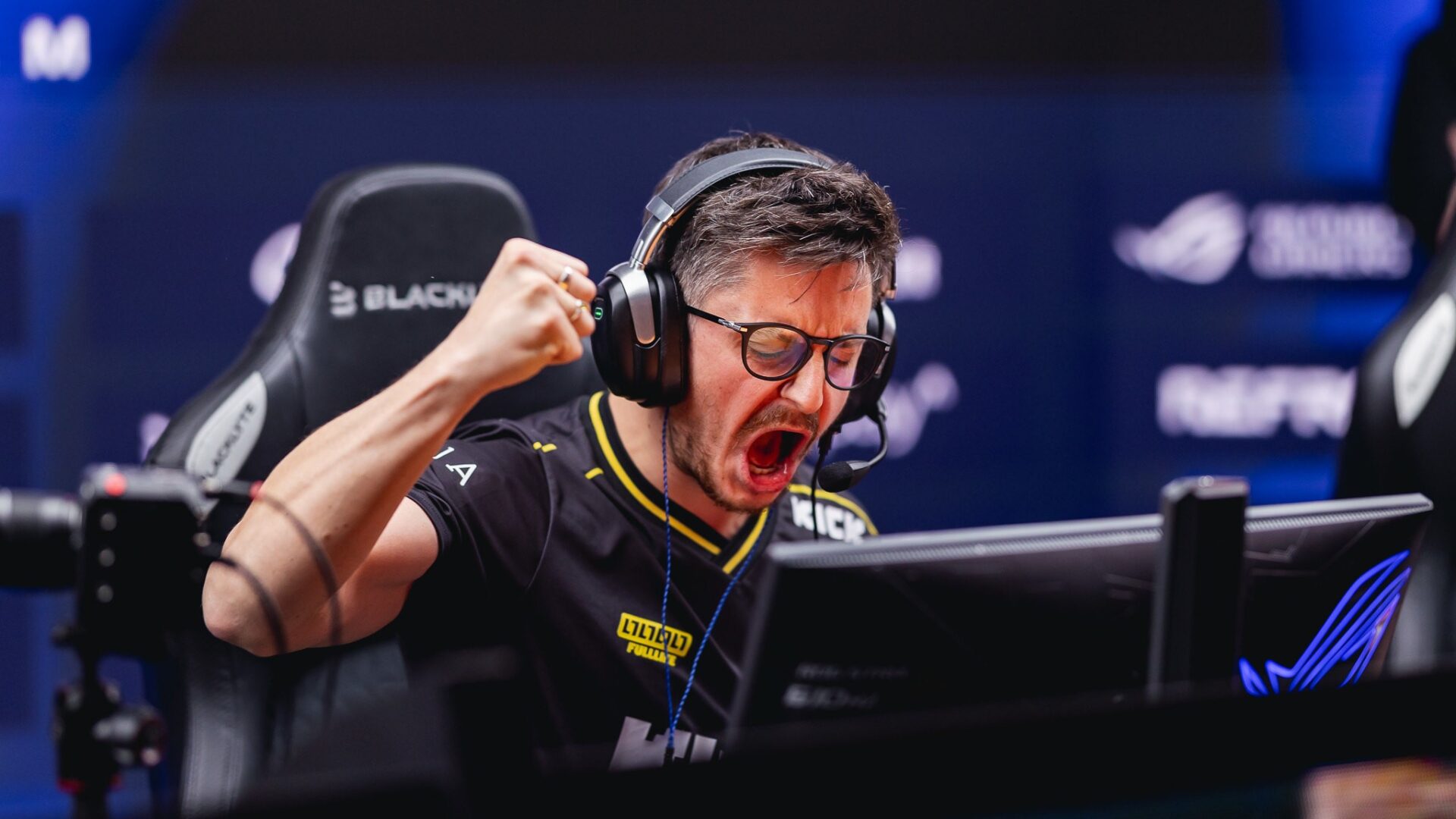

apEX spoke very openly about how the current Vitality actually works from the inside. The team captain went through his path to the IGL role, admitted that at first he did not want to see flameZ in the lineup, explained the real value of mezii, defended zonic, and said directly why his leadership style has to be harsh.
How the team was built through conflict
This interview shows very well that the strength of the current Vitality is not built only on the individual class of its players. apEX essentially explains how the team was built through conflict, adaptation, proper role distribution, and constant work with personalities. That is exactly why the current Vitality looks not just talented, but extremely precisely assembled.
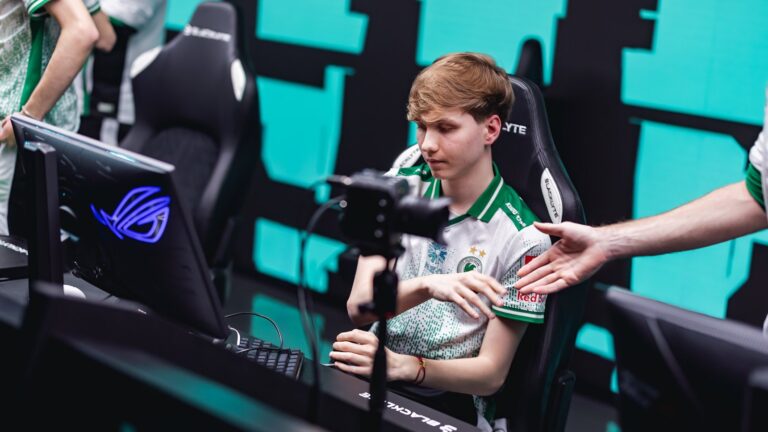
apEX was much closer to the IGL role than it seemed
apEX’s path to captaincy was not a sharp jump from the role of a “running entry” into the role of the team’s main brain. He explained that his interest in calling and strategy had been there since the early stages of his career — it just was not very visible from the outside.
I was also an IGL for like six months
Even when he was flying in first for years, that did not mean he did not understand the game on a deeper level or did not want to influence it.
I always wanted to call and I always loved this strategies on the game.
So the current image of apEX as a full-fledged IGL is not a surprise, but a logical continuation of something that had been inside him for a long time.
With flameZ, he found almost a mirror-like understanding
In the topic of flameZ, you can see very clearly why the connection between them is so strong. apEX essentially recognizes himself in him — the same sharp, aggressive player wired for constant forward movement.
We really understand each other
It is exactly because of that shared entry experience that he understands very clearly what a player like flameZ needs, how to support him properly, and when to give him more freedom.
I really understand what he needs as entry
And that is why their connection in Vitality is not just good vibes, but very specific in-game synergy.
At first, apEX did not want flameZ to join at all
One of the strongest quotes in the entire interview is that apEX directly admitted that at first he did not want this transfer. After a difficult period with Vitality’s first international lineup, the team had only just started to find stability, and another change felt to him like an unnecessary risk.
If you want me to be honest I didn’t want him to come
But the most important thing for him is not the fact of the risk itself, but how flameZ grew inside this system, changed as a person, and changed as a team player.
He became like a man
In the end, this transfer became for Vitality not just a bet on talent, but an investment in a player who genuinely matured together with the team.
The versatility of mezii made him extremely valuable for Vitality
When apEX talks about mezii, he keeps coming back to one idea: his strength is not in one specific role, but in the fact that he can do almost everything. That is exactly what made the Brit so important to the team’s structure.
He knew how to do everything
For apEX, it is also important that mezii is not just an obedient role-player, but someone who can be a second pillar in understanding the game and a second voice during matches.
He was an IGL. He could be a second voice for me.
So in Vitality, they value him not only for his shooting, but for the fact that he glues different parts of the team together.
In big finals, mezii gives the team more than people expect from him
apEX also spoke very warmly about the way mezii performs in big finals. For him, this is one of the main reasons why the current Vitality is so difficult for opponents: a title can be decided not only by the main superstar, but also by the player who is usually seen as less flashy.
If mezii didn’t perform like that in the final, maybe we’ll have lost that one
It is exactly this depth of the roster that creates the feeling that Vitality have almost no “dangerous” or “safe” positions for the opponent — any of them can burn you.
It’s such a nice feeling to have your fourth best player being able to be the best player in a grand final
And that is a very precise explanation of why Vitality look like a team without an obvious weak point.
Vitality’s secret is not a superteam, but the right role distribution
apEX explicitly rejected the popular idea that the current Vitality are simply a “superteam full of stars.” In his view, the essence is not in the number of big names, but in the fact that the players are finally standing in the roles where they actually belong.
I don’t think we have a super team
His main thesis sounds very grounded: this team is strong not because there is simply a lot of talent, but because the roles are assembled correctly.
We just have the right players at their roles
That is probably the best short formulation of the current Vitality.
apEX does not buy into the talk about zonic being a “fraud”
Despite all the criticism around zonic, apEX continues to defend him. He says directly that the Dane helped him a lot as a leader, so he does not take easy public labels seriously.
I always defended him when people called him a fraud
At the same time, apEX does not try to pretend that he knows every reason behind Falcons’ current problems, but there is one thing he is completely certain about.
I know he’s not a fraud. I know he’s a hardworking person.
That does not sound like a polite gesture, but like a very firm position from someone who actually worked with him inside a major team.
An international lineup is always harder than it looks from the outside
apEX described very directly the main problem of international rosters: it is not simply a question of the English language. It is a question of different cultures, different attitudes toward conflict, toward criticism, toward discipline, and even toward what a normal team conversation is supposed to sound like.
That’s extremely tough
He emphasizes that the difference between people from different countries is much greater than it seems when you look at a team simply as five nicknames on a server.
An Estonian and a French or a Brit, they are so big different people
That is exactly why an international lineup often looks more beautiful on paper than it does in real life.
His leadership style is deliberately harsh
When talking about his own style, apEX does not try to please everyone. He openly admits that a roster like this needs a leader who can push, demand, and not smooth over every sharp edge.
If they had a more chill IGL, it will be different
For him, a captain who is too soft would simply make Vitality less sharp and less uncomfortable for the opponent.
The fact that I am like that helps the team
So his harshness in Vitality is not a side effect of personality, but a real working tool.
apEX deliberately takes on the crowd’s hate
The last very strong point is the way apEX described his role in dealing with arena pressure. He consciously takes the attention and hostility of the crowd onto himself so the other players can focus only on the match.
I will take care of that. It’s me against the crowd
For him, this is also part of captaincy: not only calling rounds properly, but also becoming the lightning rod for the whole team.
All the attention was on me, not on them
And that shows very clearly that his leadership in Vitality does not start at the beginning of the round and does not end after the last kill.

apEX has long been more than just an emotional veteran
The main conclusion from this interview is simple: apEX has long been more than just an emotional veteran and more than just the captain of a championship roster. He thinks in terms of roles, player development, cultural compatibility, the atmosphere inside the team, and even how to redistribute outside pressure correctly. That is exactly why the current Vitality looks not just like a very talented lineup, but like a team where almost every element has been placed in exactly the right spot.