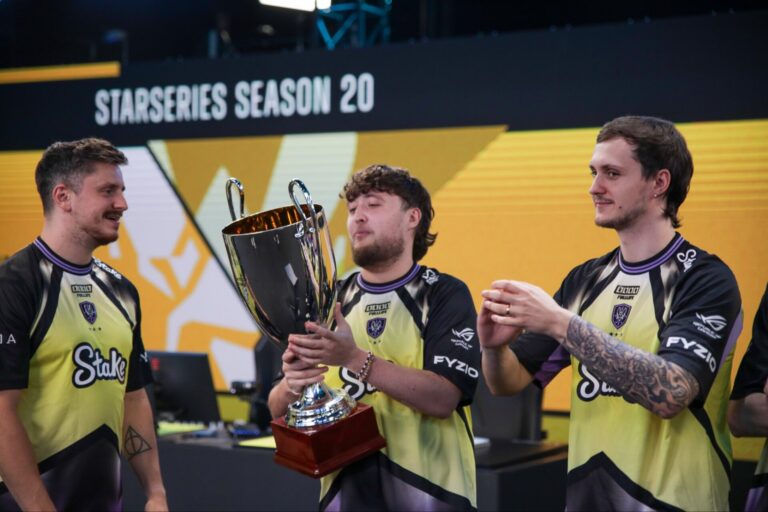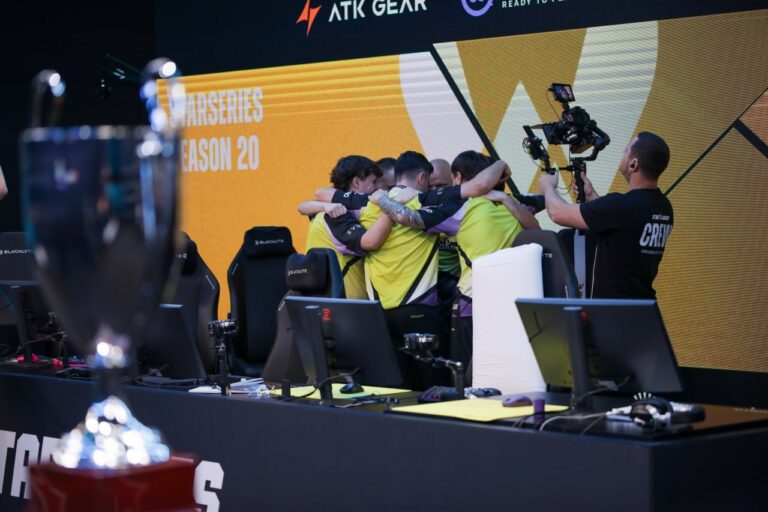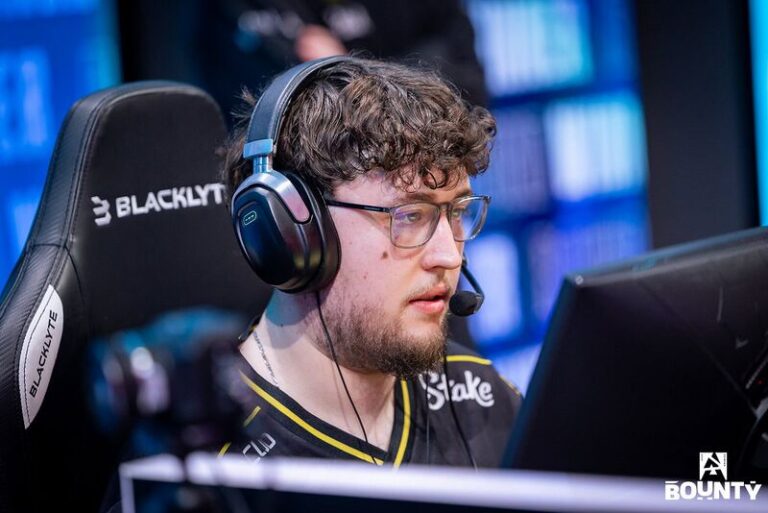
Liquid did not win BLAST Bounty Season 2’s online stage, but they produced something arguably more valuable for a team beginning another rebuild: evidence that the new lineup might finally make sense. Playing their first event with Johnny “JT” Theodosiou calling and 17-year-old Georgi “Jorko” Mitev on the AWP, Liquid defeated Vitality and G2 without dropping a map. They opened with 13-10 and 13-9 wins over Vitality before dismantling G2 13-6 and 13-5, securing a place at the eight-team LAN finals in Malta. Liquid therefore finished their first online run with the new roster 4-0 in maps and 52-30 in rounds.
It was a startling response from a team that had spent much of 2026 looking unsure of its identity. Liquid had recently exited IEM Rio and IEM Atlanta in 9th-12th or worse, finished 9th-12th at the CS Asia Championships and ended the IEM Cologne Major with a 2-3 record in Stage 1. HLTV also noted that Liquid had recorded one of the scene’s worst T-side round-win rates during the season under Kamil “siuhy” Szkaradek.
Four maps cannot prove that Liquid have solved their long-term problems. Both victories were played online, opponents had almost no footage of the new roster, and JT was not the only change. Jorko replaced ultimate at the same time and immediately produced a 1.29 event rating. But four maps were enough to reveal why Liquid believed JT could succeed where siuhy had struggled.
Liquid’s first result under JT
Liquid entered BLAST Bounty as one of the lowest-seeded teams in the field and chose Vitality as their opening opponent rather than Falcons or Spirit. It initially looked like an unnecessarily difficult debut for a roster that had barely begun playing together. Instead, Liquid removed Vitality from the tournament in two maps and then dominated G2 to qualify for the LAN finals.
Their results under the new lineup were:
Opponent | Map | Result |
|---|---|---|
Vitality |
Anubis |
13-10 |
Vitality |
Nuke |
13-9 |
G2 |
Anubis |
13-6 |
G2 |
Mirage |
13-5 |
The performance against G2 was especially convincing. Liquid led 8-4 after the first half of Anubis and 9-3 after the first half of Mirage. They did not merely survive two close maps through individual clutches. They repeatedly established early control and left G2 requiring an almost perfect second half to recover.
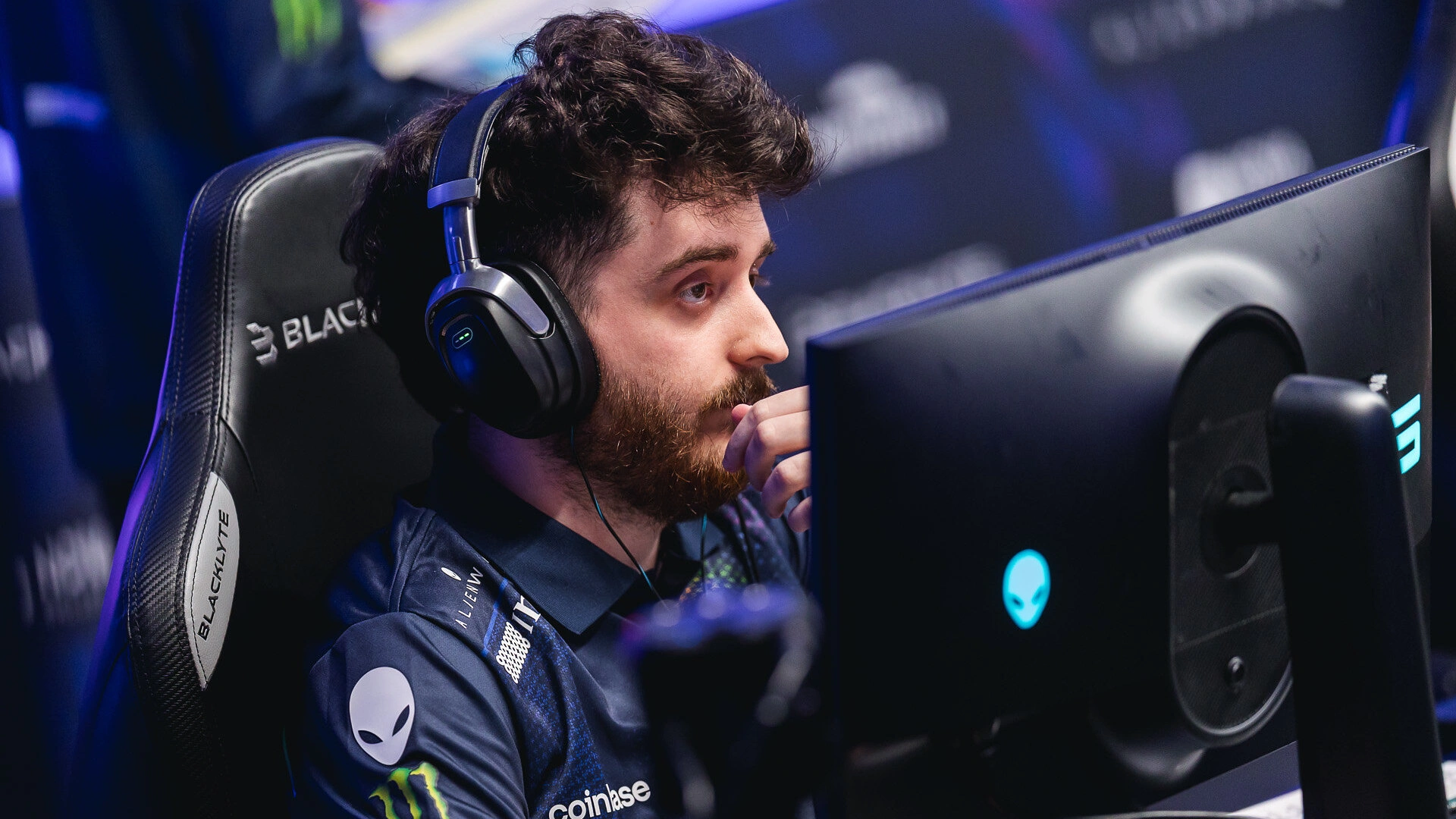
The Vitality series offered a different test. Liquid won six CT rounds on Anubis through coordinated aggression despite losing both pistol rounds on the map. On Nuke, EliGE took control with multikills and clutches, producing a 2.01 map rating. Liquid were capable of winning structured rounds, but also had enough individual freedom to let their star rifler take over once he found confidence. That balance was largely absent from the previous Liquid.
Why this does not mean JT is simply better than siuhy
It would be easy to look at Liquid’s immediate improvement and conclude that JT is a significantly better caller than siuhy. That would be unfair and historically inaccurate. Siuhy led GamerLegion to the grand final of the BLAST.tv Paris Major in 2023. HLTV selected him as the event’s standout IGL, highlighting how GamerLegion consistently exceeded the apparent level of its roster. He later led MOUZ to three titles, including ESL Pro League Seasons 18 and 19, while also reaching several finals and the semi-finals of the Shanghai Major.
Those results establish siuhy as one of the most accomplished young callers of his generation. Liquid’s failure under him does not erase what he achieved with GamerLegion or MOUZ. The more relevant distinction is fit. Siuhy’s best teams were young lineups built around a shared developmental structure. He had prior relationships with several of the players and staff in the MOUZ system, and his teams grew together over time. Liquid was a very different environment: established players, changing roles, multiple strong voices and repeated roster adjustments.
By the end of Liquid’s season, EliGE described a team that could not commit to one direction. He said there were “a lot of different voices” and different ideas about how the game should be played. He was simultaneously trying to rebuild his own confidence without overstepping the existing leadership structure. That is not necessarily evidence of weak calling from siuhy. It is evidence of a team whose players and leader never fully agreed on how authority, initiative and mid-round input should be distributed. JT arrives with an immediate advantage: he has already built a functioning system with Liquid’s most influential rifler.
EliGE before and after JT
No player has benefited more visibly from the change than EliGE. Before BLAST Bounty Season 2, EliGE had played 81 maps for Liquid in 2026 across 11 recorded event stages. A map-weighted calculation from his HLTV event entries gives him approximately a 1.04 rating, 0.69 kills per round and 0.72 deaths per round during that period. HLTV independently described his 2026 rating as 1.04 following Liquid’s Cologne Major elimination.
In his first four maps under JT, he recorded a 1.49 rating, 0.95 kills per round and only 0.59 deaths per round.
EliGE sample | Maps | KPR | DPR | Approx. K/D | HLTV rating |
|---|---|---|---|---|---|
Liquid in 2026 before JT |
81 |
0.69 |
0.72 |
0.96 |
1.04 |
Liquid’s first event with JT |
4 |
0.95 |
0.59 |
1.61 |
1.49 |
Change |
+0.26 |
-0.13 |
+0.65 |
+0.45 |
The before figure is a map-weighted calculation from event-level HLTV data; the after figure covers only four online maps and must not be treated as EliGE’s expected long-term output. The size of the improvement is obviously unsustainable. EliGE will not maintain a 1.49 rating while killing almost one opponent per round. Nevertheless, the way he reached those numbers matters.
Against Vitality, EliGE finished 42-27 with 93.2 ADR and a 1.52 rating. He followed it with a 36-21 performance, 97.4 ADR and a 1.45 rating against G2. He was not farming one weak opponent or relying on a single dominant map. He led Liquid in both series against teams ranked far above them. The difference appears to be less about JT inventing new positions for EliGE and more about removing uncertainty from the positions he already occupies.
Under the previous system, EliGE described doubting whether he should add his own ideas or avoid interfering with other voices. Under JT, that tension is reduced. Both men already understand how the other approaches rounds, when EliGE should provide input and when JT’s call should take priority. That familiarity gives EliGE permission to be decisive.
JT’s history with ElIGE in Complexity matters
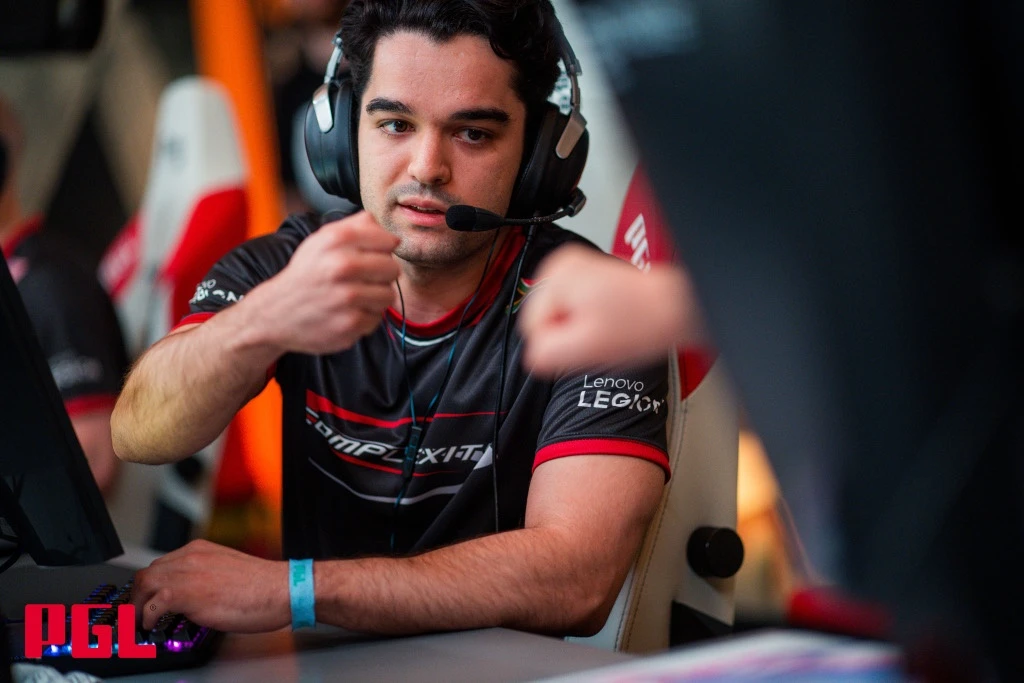
JT and EliGE played together for approximately 18 months on Complexity between June 2023 and January 2025. Across 227 maps listed in EliGE’s event history from that period, he averaged approximately 0.78 kills and 0.67 deaths per round, with a map-weighted event rating of around 1.18.
EliGE under JT | Maps | KPR | DPR | Map-weighted event rating |
|---|---|---|---|---|
Complexity, 2023-2024 |
227 |
0.78 |
0.67 |
~1.18 |
Liquid’s first event with JT |
4 |
0.95 |
0.59 |
1.49 |
The Complexity period was not perfect. The team struggled to consistently convert strong form into deep runs at elite events and ended its final Major with an Opening Stage exit. However, it also produced some of the best sustained Counter-Strike of EliGE’s later career. Complexity finished second at IEM Sydney 2023, reached the semi-finals of ESL Pro League Season 19 and the BLAST Premier Fall Final, and won ESL Challenger Jönköping 2024. EliGE finished 19th in HLTV’s Top 20 players of 2024 after posting a 1.16 rating that year.

The partnership worked because JT’s system did not reduce EliGE to a player following instructions. It actively used his experience. When EliGE joined Complexity in 2023, he explained that he wanted to bring additional structure, clearer codewords and better descriptions of opponent tendencies so that teammates could make decisions from the same information. In the same interview, he described JT as a good caller with strong reads.
JT responded similarly after EliGE’s Complexity debut, praising the rifler for adding to the team’s structure and system. Complexity had already made noticeable improvements after only two weeks together. This is why Liquid’s improvement should not be understood as JT simply “unlocking” EliGE through better tactics. Their relationship is collaborative. JT supplies the hierarchy and overall direction. EliGE supplies high-level detail, opponent reads and information from his side of the map. Because both players already trust that arrangement, Liquid do not need months to negotiate who is allowed to speak or change a round.
It is not only EliGE
Although EliGE produced the headline numbers, Liquid’s improvement was distributed across the roster. EliGE, Jorko, malbsMd and NAF’s figures come from their HLTV event histories, while JT’s rating is listed on Liquid’s current team profile.
Player | BLAST Bounty S2 online rating | Maps |
|---|---|---|
EliGE |
1.49 |
4 |
Jorko |
1.29 |
4 |
malbsMd |
1.14 |
4 |
JT |
1.05 |
4 |
NAF |
1.03 |
4 |
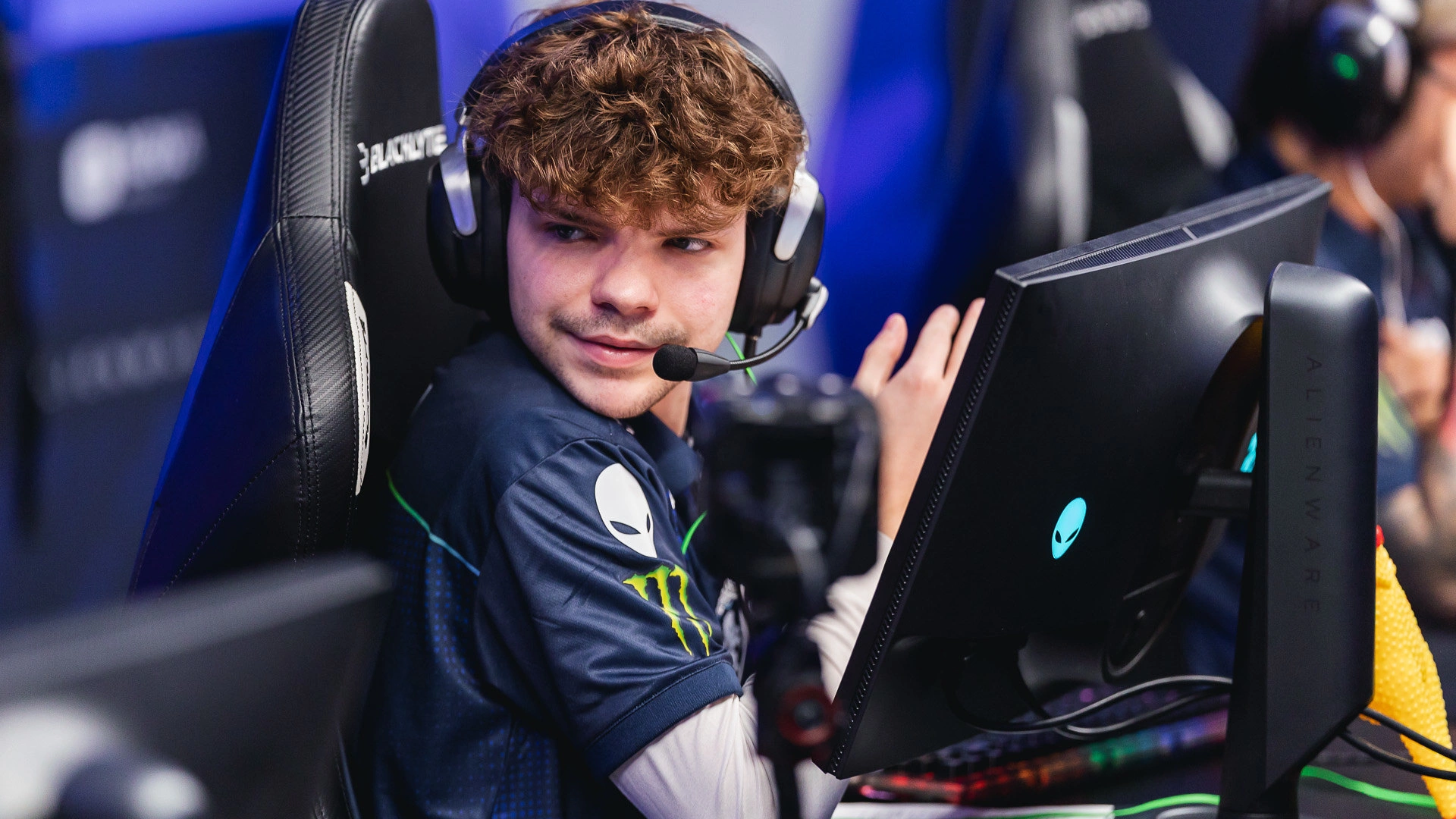
Jorko’s arrival must be considered alongside JT’s impact. The Bulgarian AWPer posted a 1.24 rating against Vitality and a 1.38 rating against G2, finishing the online stage at 1.29. Against G2, he recorded 29 kills against only 16 deaths and maintained an 89.2% KAST. At 17, Jorko remains inexperienced at this level. His long-term value will not be determined by whether he maintains elite debut numbers, but by how well Liquid creates repeatable AWP opportunities after opponents study his tendencies. JT spent years working with hallzerk in Complexity. That experience should help him establish when his AWPer is expected to seek an opening and when the rest of the team must protect the space created by that attempt.
MalbsMd finished the four maps with a 1.14 rating. His statistical improvement was less dramatic than EliGE’s because he had already been one of Liquid’s better performers under siuhy, including ratings of 1.13 at IEM Atlanta and 1.11 at the Cologne Major. The more important development is that Liquid now have several sources of initiative. EliGE can take over a map, Jorko can create an AWP opening and JT is willing to make proactive calls. MalbsMd should not need to manufacture the team’s first advantage in every difficult round. The long-term challenge will be separating his aggression from EliGE’s. Both are naturally active riflers. JT must ensure they attack complementary areas or work in a deliberate first-and-second-contact partnership rather than repeatedly asking for the same resources.
NAF produced only a 1.03 event rating, but his numbers illustrate why rating alone can misrepresent his role. He died only 14 times across the two maps against G2 and finished the series with a 1.16 rating. Liquid did not need him to force engagements because EliGE and Jorko were already generating advantages. That is the ideal environment for NAF. His value increases when the team reaches playable late rounds and he can punish rotations, preserve advantages and convert clutches. A dysfunctional team forces him to become an emergency star. A functional one lets him become the most reliable version of himself.
JT recorded a 1.05 rating across his first four maps and finished positive against G2. He even led Liquid on Anubis against Vitality with a 1.27 map rating. Liquid should not build expectations around JT maintaining above-average individual production. Across his career, his primary value has been leadership rather than firepower. But when the IGL is not being heavily punished individually, the roster becomes significantly easier to balance.
What Liquid’s first four maps do and do not prove
The new Liquid have already proved several things. They can enter a match with a clear plan. They can recover without relying on pistol rounds. They can create room for EliGE without making every round dependent on him. They can dominate a strong opponent when several players contribute. And most importantly, they appear to trust the same decisions at the same time.
They have not yet proved that the system is deep. Opponents had almost no usable footage of JT’s Liquid. That will change quickly. Teams will identify Jorko’s preferred openings, EliGE’s most common aggressive routes, Liquid’s reactions to early utility and the situations in which JT prefers to slow down.
The BLAST Bounty LAN finals will therefore offer a more meaningful test than the online qualifier. Liquid will enter Malta alongside Spirit, MOUZ, The MongolZ, FaZe, Astralis, paiN and 3DMAX. The event is scheduled for July 30 to August 2.
The most important questions will be:
- Can Liquid maintain a functional T side once opponents know their defaults?
- Can JT consistently separate EliGE and malbsMd’s responsibilities?
- Can Jorko remain effective against teams specifically preparing for him?
- Can Liquid recover when EliGE does not produce a 1.40-plus rating?
- Can JT and coach flashie expand the system without recreating the conflicting voices that damaged the previous roster?
Liquid’s first four maps are too small a sample to call the move a complete success. The improvement may partly reflect a honeymoon period, an unknown playbook and Jorko’s exceptional debut. But the difference is already visible. Under siuhy, Liquid often looked like five capable players searching for one shared interpretation of the round. Under JT, they have initially looked like five players who know what the first plan is, who may change it and what everyone else must do when that change arrives.