
The BLAST Open Rotterdam 2026 playoffs bring together six teams with very different levels of form. Some arrive at the decisive stage as fully established favorites, others as dangerous but less predictable contenders. If you ignore the bracket itself and look only at current form, the tournament picture becomes even more intriguing.
Vitality enter the playoffs as the most consistent team at the tournament
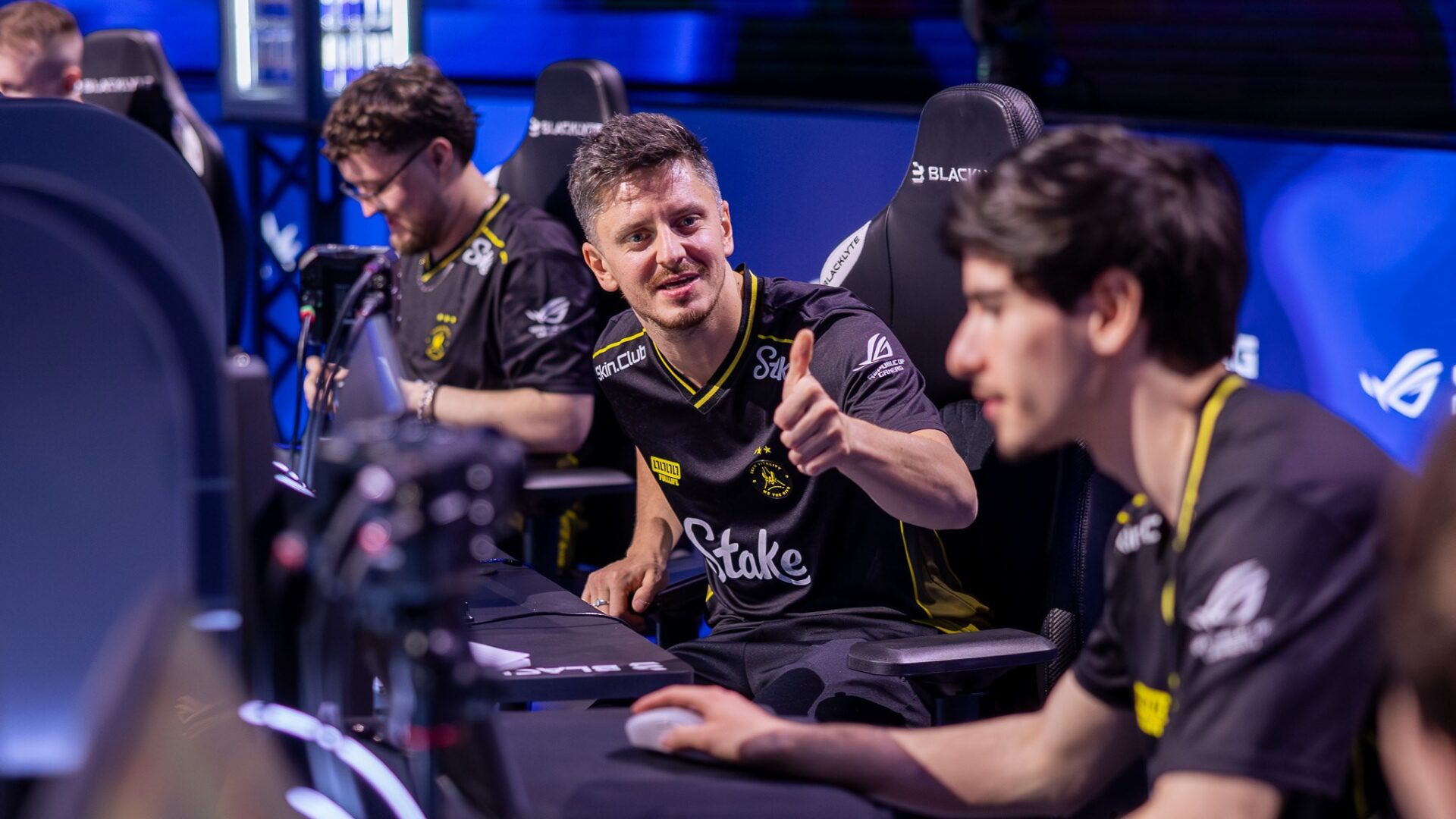
At this BLAST Open Rotterdam 2026, Vitality look the most convincing of all playoff participants. The team reached the decisive stage as the number one team in the world and has already confirmed that level at the event: undefeated in series, a 14-match win streak, and an exceptional win rate over the past three months — 94.4%.
The most important aspect of Vitality’s current form is not even the raw numbers, but the impression of their play. The team does not look like it is simply “surviving” matches through sheer class. On the contrary, they move through series cleanly, without unnecessary chaos, with a clear sense of control over the tempo. That is why Vitality are seen not just as a playoff favorite, but as the benchmark of form at this tournament.

NAVI look less dominant, but very cohesive
Natus Vincere approach the playoffs in a slightly different state. This is not as “sterile” a team as Vitality, but their form still looks very strong. NAVI are on a seven-match winning streak, and their win rate over the past three months stands at 61.9%. Compared to other top teams, this is not the loudest number, but it does not fully reflect the team’s actual level.
The key aspect of NAVI right now is structure. The team passed the group stage without collapse and looked composed in matches where opponents could impose a difficult tempo. This is a form without excessive brilliance, but with a solid working foundation. In their current state, NAVI may not look like the flashiest team in the tournament, but they appear extremely uncomfortable to play against.

Aurora remain in the top tier, but without full conviction
Aurora enter the playoffs with solid overall metrics, but not with the level of consistency that would allow them to be called a team without weaknesses. They hold a 60% win rate over the past three months, are ranked sixth in the world, and have been close to the top of the scene for some time. However, their current form looks more reliable than dominant.
At this tournament, Aurora have shown that they can secure results and move through stages confidently, but they have not created the impression of a team at its peak. This is a team without major dips, but also without the sense that it is playing at its absolute limit. Aurora enter the playoffs as a solid, disciplined top-level participant, but without the emotional or statistical momentum that some competitors have.
The MongolZ arrive at the arena with the strongest emotional momentum
If we focus on the feeling from recent matches, The MongolZ are one of the hottest teams among all playoff participants. They are on a two-match winning streak, have a 55.6% win rate over the past three months, and also carry a telling development profile: the team has previously reached the top of the world rankings and knows what true top-level performance looks like.
From a purely statistical standpoint, The MongolZ are not as strong as Vitality or Falcons. But the context makes their form much more interesting. This is a team that does not always move steadily through tournaments, but can sharply increase intensity at the right moment. That is why their current state feels dangerous: not necessarily the most stable, but capable of creating a sudden shift in any series.

PARIVISION look like a balanced team with growth potential
PARIVISION approach the playoffs in a rather interesting state. On one hand, they do not have a current win streak, as their most recent match ended in a loss. On the other, their overall win rate over the past three months is 64%, and the team has climbed to seventh in the world rankings. For a roster that was not long ago seen as inconsistent at this level, this is a significant signal.
Their current form does not look explosive, but composed. PARIVISION do not project the image of a team driven only by momentum or a short-term upset run. Instead, it feels like the roster has learned to operate at the pace of major tournaments and maintains a healthy balance between individual strength and overall structure. That is why PARIVISION appear as one of the most “quiet,” but serious contenders in the playoffs.
Falcons have one of the strongest forms by the numbers, but not without volatility
Falcons enter the playoffs in very strong condition if judged by raw statistics. The team is ranked fourth in the world, is on a two-match winning streak, and holds the second-best win rate among playoff participants after Vitality — 70.6% over the past three months. By these metrics, they look like one of the strongest teams in the tournament.
However, Falcons’ form is not as smooth as Vitality’s. There is a degree of volatility: the team can look extremely powerful, but does not always navigate stretches with the same level of clarity. This is what makes them difficult to evaluate. At their best, Falcons are a contender for the final of any event. At their less stable level, they are a team capable of creating their own problems over the course of a run. In other words, their current form is strong, but not without internal fragility.

The playoffs bring together teams in different states, but with a clear hierarchy
If we look purely at team form ahead of the BLAST Open Rotterdam 2026 playoffs, Vitality stand out as the strongest — both in results and in overall cohesion. Right behind them are NAVI and Falcons, but with different profiles: NAVI offer more structural reliability, while Falcons bring stronger numbers but less predictability.
The second tier of this group consists of PARIVISION, Aurora, and The MongolZ, but even here things are not straightforward. PARIVISION appear the most balanced, Aurora the most consistent, and The MongolZ the most emotionally dangerous. That means the playoffs begin not only with different teams, but with different types of form — and that is exactly what makes the decisive stage of the tournament so compelling.