Counter-Strike has long been one of the most iconic and competitive esports in the world. We have come to an era of counter-strike where arenas are packed year long with stacked multimillion dollar tournaments. Yet despite its global popularity, the near absence of women is extremely discouraging..
The question is not whether women can play elite Counter-Strike. They do, and we have witnessed that last year. The real question is why so few reach the highest levels of competition.
A Community Barrier
On the grassroot levels, and surprisingly even top tier levels, one of the biggest issues discussed around women in Counter-Strike is the environment players encounter online. Voice chat and matchmaking lobbies have been known to be extremely hostile places, especially for players who reveal they are women.

In many cases, female players have reported being targeted immediately after speaking in voice chat. The response ranges from disbelief and jokes to outright harassment. For new players trying to improve and enjoy the game, this environment can quickly become discouraging. While toxic behavior is common in competitive games in general, the difference is that women often receive targeted abuse simply because of their identity.
Another major factor is the lack of a player pipeline. If fewer women play the game consistently at the beginner level, naturally fewer will reach the professional level years later. This creates a feedback loop: because women rarely appear in professional Counter-Strike, new players rarely see role models they can relate to.
Opportunities for women in Counter-Strike
Some critics argue that the absence of women in top-tier Counter-Strike is purely about skill. However, that perspective often overlooks the conditions needed to reach elite competition.
Professional players typically spend thousands of hours practicing, mostly beginning at a very young age. They join teams, participate in local events, and build networks within the community. If a group of players faces social barriers early in that journey, fewer of them will accumulate the experience necessary to compete at the top.
To address these challenges, women-only leagues and tournaments have emerged over the years. Events like ESL Impact were created to give female players a competitive environment where they can develop their skills without facing the same level of harassment or structural disadvantages.
The Role ESL Impact Played
Launched in 2022, ESL Impact was designed to provide a structured ecosystem for women competing in Counter-Strike. It featured regional leagues across Europe, North America, and South America. It took no time for the circuit to become the backbone of the women’s CS scene. Teams from major organizations such as Imperial, G2, BIG, FURIA, and Imperial competed across multiple seasons.

Across its lifespan, ESL Impact distributed roughly $1.2 million in prize money and created one of the few professional pathways available to female players. But more importantly, it provided visibility, which was strenuously lacking. Matches were broadcast to global audiences, giving female players a platform that had rarely existed in Counter-Strike before.
Then in 2025, with the changes brought about in VRS, Impact’s significance surged drastically. As it was a women exclusive tournament that granted VRS, it helped women shoot up in the VRS rankings, and receive invites for male tournaments. Imperial FE, the highest female ranked team at that time, was able to play three tier-1 tournaments:
Tournament | Ranking |
|---|---|
BLAST Bounty Season 1 |
17-32nd |
IEM Katowice 2025 Play-in |
13-16th |
PGL Cluj-Napoca 2025 |
15-16th |
The difference in skill was apparent, as Imperial Valkyries failed to win a single map across the three tournaments. However, there were still glimpses of potential in what they showed on the server.
Why ESL Impact Was Shut Down
In October 2025, ESL FACEIT Group announced that ESL Impact would be suspended after its eighth season. The decision came as a shock to many within the community, particularly because the league had become the central pillar of women’s Counter-Strike. The reason cited by the TO was that the economic model was not sustainable.
Tournament organizers operate businesses. Hosting events requires production crews, venue costs, broadcast infrastructure, marketing, and prize pools. For a league to continue long-term, it must generate enough revenue through sponsorships, media rights, ticket sales, and viewership.

Women’s Counter-Strike, despite growing interest, has historically struggled to reach the same audience numbers as the main circuit. Lower viewership meant fewer sponsors and less commercial incentive for tournament organizers. In other words, even a well-intentioned project backed by one of esports’ largest organizers failed to sustain itself indefinitely.
The end of ESL Impact left a significant gap. For many teams, the circuit served as the primary competitive environment. Without it, most organisations instantly disbanded their women’s rosters, largely because there were no tournaments for them to compete in. It was a collapse of the entire ecosystem that had been slowly developing over the past few years.
Why TOs hosted these Tournaments in the first place
There have been financial challenges, but there have been clear business motivations for tournament organizers to support women’s competitions too. To start off, diversity initiatives are increasingly important for brands. Sponsors want to associate themselves with inclusive ecosystems, and women’s esports tournaments have known to provide an opportunity to expand audiences and demonstrate commitment to diversity.


Dedicated circuits can also help grow the overall player base. Esports thrives on participation. The more people play a game competitively, the larger its ecosystem becomes. By encouraging women to compete, tournament organizers have been investing in the long-term health of Counter-Strike. Then there is also the case that women’s leagues provide fresh storytelling opportunities. With new players coming in, there are new rivalries. When Imperial Valkyries climbed VRS, comparisons were drawn between s1mple and ANa.
What Women’s CS Needs to Get Back on Its Feet
If women’s Counter-Strike is going to recover from the loss of ESL Impact, several things need to happen.
1. More grassroots Tournaments
Smaller tournament organizers can step in to create community competitions and online leagues. While these may not have the same scale as ESL Impact, they can maintain competitive opportunities for players.
2. Stronger Organizational support
Esports organizations must continue investing in women’s rosters. There have been shouts of female projects, and it is unequivocally imperative for the women’s scene. Without teams providing salaries, coaching, and infrastructure, it becomes difficult for players to pursue professional careers.
3. Integration with the main scene
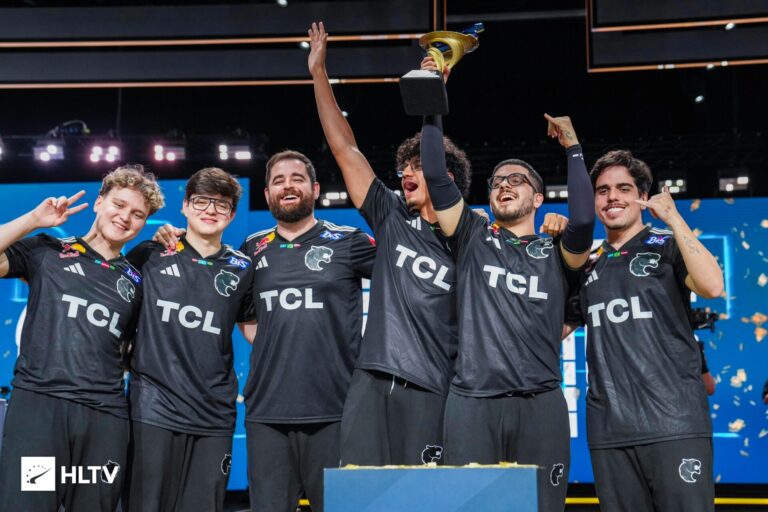
Encouraging women’s teams to compete in open qualifiers and mixed tournaments could provide a more sustainable long-term model. Success stories in these environments would also help challenge outdated perceptions about women in competitive Counter-Strike, which were also brought to light with people’s opinion on Imperial Valkyrie’.
4. Community support
Ultimately, esports ecosystems are driven by viewers. If fans want women’s Counter-Strike to thrive, they must watch matches, support teams, and engage with the scene. Without audience demand, tournament organizers will struggle to justify the investment required to host events.
A clear gap in skill level
With all that said, there is one important reality often overlooked in discussions about women’s Counter-Strike. It is that there are no rules preventing female players from competing in open tournaments. However, there has been a huge gap between the level displayed by the FE teams compared to the top tier-teams. Women can compete in the same qualifiers and tournaments as men, but the disparity in the performance has what kept them from getting anywhere.
Event |
Opponent |
Result |
W/L |
|---|---|---|---|
YaLLa Compass Spring 2025 |
Nemiga |
4 – 13 |
L |
YaLLa Compass Spring 2025 |
Metizport |
0 – 13 |
L |
YaLLa Compass Spring 2025 |
Passion UA |
3 – 13 |
L |
YaLLa Compass Spring 2025 |
Complexity |
0 – 13 |
L |
YaLLa Compass Spring 2025 |
9 Pandas |
5 – 13 |
L |
PGL Cluj-Napoca 2025 |
Complexity |
2 – 13 |
L |
PGL Cluj-Napoca 2025 |
Complexity |
5 – 13 |
L |
PGL Cluj-Napoca 2025 |
MIBR |
4 – 13 |
L |
PGL Cluj-Napoca 2025 |
MIBR |
3 – 13 |
L |
PGL Cluj-Napoca 2025 |
Eternal Fire |
4 – 13 |
L |
PGL Cluj-Napoca 2025 |
Eternal Fire |
5 – 13 |
L |
IEM Katowice 2025 Play-in |
BIG |
5 – 13 |
L |
IEM Katowice 2025 Play-in |
BIG |
4 – 13 |
L |
IEM Katowice 2025 Play-in |
FURIA |
1 – 13 |
L |
IEM Katowice 2025 Play-in |
FURIA |
13 – 16 |
L |
BLAST Bounty 2025 Season 1 |
Natus Vincere |
8 – 13 |
L |
BLAST Bounty 2025 Season 1 |
Natus Vincere |
7 – 13 |
L |
Throughout the tier-one events that Imperial Valkyries got a chance to play, there were unable to get a single map win under their belt. They even participated in the Open Qualifiers for YaLLa Compass Spring 2025, but failed to win a single map again, while also losing by a 0-13 margin twice. Therefore, while it’s true that there have been limited opportunities for them to play agianst tier-1 teams, they need to be able to put up a better fight when they do.

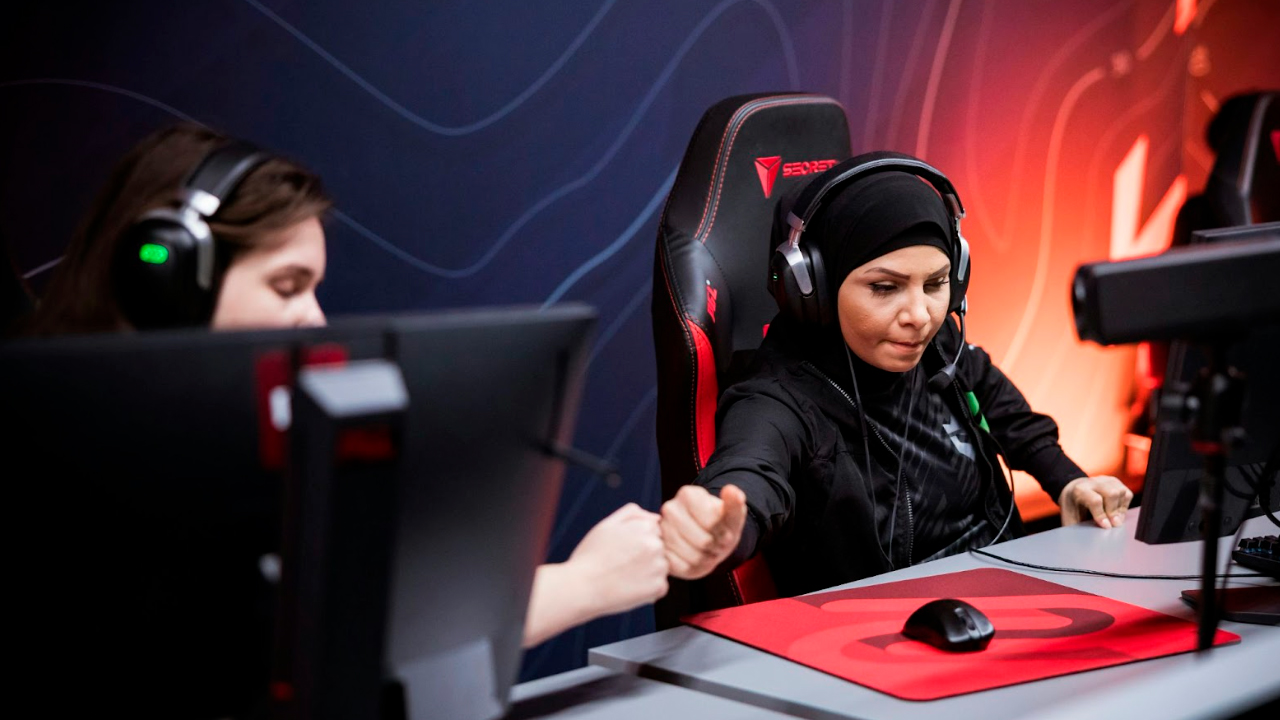
And it is the same case for any low tier team, regardless of comprising of men or women. They work their way through the lower tiers, and slowly make a name for themselves in the upper echelons. For some analysts, this could ultimately be the healthiest direction for the scene.Rather than relying entirely on separate circuits, women’s teams could increasingly participate in the broader Counter-Strike ecosystem.
The Future of Women in Counter-Strike
The closure of ESL Impact is quite evidently a setback, but it does not mean the end of women’s Counter-Strike. There is still undeniable talent, and the players are still grinding. The community discussions around representation and opportunity are stronger than ever.

The loss of ESL Impact is terrifying.
Overnight, countless women lost their job security, their community, and their vision for a future in Counter-Strike.
There is much to lose, but more to gain.#ESLImpact pic.twitter.com/27L7hgL2Ch
— BIG (@BIGCLANgg) October 8, 2025
Whether through grassroots initiatives, new tournament circuits, or greater integration into the main competitive ecosystem, the next chapter of women’s Counter-Strike will depend on the collective efforts of players, organizations, tournament operators, and fans. There are some actions stirring up behind the scenes already, with BIG teasing a female project coming out soon.
Because in the end, Counter-Strike has always been about competition. With what we have seen so far from the female divisions, it has been, unfortunately, not enough. While the collective efforts of organisations, tournament operators, and fans is paramount, it will utimately come down to the players and their hardwork to improve themselves. Because TOs can host tournaments, organisations can come with sponsorships, fans can cheer for them, but ulitmately, it is the players who have to win.