A few years ago, having a Counter-Strike academy mostly looked like an investment in the future. Today, it is starting to feel more like a necessity.
The transfer market has exploded. The best players now cost hundreds of thousands of dollars, sometimes millions. At the same time, some organizations have realized they can find those players much earlier, develop them themselves, and then decide whether to promote them or sell them.
And the results are difficult to ignore. Among the 150 players competing for the top 30 teams in the VRS, almost a third have come through an academy. These are no longer a handful of isolated success stories. Academies have become an entire part of the Counter-Strike ecosystem.
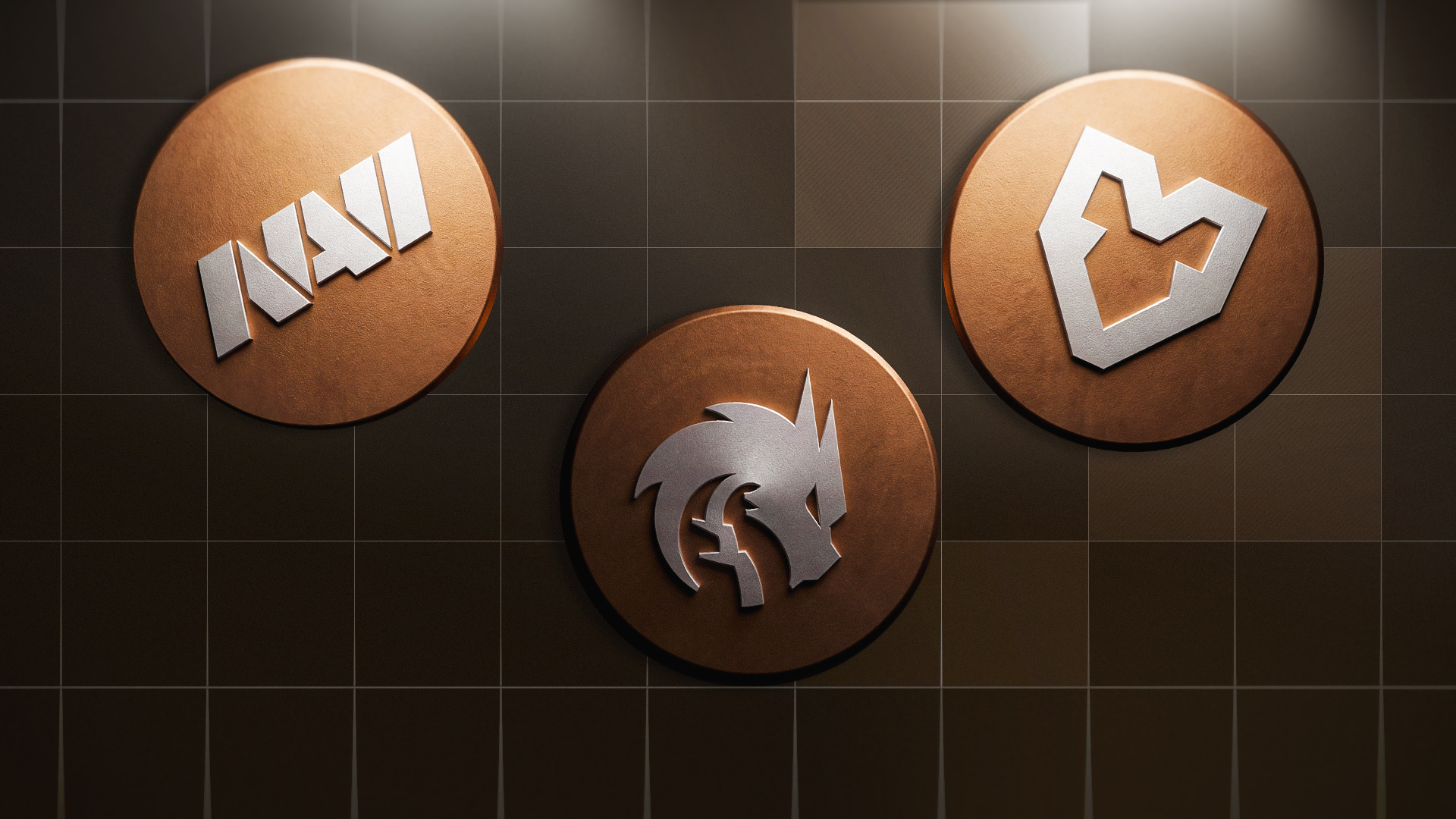
Spirit, MOUZ and NAVI: the kings of development
Spirit has achieved some of the most spectacular results, going as far as producing Major winners. donk, kyousuke, zont1x, FL4MUS, ArtFr0st, S1ren, Magnojez… Even magixx and degster can arguably be added to the list through ESPADA, which effectively acted as a Spirit academy without officially carrying the name. The success stories are seriously starting to pile up.
And donk and kyousuke almost perfectly sum up the value of the system. One becomes the superstar you build your team around. The other becomes a player you can sell for a reported fee of around $2 million. Either way, you win.

MOUZ NXT is probably the most obvious example in terms of quantity: torzsi, xertioN, Jimpphat, siuhy, PR, xelex, JDC, Neityu, Chr1zN, sirah, Jorko, mhL, sl3nd… The list is starting to get ridiculous. For years, MOUZ has been producing players capable of reaching the highest level. Some make it into the main team, others are sold and continue their careers elsewhere. Even today, a huge part of the main roster came through NXT.
NAVI completes the trio with perhaps less volume than MOUZ, but a level of quality that is difficult to argue with, including Major winners: b1t, m0NESY, makazze, headtr1ck, npl, fear, lattykk, as well as dem0n, Krabeni, cmtry and dziugss, who now play for FUT, a team that has reached the top level itself. NAVI has produced champions, sold one of the best players of his generation, and even developed almost an entire roster capable of reaching the highest level somewhere else.
Not Everyone Needs a donk
Gambit showed very early how far this model could go with Gambit Youngsters. sh1ro, Ax1Le, interz and nafany developed together in the project before Gambit essentially decided to turn its academy into the main team. Not long after, that core was competing among the best teams in the world. At the time, it almost looked like an anomaly. In hindsight, Gambit was simply a few years ahead of everyone else.
But even before Gambit, fnatic had already provided one of the first major proofs that an academy could directly impact the highest level. Golden was promoted from fnatic Academy to the main roster in 2017 and took over as in-game leader. A few months later, fnatic won WESG and, more importantly, IEM Katowice 2018. At a time when academy systems were still largely experimental, a player had gone from a development roster to leading one of Counter-Strike’s biggest organizations to a major international title. fnatic would later develop more players through its academy system, including regali, volt, Banjo and prosus.
But an academy does not need to produce several superstars or a championship-winning leader to work. NIP represents almost the opposite model with Young Ninjas: xKacpersky, nilo, phzy, adamb, LNZ, ztr, maxster, n0te, eraa… None of them became donk or m0NESY, but the sheer number of players the project has sent into professional Counter-Strike remains impressive.

The same goes for Astralis with Zyphon, br0, Altekz, MistR, JBOEN, Fessor or Patti. These projects did not necessarily transform their main teams, but they regularly turned young players who were still far from the top into professionals capable of finding a place elsewhere.
That may actually be a more realistic way to judge an academy. Not everyone needs to become a top 10 player in the world. If a structure can regularly turn unknown prospects into Tier 1 or Tier 2 professionals, it is already creating competitive and financial value.
Building for your team, your scene or your wallet
For some organizations, an academy is not only about finding the next superstar. It is also about building a pipeline for an entire local scene.
FURIA is a good example. Its development projects have produced players like KSCERATO, n1ssim, piriajr, drop, decenty, kauez and koala. Some eventually played for FURIA’s main team, others barely did or never really became part of the project. But they still entered the Brazilian ecosystem as better, more experienced players. In that sense, the academy does not only feed FURIA. It helps feed Brazil.
Other organizations use that pipeline much more directly. BIG has developed Krimbo, s1n, prosus, hyped, pr1metapz and JBOEN in Germany, Eternal Fire produced Wicadia and jottAAA in Turkey, while The MongolZ brought players such as tikuak and DarkMeister through their system. In all three cases, the academy is a way to identify the next generation early and potentially turn it into the next pieces of the main roster.

That becomes even more important for teams built around a national identity. An international organization can lose a player and search almost anywhere for a replacement. BIG, Eternal Fire or The MongolZ do not have the same luxury. Their pool of potential players is naturally much smaller. Instead of waiting for the next great German, Turkish or Mongolian player to emerge somewhere, they can actively look for him, develop him and create their own pathway to the highest level.
It is a long-term investment in both the organization and the scene around it. If one of those players becomes good enough, you may already own the next piece of your main roster. If not, he can still strengthen the wider local ecosystem or become an asset elsewhere. Other projects can lean even further into the financial side, identifying players early, developing them and eventually selling them. But the logic remains the same: why wait until a player costs $500,000 if you can try to find him before anyone knows who he is?
Now everyone wants an academy
Naturally, the success of Spirit, MOUZ and NAVI has created a trend. G2 now has G2 Ares. Vitality has recently launched its own academy. Falcons, 9z, paiN, MIBR, HEROIC, B8, Monte, FUT, Aurora, 3DMAX, Inner Circle and many more have also entered the game, or tried it in the past. At this point, having an academy is becoming almost standard across very different levels of Counter-Strike.
But not everyone uses it in the same way. Sometimes, an academy can simply solve an immediate problem. When kyousuke was unavailable because of visa issues, Falcons called up NucleonZ from Falcons Force as a stand-in. Having players already inside the organization gives you an obvious pool of replacements when someone is injured, unavailable or unable to travel.

Sometimes, it can become something much bigger. After years of struggles and repeated changes to its main roster, Virtus.pro eventually turned towards VP.Prodigy, to the point where four players from its current lineup have come through the academy. MOUZ and Gambit have taken similar routes in the past, in very different circumstances. An academy is not always just about preparing for the future. Sometimes, it can become the reset button when the main project stops working.
These projects also have value beyond the five players on the server. They can pass on knowledge, provide a professional environment to young prospects and create jobs for former professionals who want to stay in Counter-Strike and move into coaching. Instead of losing years of experience when a player retires, organizations can use that knowledge to develop the next generation.
Build early or buy late
If academies are becoming standard, Spirit shows what happens when an organization decides to make development a core part of its strategy. In 2025, the organization announced four additional youth teams, two U16 rosters, one U14 and one U12, essentially trying to build a football-style development system around its main academy. At that point, this is no longer about signing five prospects and hoping one of them becomes good. It is a long-term bet on development itself.
That is ultimately the biggest difference. Anyone can sign five young players and call it an academy. Turning some of them into professionals is already difficult. Consistently producing Tier 1 players, let alone stars like MOUZ or Spirit have done, is something else entirely. It requires better scouting, better coaching, more infrastructure, more patience and, above all, a willingness to invest in players who may never make it.
Counter-Strike is getting more expensive. m0NESY already cost $600,000 at the age of 16. A few years later, kyousuke was reportedly sold for around $2 million. In that market, academies give organizations another option. Spirit found donk before he was donk. NAVI found m0NESY before G2 had to pay for him. MOUZ has built large parts of its successive rosters with players it developed itself.
Having an academy is easy. Building a talent pipeline is much harder. Of course, for every player who reaches Tier 1, many others never will. But sometimes, you only need one. At a time when the next phenomenon can cost millions once everyone knows his name, the best deal might simply be finding him first.