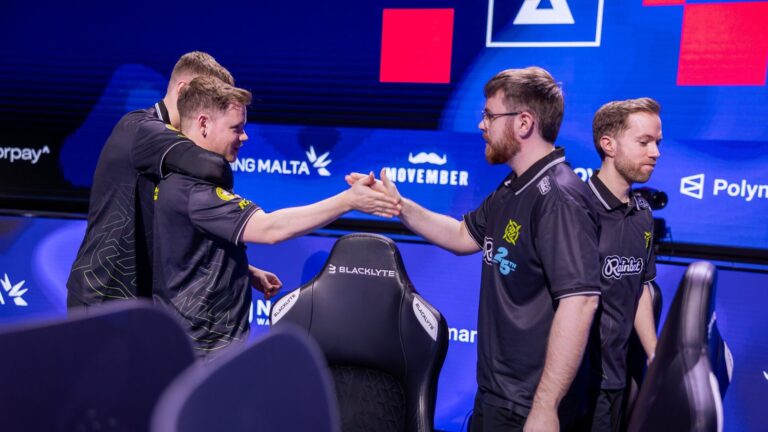

Counter-Strike has once again brought back a long-standing issue for the scene — the boundary between commercial interests, betting influence, and reputational risks. But this time, the wave of criticism is directed not just at another gambling partner, but specifically at Polymarket, whose presence in BLAST broadcasts is increasingly perceived as excessive and toxic.
Main criticism: Polymarket is seen as more toxic than a typical betting partner
The main reason for the current dissatisfaction is that, in the eyes of part of the audience, Polymarket goes beyond the framework of a “typical” betting sponsor. The core of the criticism is not the fact of gambling advertising itself — something the scene has long become accustomed to — but the platform’s controversial image, associated with betting on tragedies, deaths, and war-related events. This creates the perception that the acceptable boundaries for an esports broadcast have been pushed too far.
Within the community, this is expressed very directly. One of the most visible Reddit posts states: “Polymarket needs to be dropped as a sponsor”. The argument then becomes even sharper: “Valve is associating themselves with a company that literally allows people to gamble on who will be bombed next”. What matters here is not only the outrage, but the nature of the claim: for part of the audience, Polymarket is no longer just a questionable brand, but a reputationally unacceptable partner for a major CS tournament.
Aggressive integration into the broadcast amplified the backlash
If the ethical aspect was the first trigger, the second was the way the advertising is delivered. The community emphasizes that the problem is not only the sponsor itself, but how aggressively its presence is integrated into the broadcast. Criticism targets frequent mentions by casters, ad segments, and the overall feeling that Polymarket is being pushed as part of the viewing experience rather than remaining a background sponsor.
This is described very bluntly in discussions. One comment states: “I have never seen such aggressive gambling marketing in a CS tournament”, another adds: “they can’t go five fucking minutes without mentioning it”, and a third summarizes the sentiment: “it’s like they are trying to make it a part of the watching experience”. This is where the key issue lies: viewers are reacting not just to the brand itself, but to the sense that the broadcast is becoming a gateway into a betting ecosystem rather than a neutral tournament coverage.
From an analytical perspective, this is crucial. Betting sponsors are nothing new in CS, but there is a difference between a sponsor the audience can easily ignore and one that cannot be ignored. That is why this case provokes stronger rejection than many previous partnerships.
Additional concern: risks to match integrity
Another line of criticism focuses not on ethics, but on integrity risks. Part of the community believes that such a platform creates too much room for questionable markets and speculative bets, which in theory could encourage abuse around matches or specific in-game moments.
This idea is reflected in the original discussion with statements such as: “Polymarket actually encourages insider trading” and even “Wanna throw a match? Poly got you covered!”. Of course, this is rhetorical exaggeration rather than evidence of конкретного violation, but the very presence of such claims is telling. Some viewers are beginning to see the platform not just as an ethical issue, but as a potential factor in eroding trust in the competitive environment.
The most serious concerns can be summarized as follows:
- an excessive number of markets on “anything” undermines trust in the logic of betting itself;
- aggressive promotion during broadcasts normalizes this model for younger audiences;
- any unusual in-game situation is now more likely to be interpreted through suspicion or perceived financial incentive.
This is perhaps the most dangerous consequence for the scene: even without a direct scandal, the presence of such a partner begins to change how viewers perceive matches.
Why this backlash is unlikely to change things dramatically
Despite the intensity of the criticism, a realistic outlook remains cautious. Many participants in the discussion point out that modern esports is financially dependent on betting partnerships, and major tournaments without this type of funding would be far less viable. Others note that the issue is not unique to Polymarket, but part of a broader system where gambling is deeply embedded in both sports and esports economies.
This creates a key paradox: reputationally, Polymarket раздражает many viewers more than “traditional” betting sponsors, but structurally, the scene may not be ready to give up this type of revenue. If the platform does not formally violate distribution rules or sponsorship requirements, there is limited room for strict intervention.

The Polymarket controversy reflects a broader issue in broadcast models
The current criticism of Polymarket is important not just as another wave of outrage on social media. It highlights several weak points in modern CS broadcasts: dependence on gambling money, blurred boundaries between sponsorship and overexposure, and decreasing audience tolerance for partners with heavy reputational baggage.
It is likely that this situation will not lead to any immediate major resolution. But the signal is already clear: part of the audience is willing to accept betting sponsorships, but not every format and not every brand as the new norm. That is what makes the Polymarket case significantly more important for the scene than just another debate about advertising.