
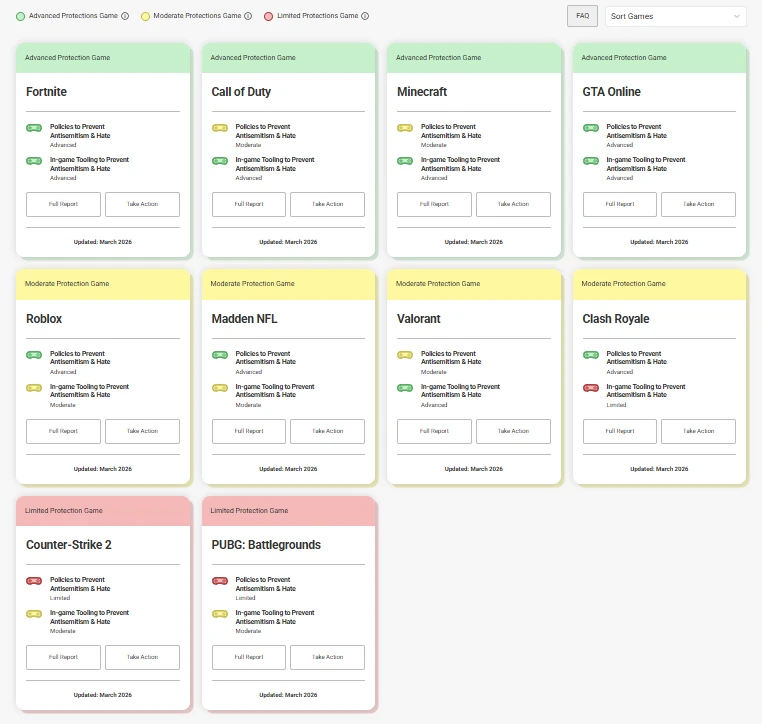
The latest report from the Anti-Defamation League (ADL) has sparked debate in the Counter-Strike 2 community. According to the study, CS2 — alongside PUBG: Battlegrounds — ranked among the worst games for preventing antisemitism and hate speech, receiving a “Limited Protection Game” rating due to weak moderation systems compared to titles like Fortnite and Call of Duty.
What’s wrong with CS2, according to ADL
The report emphasizes that the issue is not only player behavior, but also structural shortcomings within the system:
- lack of a clear policy addressing hate speech and extremism
- vague rules and absence of defined violation categories
- weak username moderation (including antisemitic names)
- limited appeal and feedback systems
unclear escalation process for serious violations
Notably, during testing, researchers were able to create 17 out of 18 prohibited usernames, highlighting significant gaps in filtering. At the same time, the report states that Valve Corporation responded to ADL and engaged in discussions, but:
Valve expressed gratitude for the engagement but made no commitment to a specific substantive change.
Community reaction: from sarcasm to criticism
Following the report’s release, the discussion quickly spread across social media — with highly mixed reactions. Some users responded sarcastically:
- “They better not fix the best part of CS”
- “W or L?”
- “We can’t stop winning!”
Others called for action:
Valve Corporation needs to step up.
At the same time, many comments reflected a deeper issue — the normalization of toxicity within the game:
Now it’s literally the only insult I hear in game lol
There were also aggressive and politicized responses, further reinforcing the report’s conclusions about the challenges of moderation in such environments.
Context: an old problem in a new game
Although Counter-Strike: Global Offensive had long been criticized for toxicity, the transition to CS2 was seen as an opportunity to reset and improve safety systems. However, according to ADL, many of the core issues remain unresolved.
What’s next?
The situation puts Valve Corporation at a crossroads: either take meaningful steps to improve moderation, or continue facing reputational risks — especially as scrutiny over online safety continues to grow. For now, no concrete changes have been announced, but pressure from both the community and organizations is likely to intensify.