![Overpass Callouts In CS2: Full Guide [2026] Background](https://community.skin.club/wp-content/uploads/2023/11/Background-14.jpg)

Overpass, a unique battleground, beckons with its strategic intricacies. Unlike some other familiar maps in the game, Overpass is an original addition, born in 2013, set in the heart of Germany. This virtual Berlin locale is a hotbed for intense clashes, where Counter-Terrorists and Terrorists battle it out in a park and the bustling canal overpass below. Overpass callouts are renowned for their multi-layered structure, offering a distinctive challenge for players. While the Counter-Terrorist side enjoys certain advantages, mastering callouts becomes essential for both sides. The knowledge of these callouts can turn the tide in your favor, and in professional competitions, it’s a must-know map for any serious CS2 player.
Mastering Overpass Map Callouts
In contrast to several other maps, Overpass stands out with its distinctive map callouts. This map boasts extensive pathways leading to the explosive sites, interwoven with tight and confined corridors that link these routes.
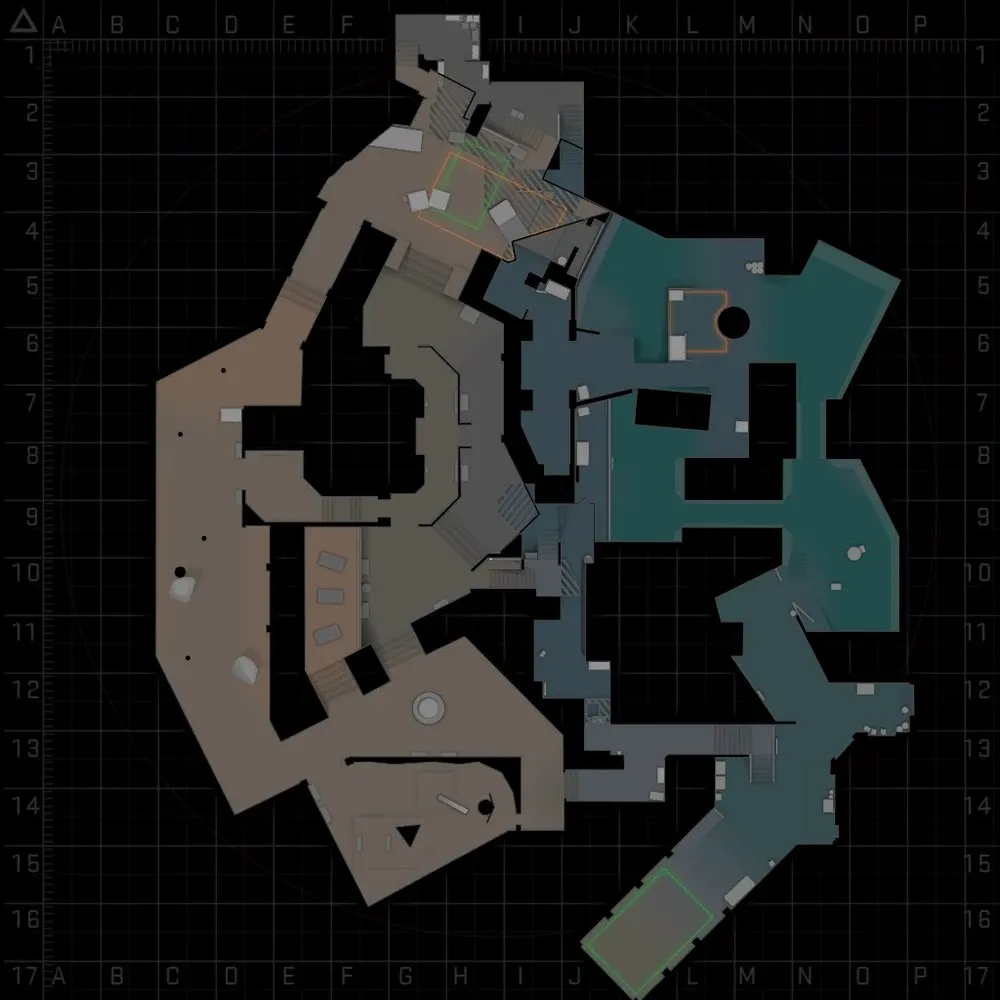
Just like on Overpass, clear communication matters on Mirage. Learning Mirage callouts in CS2 helps improve team coordination and makes it easier to play confidently on this iconic map.
Overpass A Site
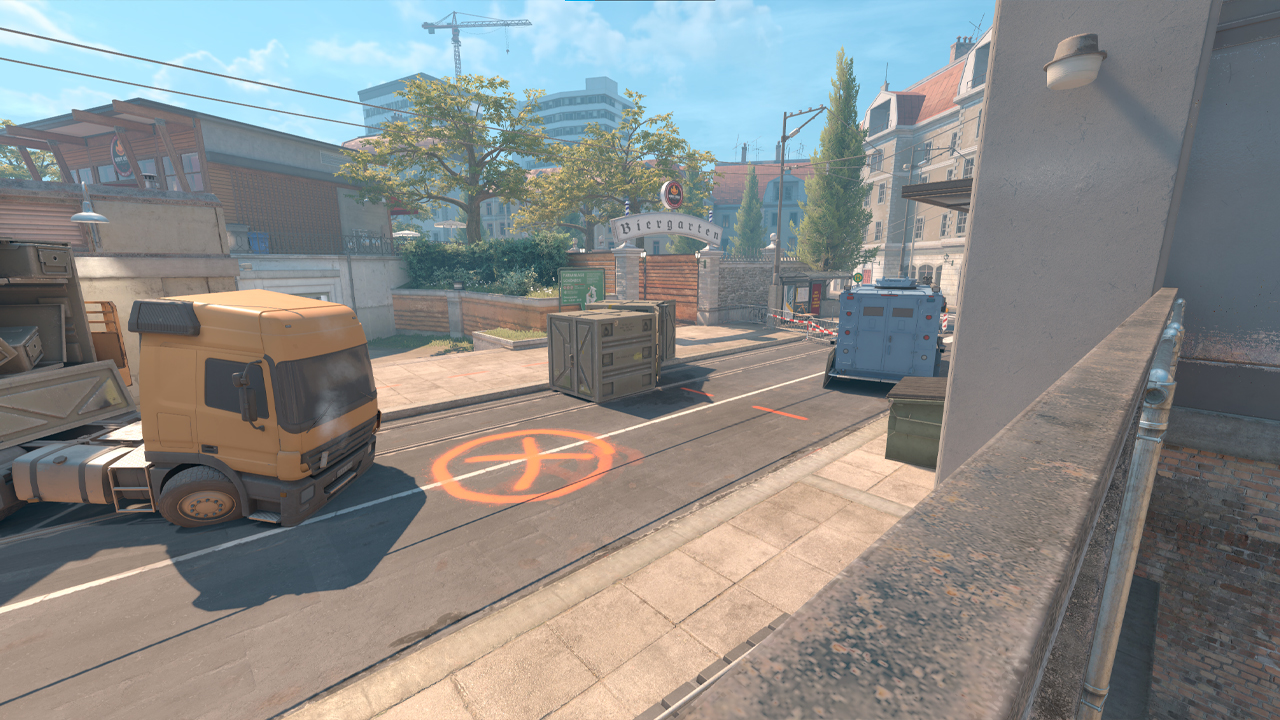
A Site is one of the most important control points on Overpass, with several angles and layered positions around the bomb plant zone.
- A Site: The main bomb plant area on A. When players call “site,” they usually mean the open default fighting space itself.
- Default: The most common plant spot on A, located near the green boxes. It is one of the standard references in post-plant and retake situations.
- Optimus: The large truck on A Site. It gives strong cover and is often used as a landmark during fights.
- Bank: The building behind A Site on the CT side. It overlooks the site and is a very common defensive position.
- Van: The van next to Bank at the back of A. It is usually called when someone is hiding or fighting around that cover.
- Dumpster: The back-A area near the CT side behind the site. Different players may use slightly different names for this spot, but both usually refer to that same section.
- A Short: The shorter route from Mid and Toilets into A. It is the quicker entry path compared to Long.
- A Long: The wide outside approach into A from the park side. Teams often use it for slower control or split hits.
- Signpost: The sign near the A entrances from Long and Short. It is a smaller detail callout, but useful for very specific positioning.
- Flowers: The flowerbed near the A entrance. Players sometimes hide or crouch around it, so it can matter in close fights.
- Close Left: The close corner on the left side when exiting Long onto A. It is a dangerous angle that attackers usually need to clear carefully.
Overpass B Site
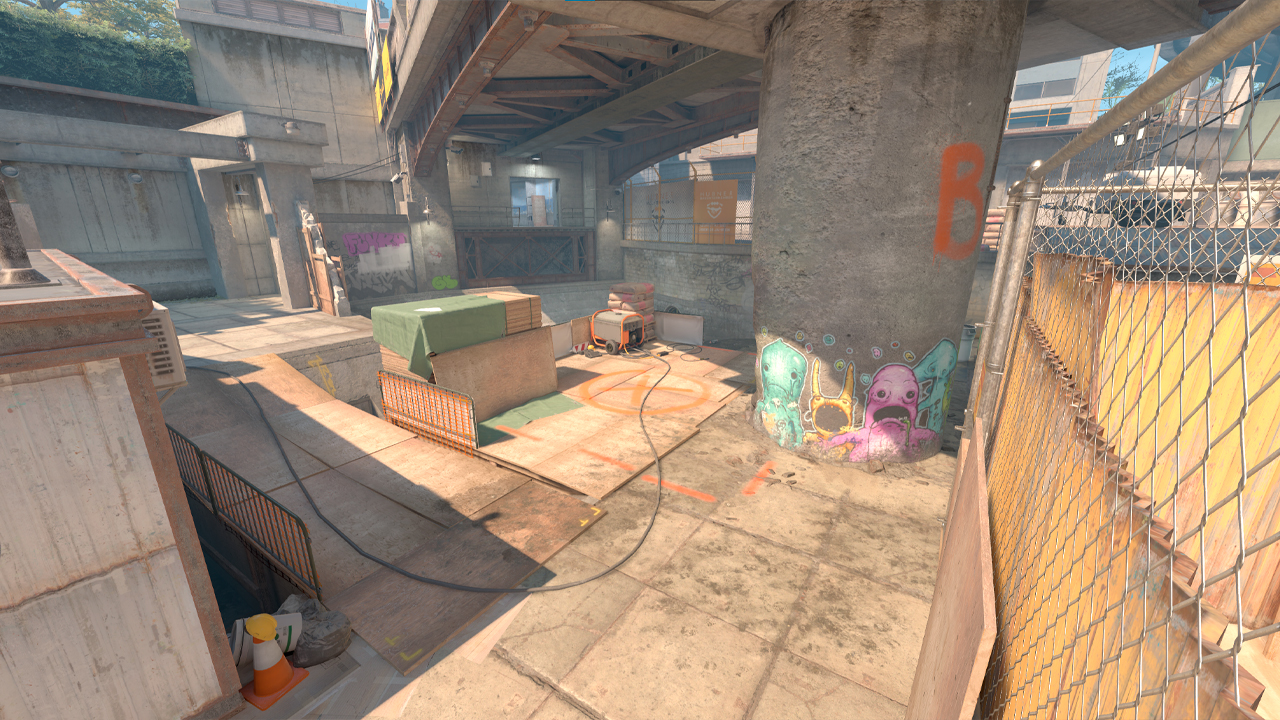
B Site on Overpass is tighter and more enclosed, which makes precise communication especially important during fast executes and retakes.
- B Site: The main bomb plant area on B. This callout usually means the wooden site platform and nearby fighting space.
- Pillar: The large pillar in the middle of B Site. It is one of the key cover spots on the site and gets called constantly.
- Monster: The large tunnel leading from T side into B. It is the main entrance for many B hits.
- Sewers: The watery area just outside Monster before entering B. Teams often group there before pushing onto the site.
- Barrels: The barrel stack on or near B Site. It gives cover and is often used by defenders holding the main entrance.
- Pit: The low water area behind B under Heaven. It is commonly used during retakes and for players dropping down from above.
- Heaven: The raised platform overlooking B from the CT side. It is one of the strongest defending and retake positions on the site.
- Graffiti: The back-site corner with graffiti on the wall. It is a classic B anchor spot and an important point of reference.
- Bridge: The path at the back of B connecting the site toward Graffiti and the CT side. It is usually called when someone is crossing that lane.
- Walkway: The path under Heaven on the CT side of B. It links the back-site area with the rotation route and is important in retakes.
- B Short: The route from Water into B Site. Some players also call it Construction, and it is one of the main split paths into the bombsite.
- Sandbags: The sandbags on B Short near the site entrance. It is one of the most common close positions on B.
Overpass Mid
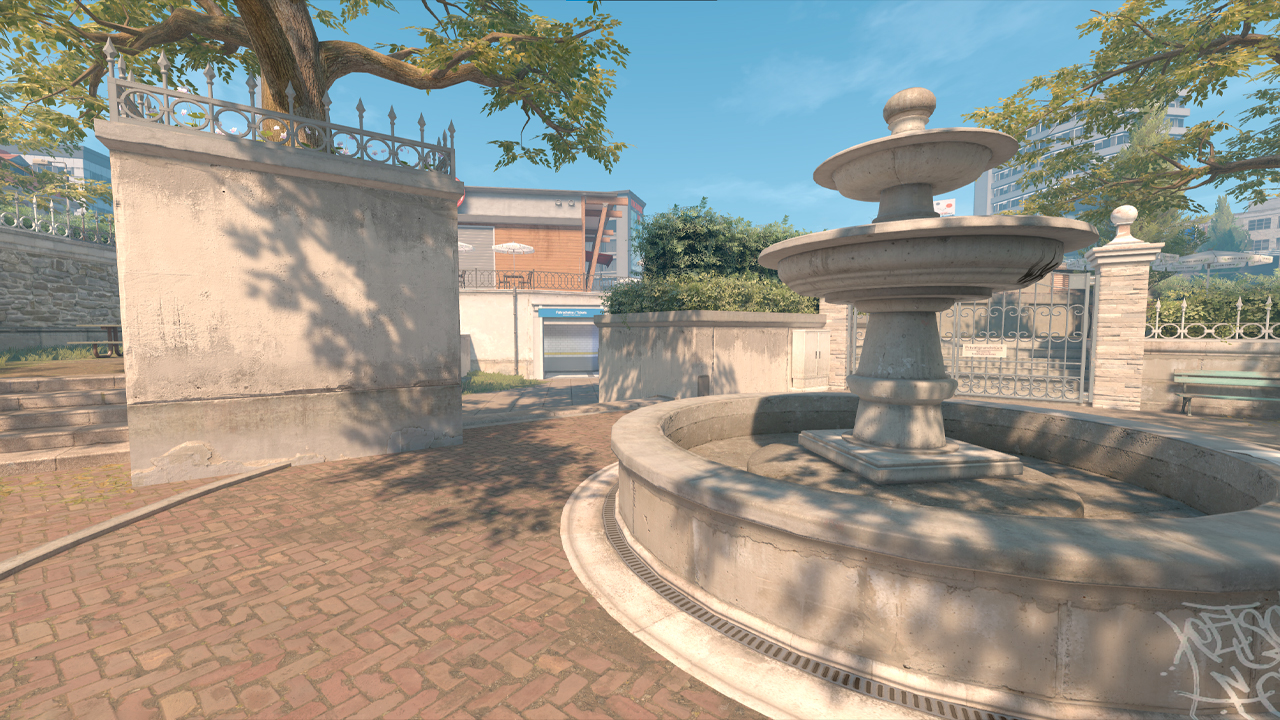
Mid is the central link between the upper and lower parts of Overpass, making it one of the key areas for map control.
- Mid: The central area of the map between Fountain, Party, Toilets, and Connector. It is the main zone that links the upper and lower parts of Overpass.
- Fountain: The fountain area near Mid on the A side. Teams often start here before deciding how to take map control.
- Playground: The playground section near Fountain. It is an easy landmark and a common early-round staging area.
- Party (Balloons): The picnic area next to Mid marked by balloons. Both names usually refer to the same section.
- Toilets: The indoor path from Mid toward A. It is one of the most important control areas on the map.
- Long Toilets: The farther section of Toilets leading toward A Long. Fights here often decide who gains access to A.
- Long Boost: The raised spot near Long where players can boost or hold elevated angles. It is mainly used for surprise positioning.
- Tree: The tree on A Long. It is a simple landmark that players use constantly in Long fights.
- Rock: The rock on the T side of A Long. It is one of the first common cover spots when taking Long control.
- Connector: The stair and tunnel route linking Mid to the lower part of the map. It is very important for rotations and split pressure.
Other Key Overpass Callouts
- T-Spawn: The Terrorist starting area. Most T-side routes begin from here.
- CT Spawn: The area where Counter-Terrorists spawn and rotate to A or B Sites.
- Upper Tunnels: The upper tunnel leading away from spawn. It connects into the lower tunnel system.
- Lower Tunnels: The lower tunnel area after the ladder. It leads toward Connector and the lower B-side routes.
- Ladder: The ladder between Upper and Lower Tunnels. It is a simple callout, but useful for tracking movement and timing.
- Tracks: The area under the train tracks on the B side. It connects toward Monster and Short Tunnel.
- Short Tunnel: The tunnel leading from Tracks toward Water. It is part of the route used to pressure B Short.
- Water: The low area between Connector, Short Tunnel, and B Short. It is one of the most important lower-map callouts on Overpass.
- Squeaky: The door leading from Connector or Lower Tunnel into Water. It is a narrow choke point and often called during utility usage or quick pushes.
- CT (CT Stairs): The Counter-Terrorist rotation route on the B side. Depending on context, it may mean the stairs or the general CT-side path.
- Storage: The room between Bank and the nearby stairs on the A side. It is a more niche callout, but still useful for tracking rotations.
Overpass Callouts: Team Play in CS2
Overpass in Counter-Strike 2 makes a solid balance between depth and clarity. At first, its layout can feel a little tricky because of the multiple paths and rotation routes, but it becomes much easier to understand once you spend a bit of time learning the main areas. The most important step is getting comfortable with the key callouts, since they make communication faster and far more reliable during a match. Good callouts help teams share information clearly, react quicker, and coordinate pushes, retakes, and rotations with less confusion. If you take a few minutes to study the map and remember the most important locations, Overpass becomes much more manageable.
FAQ
-
What are the callouts in Overpass?
Callouts in Overpass are location-based references that players use for effective communication. Some key Overpass callouts include A Short, B Short, Connector, and Heaven, among others.
-
Is Overpass a CT sided map?
Overpass is generally considered a CT-sided map. Counter-Terrorist teams tend to have an advantage due to map design and positioning.
-
When was Overpass added to CS?
Overpass was added to Counter-Strike: Global Offensive in the game’s release on December 18, 2013.


![Desert Eagle Heat Treated CS2 Guide & Patterns [2026]](https://community.skin.club/wp-content/uploads/2026/09/Main-x-Name-11-768x432.jpg)